
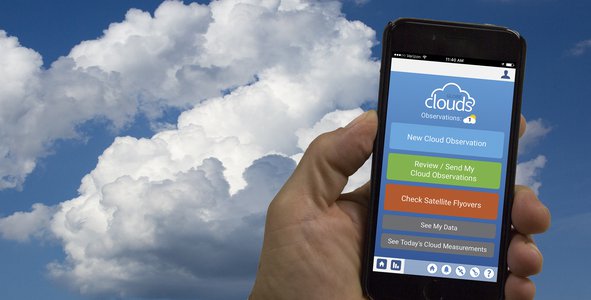
COVID-19 continues to be a global problem even though vaccination efforts are underway to control its propagation. Your challenge is to use environmental data and other information (such as epidemiological, social, policy, and economic data) to build a smartphone application that provides individualized, geolocated, COVID-19 risk warnings to guide social awareness, response, and health security.
Summary
Details
Background
SARS-CoV2/COVID-19 propagated rapidly from local to global scales. Almost 199 million COVID-19 cases and 4.24 million deaths were reported by the World Health Organization as of August 2021, and the virus has resulted in multi-trillion dollar impacts. The pandemic has prevailed over the annual seasonal cycles of both hemispheres and continues to be a global problem, even though vaccination efforts are underway to control its propagation.
An abundance of open-source COVID-related research findings is available online. But many of these studies are inconclusive and require more data to be collected and analyzed. Many informative open-source web portals and dashboards provide real-time snapshots of COVID-19 case rates and mortality and some also display potentially associated environmental variables. This challenge is an attempt to consolidate open-source COVID-related information from multiple sources and integrate it in a quantified, computational framework that provides individualized risk warnings, taking into account physical location, weather/climate conditions, as well as social behavior.
This challenge involves use of open-source environmental observations (remote sensing/in situ/modeled) to distinguish among environmental factors (e.g., Temperature, Relative or Specific Humidity, Winds, Pressure, Pollution PM2.5, Solar Radiation/UV etc.) possibly associated with SARS-CoV-2/COVID-19 infectiousness and propagation, and concurrent forcings due to policy (e.g., lockdowns, slow-downs..), social practice (wearing masks, social distancing…), demographics (population density, GDP, air conditioned vs. ventilated spaces, etc.), and economic activity (e.g., open/closed businesses, recreation/tourism, etc.).
Objectives
Your challenge is to use open-source environmental data and other open-source information (such as epidemiological, social, policy and economic data) as available to build and demonstrate a prototype smartphone application that can provide individualized, geolocated, COVID-19 risk warnings to guide social awareness, response, and health security.
The challenge involves use of risk warning models/algorithms as smart phone applications to advise users of their COVID risk; e.g., the application might provide the user with geolocated COVID-19 risk/susceptibility levels, which could guide individual decisions regarding what to wear (type of mask), which locations to avoid if possible (e.g., shopping, dining, social and sports gatherings), social distancing measures, and other exposure control measures.
Potential Considerations
When developing your prototype application, you may (but are not required to) consider the following:
- For the typical end-user application to be well received—be it a research or applications product—the templates and graphics should be kept simple and intuitive. I.e., a user should be able to easily fill in the required local input information and obtain a COVID-19 risk factor or prediction depending on location, personal social choices, and regional COVID-19 context.
- It might be useful to build upon existing COVID-19 calculators and add environmental elements that help refine the risk-warning calculations. Proximity (to reported COVID-19 cases from testing sites) information from smart phone networks could be very useful if such information can be obtained from public sources.
- Potential keywords you may search online: 19 and me, covid calculator, case rates, death rates, earth engine, climate data store, monthly climate explorer
For data and resources related to this challenge, refer to the Resources tab at the top of the page. More resources may be added before the hackathon begins.
NASA does not endorse any non-U.S. Government entity and is not responsible for information contained on non-U.S. Government websites.