
High-Level Project Summary
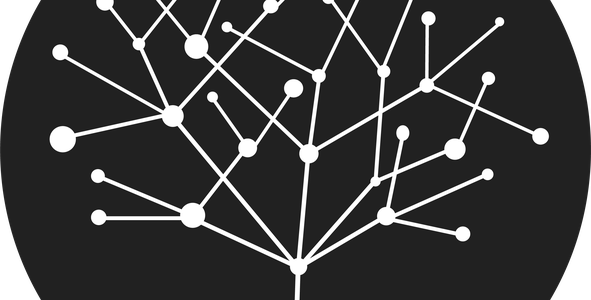
Our solution for the challenge is creating a platform where all data provided by the NASA s science disciplines can be observed in an attractive and entertaining way.Each discipline connects with others starting from a central point, branching out using three fractal structures. Artificial intelligence GPT -3 would create summaries of the different subjects the user is interested in.The main purpose of The Point is to create a user-friendly interface where information from almost the whole observable universe can be found. In that way, it can be easily used for anyone, from childrens to researchers.
Link to Project "Demo"
Link to Final Project
Detailed Project Description
What is our idea?
As we stated before, the main idea is to represent our universe using the fractal three structure. So every subject or element of the universe is connected to the other no matter how specific the subject is,
Using this app will simplify the way the information is presented to the user and also give plenty of options to keep learning about the main topics the user is interested in. This whole information is taken from the five science divisions in NASA's Science Mission Directorate (SMD): Earth Science, Astrophysics, Heliophysics, Planetary Science, and Biological and Physical Sciences.
How would this app work?
This is what the user will find using The Point:
The user could use the Earth as a starting point and be able to zoom in, and find several key topics about our planet (Geology, Climatology, Biology, Astrophysics, etc.) or also zoom out and find several key topics about the solar system (Planets, NASA exploring missions, Astrophysics, Heliophysics, etc). Also, the interface will show the most recent news about the topics selected and related articles to the users interest.
What benefits does it have?
The main benefits of this platform is providing an easy way to find the NASA information the user is searching. An interactive and easy to use app that combines the tons of information NASA’s SMD provides can be the solution to the typical problem of not knowing where to start to find reliable information about our universe.
What are we hoping to obtain from this?
What we actually hope to achieve is that every single person (being a part of the scientific community or not) have the access to any single piece of data about our universe, and this would erase the barriers of desinformation and having them all compressed in one place like a red would make it easier to avoid fake or incomplete data.
Also, we thought about using a theory that can be reflected in natural structures like neurons, a tree, roots, pseudopods.
If the nature can be presented like this, a fractal net that gathers the information about our whole universe can too.
Space Agency Data
As the challenge was oriented into it, we would use only NASA information.
https://www.nasa.gov/
Hackathon Journey
Why we decided to participate?
Last year, we participated too and it was very overwhelming finding people with ideas and wanting to help society to progress enhancing its posibilities, so we felt a part of it and made ourselves a time to give our ideas a place too.
Did we learned something important?
Yes, the most important part of it is learning how to work with different people, creating and resolving tasks to achieve a common goal. Our group is composed with people who doesn´t know each others in real life, so we always need to help and think altogether using the internet.
Why this challenge and not another?
We identified a need, the necessity of having a place where all the data we already have is presented in a way more dinamic, not just extense and complex texts where the main point of learning gets lost. Also, having the advantages of IA´s by our side and thinking of the universe as a big netwok of connections, this challenge was the best option.
How did we manage to resolve it?
The most difficult part is choosing the idea we wanted to develop, the next step was divide tasks and getting our doubts clarified by the information we had.
People we would love to thank...
Firstly, to Dr. Argyro Kavvada, Dr. Daniel O’Neil and Dr. Shobhana Gupta for creating the challenges, and giving us this space and opportunity to share opinions and ideas. Secondly to The Mars Society Argentina for always helping us out with resources and giving us tools to edit.
And last but not least, to all the people who decided to study our place in the Cosmos, who dedicated their lives for the sake of getting closer to the answers, and basically gave us the idea of connecting everything.
References
- https://science.nasa.gov/
- https://www.nasa.gov/specials/ocean-worlds/
- https://images.nasa.gov/
- https://www.jpl.nasa.gov/
- https://es.wikipedia.org/wiki/GPT-3
Tags
#fractals #GPT-3 #red #cosmology #artificialintelligence #TMSA
Global Judging
This project has been submitted for consideration during the Judging process.