
High-Level Project Summary
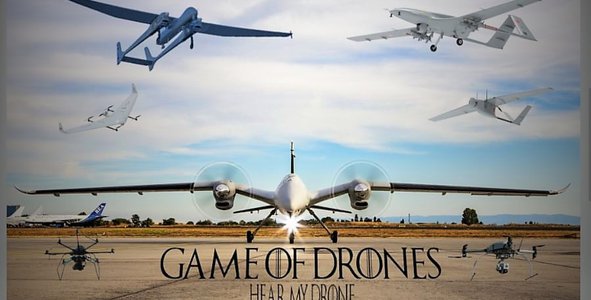
Problems arise with the increase in traffic density. As flying cars start to enter our lives, there will be a need for the control of these vehicles. The aim of the project is to control future flying cars with drone cops. In our project, drones will act as traffic cops on the ground for flying cars. In cases where the rules are violated, it will give a warning and forward the license plates of the vehicles that violate the rules to the center. It will also control and supervise the orientation of flying cars to the take-off and landing strips. Thus, both the traffic on the ground will decrease and the air traffic will be controlled and the occurrence of irregularities will be prevented.
Link to Project "Demo"
Link to Final Project
Detailed Project Description
In the near future, flying cars, which are expected to increase in order to relieve the traffic on the ground, will need control just like the cars on the ground. Since it will be difficult to carry out this inspection in a manned manner, the aim of the project is to control the flying cars of the near future with drone polices in this age when unmanned systems become widespread and will become widespread. Since it is more costly and difficult for traffic police to control with manned flying vehicles, it is preferred to use drones with less cost and no risk of loss of life.
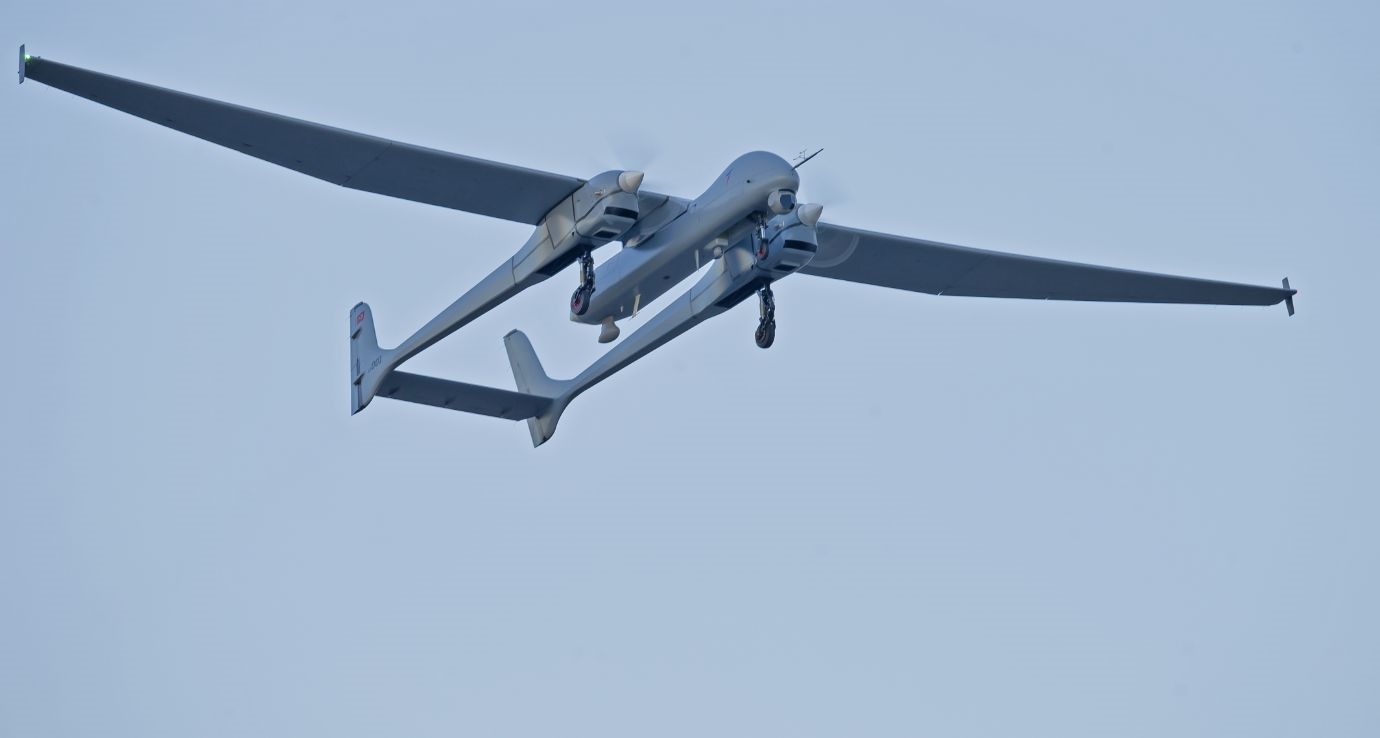
The designed drones will almost act as traffic cops on earth for flying cars. In cases where the rules are violated, the flying car driver will be warned by the drone traffic police, just like in urban traffic today. Plates of vehicles violating the rules will be forwarded to the center. It will also control and supervise the orientation of flying cars to the take-off and landing strips.
It is hoped that various benefits will be obtained as a result of the idea put forward to solve current and near future problems.
Traffic congestion on earth will decrease with the introduction of flying cars. Traffic congestion in urban transportation can be reduced and this will reduce other problems caused by traffic congestion.
The time people spend in traffic will decrease and other accompanying problems (negative effects on people's moods) can be prevented.
The speed of transportation will also increase. A faster and more efficient cargo transportation service will be provided.
The urgent needs of health institutions (blood, organ transport, etc.) will be met quickly, and the transportation of the injured to health institutions will accelerate with the reduction of traffic congestion.
Flying cars can be used to supply high-risk war zones. There will be a decrease in traffic accident rates.
Since both flying cars and drones operate with a non-polluting system, the rate of air pollution will decrease and the growth rate of the carbon footprint will decrease.
Thanks to the control of flying cars, congestion and accidents on the landing and take-off runways will be prevented.
Previous studies on the subject were found and reviewed using the literature review method. The works deemed necessary for the study were obtained from the library and the internet. In addition, interviews were held with engineers. In line with the information obtained, some results and solution suggestions have been put forward.
Space Agency Data
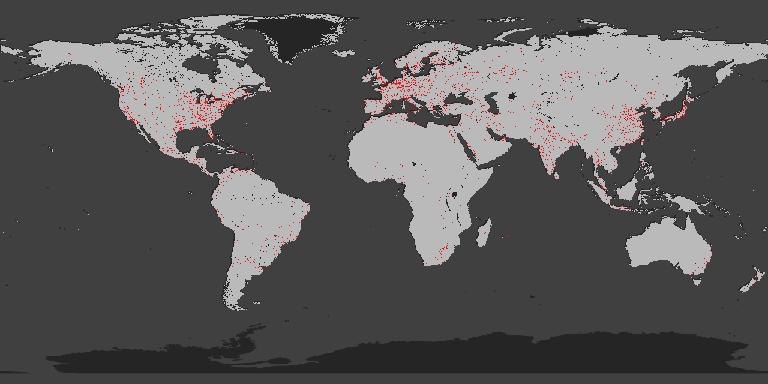
Some data from NASA (National Aeronautics and Space Administration) were used in the project. NASA's flying car, which has been tested, expresses the point of technology. This situation inspired the project. As a result of the source scanning for the project, the map of urban areas shared by NASA was taken and it was seen what level of urbanization had reached. The problems caused by this situation were considered and focused on the problem of traffic density. Today, traffic density is increasing, especially in metropolitan cities, and it is predicted that this traffic problem will increase over time. Major cities around the world have already reached their maximum road capacity. In big cities, traffic congestion in urban transport is at its maximum. This data from NASA also inspired the project.
Hackathon Journey
Although the SpaceApps experience took 2 days for us, it was a long-term experience. In these 2 days, we learned how to generate ideas, plan, research and present the idea we produced, in short, to manage events when we have a time limit and when we are under stress.
We chose this challenge because everyone on the team was interested in drones. Although we encountered setbacks while preparing the project, we overcame these difficulties by scheduling tasks and time planning.
Finally, we would like to thank to our teachers Halil Bağış, Merve Balaban and Lütfi Yösavel for the help and ideas they gave us, their effort to mentor us; and the NASA and the NASA SpaceAppsCorum organization team for bringing so many teams together, organizing this competition and giving us this opportunity.
References
- https://pin.it/428Yvxi
- · https://pin.it/k0qATBd
- · https://pin.it/7Kb5dlD
- · https://pin.it/6GSo6ei
- · https://pin.it/5T9VrEb
- · https://www.nasa.gov/ames/atmx
- · https://worldview.earthdata.nasa.gov/images/layers/previews/geographic/GRUMP_Urban_Extents_Grid_1995.jpg
- · https://www.nasa.gov/press-release/nasa-begins-air-taxi-flight-testing-with-joby
- · https://baykardefence.com/page-Flying-Car.html
- · https://drive.google.com/file/d/1za7_f5bIxFRisbVDwrllxHo-MxmhieQs/view
- · https://docs.google.com/forms/d/e/1FAIpQLSe_MHXM9f9RCOQZGVB1GQemsu8580zmJJshqtGi_2Dhl3cEZQ/viewform
- · https://drive.google.com/file/d/1za7_f5bIxFRisbVDwrllxHo-MxmhieQs/view
- · https://2021.spaceappschallenge.org/offers
- · https://youtu.be/izDxpfOIF6M
- · https://www.baykarsavunma.com/sayfa-Ucan-Araba.html
- · http://www.aircarcorp.com/
- · https://www.volocopter.com/
- · https://worldview.earthdata.nasa.gov/images/layers/previews/geographic/GRUMP_Urban_Extents_Grid_1995.jpg
- · https://www.icao.int/Aviation-API-Data-Service/Pages/APIs-Sample.aspx
- · https://www.airbus.com/newsroom/press-releases/en/2021/09/Airbus-reveals-the-next-generation-of-CityAirbus.html
- · https://pin.it/32UbxVQ
- · https://www.volocopter.com/solutions/volodrone
- · https://volocopter-statics.azureedge.net/content/uploads/20210324_Volocopter_WhitePaper_Roadmap_to_scalable_UAM_m.pdf
- · https://www.youtube.com/watch?v=VH_WHz9HKhw
- · https://twitter.com/Action1041/status/1438570070041583616?s=20
- · http://www.aircarcorp.com/
- · https://www.nasa.gov/ames/atmx
- · https://www.youtube.com/watch?v=VH_WHz9HKhw&t=8s
- · https://www.trthaber.com/haber/bilim-teknoloji/yanginla-mucadele-icin-iha-ordusu-603635.html
- · http://ormanweb.isparta.edu.tr/ormanvecevre/belgeler/bildiriler/46_K4-4.pdf
- · https://dergipark.org.tr/tr/download/article-file/470180
- · https://2020.spaceappschallenge.org/challenges/create/create-mascot/teams/ai-ltruistics/project
- · https://youtu.be/yVu6Kd_whR8
- · https://twitter.com/turkteknolojisi/status/1356253292662284290?s=20
- · https://t.co/CtvTaAvrbN?amp=1
- · https://twitter.com/aircarcorp/status/1425453675670028289?s=20
- · https://www.youtube.com/watch?v=SDXTEgXD-1A&t=219s
- https://www.defenceturk.net/wp-content/uploads/2020/08/ser%C3%A7e-I-%C4%B0HA-e1596686912623.png
- https://www.defenceturk.net/wp-content/uploads/2018/12/oktov3.jpg
- https://www.tusas.com/content/images/uploads/originals/a1,587.jpg
- https://www.baykarsavunma.com/upload/fotograf/1562837736.png
- https://www.baykarsavunma.com/assets/img/upload/iha/bayraktar_diha.png
- https://www.baykarsavunma.com/assets/img/upload/iha/bayraktar_taktik.png
- https://pbs.twimg.com/media/FANQMwFVcAQzXtK?format=jpg&name=large
- https://www.volocopter.com/




Tags
#space, #spaceapp, #drone, #flyingcar, #flyingtaxi, #cargodrone, #traffic, #eyescontrollingthesky, #ecs, #trafficdronepolice, #uav
Global Judging
This project has been submitted for consideration during the Judging process.