Awards & Nominations
Antheia has received the following awards and nominations. Way to go!
Global Nominee

Antheia has received the following awards and nominations. Way to go!
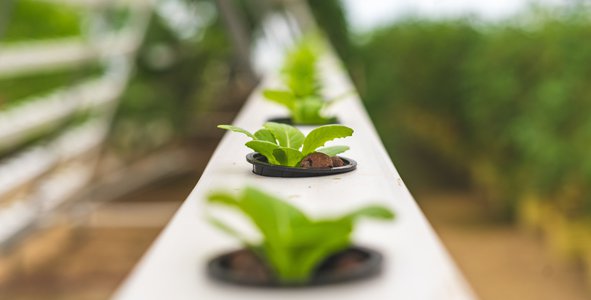
We have developed a collapsing seed terrarium, that nurtures the seeds through hydroponics, a process that provides all the minerals and nutrients the seeds need to germinate and grow in the perfect proportions, all without the added excess weight of soil, reducing the overall weight of the spacecraft. To ensure its portability, it collapses into a size 34% of its original size, and its modularity means that firms and NGO’s can create a hydroponic system anywhere, be it the worlds most deprived areas or a colony on Mars. Each individual module can collapse in order to make them an affordable and tailored solution to any region where food is required.
Our project can ensure that seeds can be stored, transported and grown in the most efficient and space effective way possible. It is user intuitive, with a touch face interface ensuring that it can be used globally. The basic premise the modules are built on is hydroponics, which ensures the nutrients and minerals can be applied to the water system in the most efficient way, ensuring the least volume needs to be transported on the spacecraft, thus reducing its weight. The module collapses to 34% of its original size when in storage, meaning that transportation of the units to more deprived regions of the world, such as the Sahel, where food is difficult to grow, or the Indian subcontinent as a solution to overpopulation in major cities there. We firmly believe our design can help solve these major global issues, as well as help humans reach further than ever, and set up colonies on Mars. To achieve these reachable goals, we have adapted our container in order to ensure it is suitable for space transport. This involves using certain materials, such as recycled (and thus sustainable) low density polyethylene for the outer casing, and aluminium (which is malleable but still mechanically strong) for the ends and strip in the middle, with it’s low density making it further suitable for transportation. In addition to this the polyethylene is transparent so the crew can monitor the seeds progress, if they are growing in transit, or to watch for faults in the system, which can be easily fixed with the automated touchscreen control interface. This control interface can be made with a simple single-board computer, and some PID controllers - these help to minimise error and maximise efficiency by constantly predicting and adjusting the state (conditions) of the terrarium. The PID controllers can be tuned as needed, although the main control interface cannot do this, so as to prevent accidental damage from users. A user can select from a set of predefined optimum conditions, unique to various species of plant. These can also be changed as needed. As our module is primarily designed for space transit, the effects of geotropism will be neutralised as there is no gravity, meaning the seeds will naturally grow their roots into the water. Instead, seeds are encapsulated in netting to prevent them from floating away. We have used a fairly wide range of tools, including Typescript with React for the control interface, CAD to create designs for our module, as well as simple pen and paper in order to sketch our initial ideas, which were key in developing the final product.
We used a variety of different data sets from NASA to help us with our project. Firstly, we used their information about how they plan to keep astronauts risk of radiation harm whilst in space to a minimum in order to see how we could apply the same, or similar, to our seed capsule. This was implemented through having them in a sealed place within the spacecraft, which would protect them for us. This was reinforced when we looked at data from an article by Shaowen Hu, talking about radiation from solar particle events. The abstract of this confirmed our beliefs that little is known about how to protect astronauts from these events, however we tried to combat what we could, in the time that we did. We also used papers published by NASA surrounding Veggie, and the challenges associated with it. This enabled us to incorporate the best of existing frameworks with our own ideas. Lastly, we implemented our readings of the Space Faring: radiation challenge magazine on the NASA website to help us with our findings. We used mainly NASA data on our research about the radiation part of our project as this was the part that we found was hardest to research conventionally and we knew least about. The high brow data was difficult to read through, but we took core elements from it in order to apply the same logic to our seed terrarium.
Our team is formed from 5 STEM students and one humanities student. We have all applied our various skills and expertise, including coding and engineering of the module as well as the more essay based descriptions. Our team were inspired to choose this challenge as we felt it would encompass a broad range of our skills, and presented a significant challenge in designing the module, as it would have to be adapted to go through space. We encountered numerous challenges, the most significant being that we couldn't find a suitable touchscreen interface and as such had to code our own to tailor it too our needs. Our approach was very enjoyable, as it allowed us to socialise together, something we have missed during the pandemic, as we went to each other’s houses to work collaboratively on the project. This helped us solve the major setbacks as we could do it together, instead of having to tackle them ourselves. As a team, we would like to thank Mr. Munir El Moudden, our Computer Science teacher (for most of us) as he encouraged us to participate in the space apps, of which our experience has been extremely positive, particularly with the advice on the YT livestream. A huge thank you to all the space apps team for organising and making this possible.
Tools: Microsoft PowerPoint, CAD Modelling, Typescript, React, Sketching with paper and pencil
Resources/Data: RHS (to learn more about how seeds work), NASA.gov (primarily to research radiation and its effects but also on other parts of our project), Edexcel A Level Biology, IT, and Physics textbooks, Wikipedia.
#plants, #seeds, #spacetransport, #nature, #London, #space, #future, #stem, #space, #mars, #science, #DSCOVR, #love, #hardware
This project has been submitted for consideration during the Judging process.
A viable food system for long-duration exploration missions does not yet exist, but it will be necessary to maintain crew health and performance. Your challenge is to design a deployable crop production system capable of supporting the nutritional requirements of a crew of 4-6 on a transit mission to Mars and back to Earth.