Awards & Nominations
Ariadne's Microgreens has received the following awards and nominations. Way to go!
Global Nominee

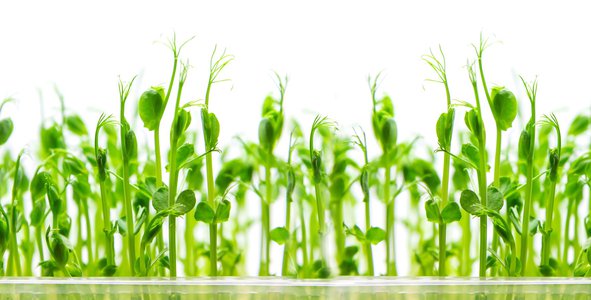
Ariadne's Microgreens has received the following awards and nominations. Way to go!
High level summary: a system to automate the sowing and growing of plant seeds, enabling rapid iteration experimentation while providing nutritious fresh produce for crew. We developed: an outline of the solution, including visualizations of the main components.How does it solve the challenge: existing methods of growing plants in space are time-consuming for the crew. Our solution aims to reduce the time and effort required to produce nutritious, healthy, fresh produce in space.Why is it important? Automated horticulture could provide efficient, scalable solutions to the problem of nutrition in space and other planets, resulting in healthier, happier astronauts.
System Description
The system consists of 3 elements:
What exactly does it do?
The seed sowing robot (known as "Ariadne") automates the precision placement of seeds onto threads. To enable robotic manipulation the seeds are encased in a small cube of porous material that is strong enough to hold the seeds to the thread, but soft enough to allow the seeds to sprout their shoots and leaves. The cubes are sized to be as small as possible while still allowing a robot to manipulate them.
Once the threads are prepared, a crew member can load them into the Growpods. The Growpods maintain the correct moisture, light, and nutrient levels to ensure growth of the seeds. Cameras and sensors in the Growpods collect data for the system for analysis either in-situ or at the ground station.
The system software sows seeds based on a number of parameters including crew preferences and health requirements.
What benefits does it have?
The benefits of the system are two-fold:
What do you hope to achieve?
Our aim was to take the simplest approach possible to growing plants in space, while being cognisant of the constraints of the environment, such as weight, complexity and waste management.
We hope to convey the ideas we came up with while collaboratively working on this project.
What tools, coding languages, hardware, or software did you use to develop your project?
We used a number of collaboration tools such as Google Docs, Office 365 and Discord. 3D modelling was carried out in Blender, and some of the images were prepared using Adobe Illustrator.
Project Ariadne’ Thread has been supported by the following data;
A large proportion of data and research was taken from NASA.gov (NASA TV) and their continuing research into the growth of plants at both the agency's Kennedy Space centre in Florida and on the International Space Station. Both “Veggie” and “Advanced Plant Habitat (APH) were researched and due to its success the LED aspect was then used as part of our project. Following on from this NASAs Biological Research in Canisters project provided us with detailed information with regard to the possibility of the plants becoming stressed due to an increase in oxidation damaging mitochondria and anecdotal evidence of the plants struggling with pathogens. Using BRIC-led advancements we considered their use of “Flag-22” as part of the study of our microgreens to gain further data on the growth of plants in space. As NASA research develops into plant stress this will assist projects like ours into supporting long-duration missions and Astronaut health and nutrition.
Consideration and planning stage.
Our first consideration was to choose the challenge that appealed to us and fitted our backgrounds, it was decided that “Have seeds will travel” was the optimal challenge as Julian is an IT specialist and Katherine has a strong background with horticulture and crops. The first question to address was exactly how this challenge would be interpreted. Having researched into NASAs journey with the cultivation of plants in Space it was clear that the astronauts missed fresh “crunchy” greens. That led to the idea of growing “greens”.
Next question was to look at how we could speed up the growing of greens under artificial means. It was suggested that due to their fast growth periods that microgreens would be optimal as they grow in as little as 14 days for Brassicas, little longer for some other greens, herbs being ready in 16-25 days.
Considering the challenges of health and nutrition in Astronauts it was agreed that microgreens fitted the bill in that they provide concentrated vitamins, minerals and antioxidants which is of paramount importance. Research led to the discovery that some plants are actually able to protect the consumer against radiation which for someone in Space especially for long periods is ideal. That’s where the idea of including Amaranthus was first introduced.
The building and development phase;
Next on the development phase was the consideration of the pod and it’s design. Both of us drafted a design we felt would work, these were then shared via Discord, it turned out that they were both similar in design and so a final draft was decided. A lightweight unit of minimal size was considered most beneficial due to constraints within space.
Polycarbonate was chosen for the reasons including; good visibility of interior conditions, lightweight, easy to clean and keep sterile
Parts were then considered against the constraints of minimal spares being needed and being fitted with ease.
Usage was then considered, whether it be by crew, remotely or a mixture of both. We wanted to keep the complexity to an absolute minimum .
The pod was designed using Blender, which drafted the initial design including the threads, where the components/computer and sensors would be housed and where the fan/back pump would be located.
A summary of parts was then considered, including using the lighting configuration currently used in the APH as this has been successful for NASA in growing plants in space.
Consideration of the Seeds, germination and the threads;
The biggest question of all that needed answering was how to connect the seeds to the threads with it being edible and not damaging the seeds prior to or during germination. While the exact formulation of this glue was not explored we feel that some fairly neutral, natural component could be used, such as agar, pectin or gelatin.
With NASA already researching plant growth and considering possible fungal infections, we decided that their use of Flag 22 would be a good fit for preserving roots/leaves for later research.
As you can see a lot of our project considerations have included research and models already taken from NASA as they are proven to work.
To overcome the questions that we encountered Discord was used heavily between us to talk remotely at speed and decide on which factors we decided took priority and needed addressing to those that didn’t. Research into microgreens, their nutritional properties and the current possibilities of growing plants in space was undertaken throughout the planning of the project. Julian did all of the 3D modelling on Blender, Katherine drafted the slides and presentation however, both were able to amend and include information they felt needed including via prior agreement on Discord.
I believe that we have learned that collaboration and research of current projects already underway reinforce and assist new projects on their journey forward, and that open and positive conversation can resolve most challenges.
We would like to thank NASA and SpaceApps (and to all involved) for making this weekend possible. It has been demanding at times, needing full concentration, plenty of available time.
it is incredible to see just how much can be achieved by two people in one weekend with support from outside agencies.
References
Niroula, A. et al. (2021) ‘Pigments, ascorbic acid, total polyphenols and antioxidant capacities in deetiolated barley (Hordeum vulgare) and wheat (Triticum aestivum) microgreens’, Food chemistry, 354, pp. 129491–129491. doi: 10.1016/j.foodchem.2021.129491.
Rachel G. Newman et al. (2021) ‘Biofortification of Sodium Selenate Improves Dietary Mineral Contents and Antioxidant Capacity of Culinary Herb Microgreens’, Frontiers in plant science, 12, pp. 716437–716437. doi: 10.3389/fpls.2021.716437. Nasa.gov ‘growing plants in space’
NASA pages:
https://www.nasa.gov/content/growing-plants-in-space
https://www.nasa.gov/sites/default/files/atoms/files/veggie_fact_sheet_508.pdf
https://www.nasa.gov/sites/default/files/atoms/files/advanced-plant-habitat.pdf
Resources:
Fonts:
CCMeanwhile (licensed via Adobe subscription)
Lazenby Computer Smooth (Creative Commons License)
Images:
Photos licensed via stock.adobe.com
Tools used:
Blender
PowerPoint (online version)
Google Docs
Adobe Illustrator
#microgreens #space #robot
This project has been submitted for consideration during the Judging process.
A viable food system for long-duration exploration missions does not yet exist, but it will be necessary to maintain crew health and performance. Your challenge is to design a deployable crop production system capable of supporting the nutritional requirements of a crew of 4-6 on a transit mission to Mars and back to Earth.