
High-Level Project Summary
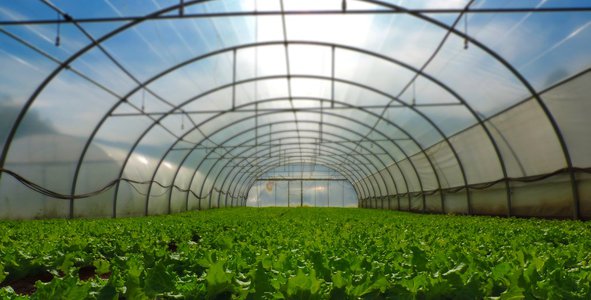
Astronauts have lived and worked continuously in space for more than 20 years, consuming mainly packaged food however on missions lasting up to 3 consecutive years, as well as on a round trip to the planet Mars, the nutrients from these foods tend to lose. effectiveness. For this reason, the creation of an automated greenhouse is proposed, which will allow satisfying the nutritional requirements of a crew, in addition to being able to adapt to the arid areas of our planet earth. This greenhouse also temporarily supplies food in situations of risk due to natural disasters or others, effectively taking advantage of the space entrusted to it by having an autonomous deployable structure.
Link to Project "Demo"
Link to Final Project
Detailed Project Description
WHAT DOES HUIÑAY HUAYNA?
It is an automated airtight greenhouse which harvests a wide variety of vegetables and requires no human interaction other than to plant and harvest the vegetable.
HOW DOES IT WORK?
Deployment system
ORIGAMI MODEL: https://drive.google.com/file/d/1F3k648UqX-MEF7iG2fJue8gI_41GlQYi/view?usp=sharing

Connection system

System operating process

Equipment required for operation
Required measurement sensors
Pressure sensors (Barometer) MODULE GY-63

Features:
- Module Model: GY-63-03
- Size: 19mm * 13mm
- Name: MS5611 module (atmospheric pressure module)
- Built-in 24bit AD converter chip
- High quality Immersion Gold PCB, machine welding process to ensure quality
- Use Chip: MS5611-01BA03
- Power supply :3-5v (internal low dropout regulator)
- Communication: Standard IIC / SPI communication protocol
Air humidity and temperature sensors MODULO DHT22

Features
- Low cost
- 3 to 5V power and I/O
- 2.5mA max current use during conversion (while requesting data)
- Good for 0-100% humidity readings with 2-5% accuracy
- Good for -40 to 80°C temperature readings ±0.5°C accuracy
- No more than 0.5 Hz sampling rate (once every 2 seconds)
- Body size 15.1mm x 25mm x 7.7mm
- 4 pins with 0.1" spacing
CO2 sensors MODULE MG811

Features:
- Carbon dioxide sensor module (with analog signal output, TTL level signals, temperature compensated output)
- One size: 32mm X22mm X30mm L * W * H
- Second, the main chip: LM393, carbon dioxide gas sensing probe
- Third, the working voltage: DC 6V
- CO2 detection device for the family, the environment. Suitable for detecting the concentration of carbon dioxide, carbon dioxide gas sensors tested concentration range: 0 to 10000ppm
Sensor de luminosidad MÓDULO TSL2561

Features
- I2C interfaces
- Power supply:3.3v ~ 5v
- a low supply current max of 0.6mA
- Selectable detection modes
- High resolution 16-Bit digital output at 400 kHz I2C Fast-Mode
- Wide dynamic range: 0.1 – 40,000 LUX
- Wide operating temperature range: -40°C to 85°C
- Programmable interrupt function with User-Defined Upper and lower threshold settings
These sensors were taken into account for the prototype, a future work would be composed of more dedicated sensors and built exclusively for this purpose or mission, among them is the new technology composed of a network of nanochemical sensors on a silicon chip. among its benefits of using this technology is:
- Low cost compared to other sensors of this caliber.
- The size is smaller.
- Tested, not affected by microgravity.
- Resistant to high temperatures.
- Resistant to cosmic radiation in space.
Low cost compared to other sensors of this caliber.
The size is smaller.
Tested, not affected by microgravity.
Resistant to high temperatures.
Resistant to cosmic radiation in space.
Light Emitting Diode (LED) 3 color SMD LED MODULE KY-009
Valve which releases CO2 from the tank into the greenhouse tank.
Humidifier valve which will insert moisture into the air when needed.
air particle suction unit, which will be used when there is excess pressure.
LCD screen, which will inform the crew of the crop status, measurement parameters, and established settings.
Microcontroller. In charge of performing the calculations and processing the data obtained by the sensors and controlling the actuators so that the plant is in optimal conditions.
Profits
- Keep astronauts healthy, since they will be able to consume fresh foods rich in nutrients and vitamins B1, C and K, thus preventing various diseases in the absence of them .
- Save space, this prototype features a self-contained deployable structure ideal for the limited space the ship has.
- Autonomy, it has an automated system to the point that it only requires human intervention to sow and harvest the vegetable.
- Easy to adapt, it can be adapted to any type of plant, only the parameters of its natural habitat in which it has optimal growth are required.
- adapts to other environments such as arid zones, emergency zones due to natural disasters
Space Agency Data
The tools provided for the challenge by the different agencies involved in NASA's Space Applications Challenge were helpful. For our proposal, we use the following resources obtained by NASA research centers:
- Veggie
- The Growth Chamber Advanced Plant Habitat
- Biological Research in Canisters
As tools to prepare and develop the idea we use:
- Miro (for the block diagram and mind map).
- Bizagi Modeler (for the process diagram).
- Photoshop and Paint (to edit the images).
- Flickr (imaging)
Hackathon Journey
You learned?
- We conducted a quasi-formal investigation.
- .Our understanding extended to how a greenhouse works and what parameters are necessary for a vegetable to grow in optimal conditions.
- Aprendimos a identificar con qué parámetros debemos tener en cuenta fuera del planeta tierra.
What inspired your team to choose this challenge?
In our town every certain period of time natural disasters occur which cannot be avoided and this prototype will cushion the lack of food that exists at that time.
What was your approach to developing this project?
We rely more on the well-being of the crew and the problem we had with food for long trips, the lack of vitamin C, K and B1. The lack of these vitamins in the human body can cause irreversible damage, both mental and physical and can even lead to death
How did your team resolve setbacks and challenges?
Working as a team, and as well as in a team, each member gave the best of himself so that this viable project can arrive, in a usable future for the benefit of humanity.
Is there someone you would like to thank and why?
We would like to thank the mentors and organizers who presented us with these challenges, which helps us to awaken that curiosity about the research that is hidden in each one of us, as well as our family members who indirectly supported us in each moment of these two days of NASA SPACE APPS CHALLENGE Cusco, Peru.
References
[1]. T.Guerrero (2014, April,30). A greenhouse to grow lettuce in space, El Mundo, Available at https://www.elmundo.es/ciencia/2014/04/30/535fcf9522601d16438b4575.html
[2]. John F. Kennedy Space C. Advanced Plant Habitat, National Aeronautics and Space Administration (NASA), Available at: https://www.nasa.gov/sites/default/files/atoms/files/advanced-plant-habitat.pdf
[3]. L.Ada,T.DiCola, K. Rembor. (2012, July, 29). DHT11, DHT22 and AM2302 Sensors, Adafruit, Available at https://learn.adafruit.com/dht/overview
[4]. J. Johnny, E. Michel, V. Maitland, T. Nelzy, Intelligent Software for Nanosatellites, Available at https://www.giss.nasa.gov/edu/nycri/research/files/2015/2015-MEC-Austin_presentation.pdf
[5]. M. Bogdan, (2016, December,29) How to Use the DHT22 Sensor for Measuring Temperature and Humidity with the Arduino Board, published by De Gruyter Open, Available at https://doi.org/10.1515/aucts-2016-0005
[6]. ams DATASHEET,(2018,april,23) ,TSL2561 Light-to-Digital Converter, Available at https://ams.com/documents/20143/36005/TSL2561_DS000110_3-00.pdf/18a41097-2035-4333-c70e-bfa544c0a98b
[7]. MG811 CO2 Sensor, Datasheet, available at http://image.dfrobot.com/image/data/SEN0159/CO2b%20MG811%20datasheet.pdf
[8]. Nanosensor Array for Medical Diagnoses, National Aeronautics and Space Administration (NASA), Available at: https://ntts-prod.s3.amazonaws.com/t2p/prod/t2media/tops/pdf/TOP2-169.pdf
[9]. B. Dickey M. Mathews, (2007, june, 18), NASA Nanotechnology Space Sensor Test Successful in Orbit, Available at: https://www.nasa.gov/home/hqnews/2007/jun/HQ_07140_Nanotech_Sensor_Test.html
Websites
[1]. https://www.ebay.es/itm/323454588426
Global Judging
This project has been submitted for consideration during the Judging process.