
High-Level Project Summary
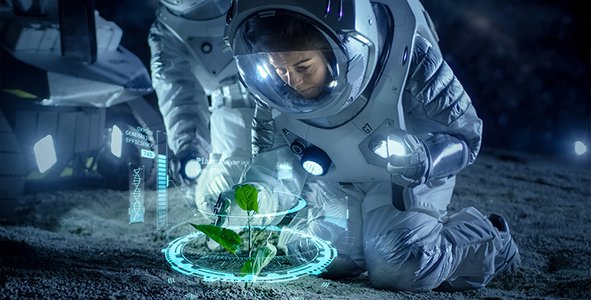
Our team has designed a Greenhouse which we believe could be a viable solution to be carried with us on the journey to Mars. It would consist of a foldable cylinder to conserve space on the space shuttle. The system will possess solar panels on certain parts of the Greenhouse for energy supply needed for the sustenance of the crops.The greenhouse we designed is in the shape of a cylinder (better to transport) . The cylinder will fold in on itself so it can be easily transported to mars. On arrival to Mars, the Greenhouse will open itself (unfold) through a hydraulic system.
Link to Project "Demo"
Link to Final Project
Detailed Project Description
Our challenge was to develop a complementary crop production system that would support a crew on a long-term exploration mission to Mars and back to Earth.
The criteria we had to consider is:
· Stowage Mass
· Soft wall construction
· Recycling transpired water back to crops
· Basic Thermal Control System
Our team has designed a Greenhouse which we believe could be a viable solution to be carried with us on the journey to Mars. It would consist of a foldable cylinder to conserve space on the space shuttle. The system will possess solar panels on certain parts of the Greenhouse for energy supply needed for the sustenance of the crops.
A Cylinder will be the most viable option as it occupies the least volume out of all the other solids (other than a sphere). This is going to fold in on itself to become easily transported to Mars.
On arrival to Mars, the Greenhouse will open itself (unfold) through a hydraulic system.
Seed boxes would contain a clay-based growth media, like the pillows on the “Veggie” for seed plantation. The system would have irrigation systems and fertilization chemicals in action.
These seed boxes will be clipped on to the systems walls which have specially designed hooks to easily attach them.
In addition, the Greenhouse would have a state-of-the-art program which enables it to function autonomously with not much human interference.
Once the seed box has been attached, the system will recognize it and begin the germination process.
Crops to plant:
Lettuce, Radishes, Peas, Cauliflower, Cabbage, Mustard and Brussels Sprouts, Lentils.
These have been selected to reduce the water usage by the plants and also provide essential food to make a salad!
Light Emitting Diodes (LEDs) can be used to increase the germination process. Moreover, solar panels will be present on certain parts of the exterior of the Greenhouse to utilize any incoming energy.
These will be present on the surfaces that do not fold to ensure proper functioning of the entire Greenhouse.
Furthermore, an air regulation system will be operated by the AI program to constantly move O2 and CO2 through the inlets and outlet pipes. A single pipe will be connected to the Greenhouse, which will act as the main connection.
The CO2 and O2 produced by the plants and astronauts will be used by each other to facilitate the germination process as well as provide the required survival needs. A temperature control system checks the radiation status and the overall surrounding of the Greenhouse.
We have designed our model using the software Rhino.
Space Agency Data
The data that we have come across has helped us to think critically on a specific design as well as understand how previous models have worked to provide a similar solution.
https://www.nasa.gov/content/growing-plants-in-space
https://www.nasa.gov/sites/default/files/atoms/files/veggie_fact_sheet_508.pdf
https://www.nasa.gov/sites/default/files/atoms/files/advanced-plant-habitat.pdf
Hackathon Journey
We came to know about this challenge only a few days till the deadline. However, we managed to carry out large amounts of research on the topic; we came up with many ideas but the solution we think is plausible is presented to you in the attached documents. When we came across this specific challenge, we knew that it would be interesting.
References
We have designed our model using the software Rhinoceros.
Below are the resources we have referred to come up with the solution.
https://www.nasa.gov/content/growing-plants-in-space
https://www.nasa.gov/sites/default/files/atoms/files/veggie_fact_sheet_508.pdf
https://www.nasa.gov/sites/default/files/atoms/files/advanced-plant-habitat.pdf
Tags
#mars #elonmusk #wateronmars #space #thefuture
Global Judging
This project has been submitted for consideration during the Judging process.