Awards & Nominations
Let it grow has received the following awards and nominations. Way to go!
Global Nominee

Let it grow has received the following awards and nominations. Way to go!
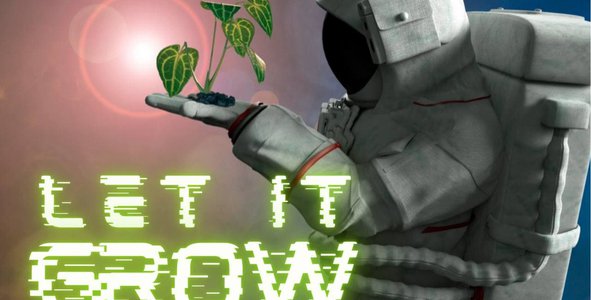
During long-term missions, it’s difficult for the human body to stay healthy without vitamins. The problem is that we can’t carry lots of supplies at the start, but we can grow vitamins along the way. So we created a Portable Vitamine Factory that will consist of individual containers, rockwool cubes inside the container; software that controls resources required to grow specific plants; a delivery system for mineral fertilizers, and minerals kits for each plant; a unique planting process that will allow having endless harvest during the flight. Let-it-grow Portable Vitamine Factory is easy to deploy in the vacant space as food supplies are consumed.
SYSTEM DESIGN
Hardware
Our hardware part consists of 2 main blocks.


Electronics
Cube electronics include soil moisture sensors. A factory electronics includes a sensor system to monitor an environment: humidity sensors, CO2 sensors, organic compounds sensors, temperature sensors. A separate part of the factory includes an RFID system to read a PlantID, a card with the unique information of the plant growth process and environment required. Additional elements will be an irrigation pump or valve, and a fan to support the environmental conditions.


Software
Our software will have the following features: scanning of a PlantId tag will provide the system an algorithm on what conditions will be required in the process of growth. During the process of growth, sensors will provide data with the current statuses of each monitor and will automatically expand the factory without interaction with astronauts. However, we will also include a notification system that will notify the crew about the progress and about any outsider’s process. In the future, it will be possible to include machine learning algorithms to make the system self-improved.
Growth Process
Cabbage example. In 50 days, we will get the first harvest ready to eat. Each day astronauts crop part of it and leave the endless harvest. Approximately two hundred grams of the cabbage will cover 100% of vitamin C required daily. Imagine, our system will have 1000 grams of it in one cabbage. An endless harvest process will allow having 12 parallel processes in one system due to the unique ergonomic design!

SYSTEM ADVANTAGES
The first advantage of the Let-it-grow Factory will be autonomy, it will require minimum interaction with astronauts due to algorithms and specific growth processes for each plant. Another advantage is that it is reusable, an individual container could be reused. And our favorite advantage is a PlantID which is an RFID tag with information about conditions required for the growth process.
INSTRUMENTS AND TOOLS
In the process of creating our project, we used a 3D printer, CAD software, hand-held power tools (angle grinder, screw gun, circular saw), ESP8266, and Platformio. We also used hand materials such as plastic, wood, etc.
ADDITIONAL SLIDES ABOUT LET-IT-GROW FACTORY
https://docs.google.com/presentation/d/1RRLnsep1ftunwfOHty7DSTOyAhARDvVbBjiwn2HDDuo/edit?usp=sharing
We chose this challenge as our members' varied expertise could have the most influence on this problem: embedded developers, design engineers, biologists, and particular hydroponic systems design. We also consider this problem as one of the critical problems for space travel, and that’s why we decided to dedicate our time to it. In addition to vitamin production, gardening will improve the psychological condition of astronauts.
Our team used different approaches to solve this problem. We started with brainstorming, research, analytics, and prototype description. Then we divided the roles and contributions of each member. During these two days, we managed to develop the MVP of the factory using 3D printing, open-source projects, and the construction expertise of our members.
It was challenging for us, as our members said this challenge includes three different projects. One of the topics that will require more deep analysis is the capability to reprocess nutrients from waste streams. Another topic to discover is using of different types of substrates such as mineral wool, clay, hydrogel, etc.
We are thankful for our mentors that contributed and validated our ideas. And thanks for the great work of the NASA Challenge local team!


#Grow #Vitamins #Factory #Happiness #hardware #food
This project has been submitted for consideration during the Judging process.
