NASA Growing Plants in Space | NASA
 Ajay Gangadharan
 Ajay Gangadharan
 Ajay Gangadharan
 Dhwani Rupali Vani
 Dhwani Rupali Vani
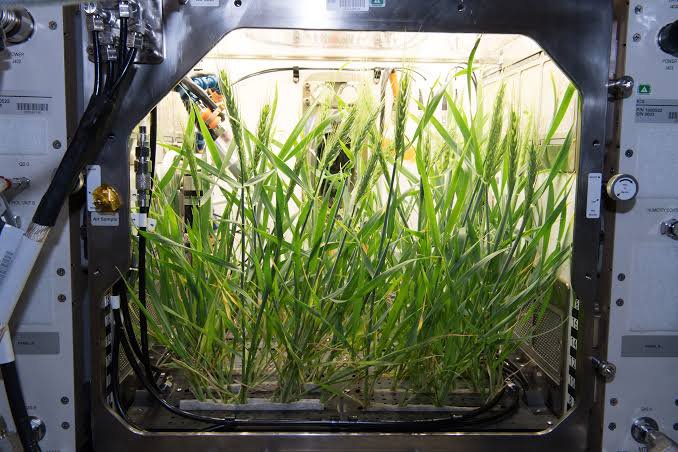
The plant habitat uses red, blue, and green LED lights and broad-spectrum white LED lights.
The system contains more than 180 sensors, relaying real-time information, including temperature, oxygen content, and moisture levels (in the air and soil, near the plant roots, and at the stem and leaf level), back to the team at Kennedy.
Structural Mounting Assembly • Air Filtration Assembly (provides filtered air to the system) • Plant Habitat Facility Kits (includes hoses, water bags, syringes) • Science Carrier (the tray that the plants will grow in) • Growth Chamber (enclosed volume that the plants will grow in) • Environmental Control System (ECS) (Growth Chamber temperature, humidity, and airflow control) • Fluid International Subrack Interface Standard Drawer (contains the carbon dioxide bottles, water reservoirs, and gaseous nitrogen regulation) • Orbital Replacement Unit Component Drawer (water distribution system, power system, and main computer, or PHARMER) • Growth Light Assembly (lighting system)
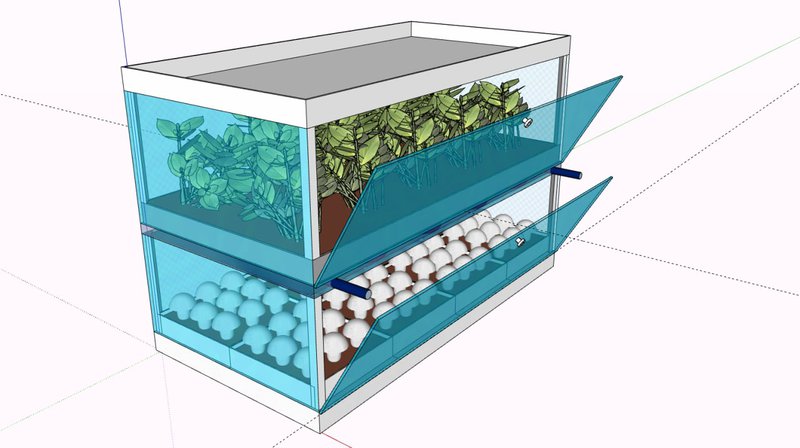
"Cut and Come Again” where the astronaut will only harvest the outer leaves allowing for an attempt at a longer growth of the plants
Dhwani Rupali Vani