
High-Level Project Summary
Nowadays, there is no fresh food in the astronauts' diet, causing astronauts to have micronutrient deficiencies, mainly vitamin A, D, K, C, B1, B6, calcium, and potassium. Therefore, we propose a diet based on microgreens, sprouts, and semi-perennial fruits that offer an opportunity to provide micronutrients for space missions. Further using vertical precision agriculture, it will farm organic seeds and especially Andes seeds because of its high-quality nutrientilies. Moreover, Andean seeds are naturally resistant to abiotic or biotic stress, also the system optimizes resources.
Link to Project "Demo"
Link to Final Project
Detailed Project Description
We want to provide high nutritional micro-vegetables optimizing resources (space, water, and electricity), and performance. Perennial fruit trees of the Rosaceae family will be adapted to this farming system. In addition, the vegetables to be grown have a high content of micronutrients that are essential for the proper functioning of the human body, and the production time is short compared to conventional vegetables.
Our system will allow us to fully monitor and automate aspects such as weather, lighting, irrigation, pH level, electrical conductivity (EC) level, and nutrient dosing while constantly checking substrate humidity and temperature using a programmable logic controller. The operator will be able to monitor and analyze the climatic variables and the status of the devices in real-time thanks. This screen will present the data to the operator and he could control all the processes. Besides, the lighting system is LED with variable light intensity to stimulate the photosynthesis process and the growth of micro-vegetables. The system will have an electrical panel to turn it off, which will be carried out when maintenance is required. The waste generated by the cultivation system, which will be mainly the roots, will be treated with a high-temperature thermal reactor which breaks down the waste into water, oxygen, and other gases that the crew can use or ventilate as needed, thereby reducing any biohazard that may arise.
We use LabVIEW software that implements graphic programming or G language to create programs based on block diagrams. LabView includes specific libraries for data acquisition, VXI and GPIB instrumentation control, serial communication, presentation analysis, and data saving.
Generating food onboard a space mission gives us a connection with our terrestrial environment. One advantage of our proposal is that we are using Andean seeds which have unique nutritional qualities and are resistant to abiotic and biotic stress. Besides, it can be a complement to any main diet. Due to the great variety of vegetables that we are proposing, it covers the nutritional needs that a human being must consume daily, it also helps to counteract the psychological effects that long-term space missions reveal.
On the other hand, although vegetables do not have a long time of conservation in the air, we have solved this problem by designing a production system that generates only the amount of vegetables necessary for the daily consumption of the astronauts during the entire mission. In addition, since these vegetables will be consumed immediately, it is not necessary to use chemical compounds, such as preservatives or preservatives, which can be harmful to the organisms.
Space Agency Data
NASA increasingly develops new smaller and more efficient solar panels that are used on the International Space Station as the new deployable solar panels which can be used for crops in space missions.
For the implementation of food production technology in areas of lack of electrical energy service, it is necessary to know the amount of solar radiation that falls on a terrestrial surface known as irradiance (W / m2). For this reason, we will implement a photovoltaic system that supplies electrical energy to the entire cultivation system in regions with good insulation (kWh / m2) and great thermal amplitude being environmentally friendly.
NASA's solar energy database will allow us to analyze the feasibility of implementing solar panels based on the energy demand of the cultivation system. This will allow us to carry out an irradiance study together with other meteorological parameters, such as ambient temperature and wind speed.
In addition, Space Apps provided us with scientific articles related to space agriculture that have been tested and validated on the International Space Station which was used as a guide for the development of an innovative proposal for a food system.
NASA POWER | Prediction Of Worldwide Energy Resources
https://www.nasa.gov/feature/new-solar-arrays-to-power-nasa-s-international-space-station-research
Hackathon Journey
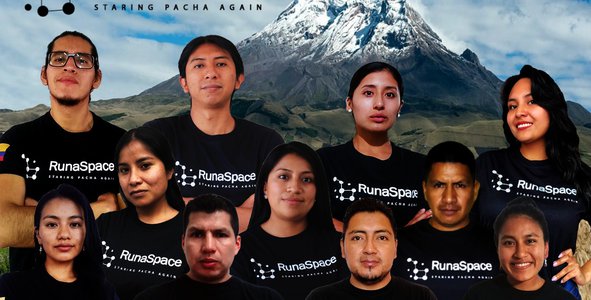
The experience in Space Apps has allowed our group to learn about the different problems of space exploration being one of the most important the development of a food system that allows human survival in space. The formation of a multidisciplinary team, such as RunSpace, facilitated the creation of a proposal that will not only be useful in long-term space missions but can also be replicated on Earth.
Because Ecuador does not have a scientific culture, participating in this type of event allows us to expand our knowledge and network of contacts in science. It will also allow us to demonstrate the potential of native indigenous team members who have historically been excluded and made invisible in all areas. With our participation, we seek to inspire native indigenous children and youth people of Ecuador to get involved in science, since science and technology have been the basis for the development of a society.
RunSpace aims to use the developed technology in communities in Ecuador where do not have easy access to basic services, especially electricity and drinking water. In this way, small producers will benefit and could increase their income. At the same time, they will provide fresh and nutritious food that will decrease child malnutrition.
To solve this challenge, RunaSpace works as a team by contributing ideas from each of the members depending on their area of expertise. This allowed us to learn from others through constructive and positive feedback. In the end, an adequate synergy was generated which will allow us to continue developing research and projects in the future. Thanks to the active participation of each of the members, the objective of obtaining a solid proposal were achieved.
Finally, we would like to thank the farmers of our communities who have inspired us to develop new agricultural techniques that combine our ancestral knowledge with science and technology.
References
[1] Rosenbaum J. BROTES o GERMINADOS EN LA ALIMENTACIÓN ¿Cómo hacerlos en casa?Inta.gob.ar [Online]. 2017 [cited 12 July 2021]. Available from: https://inta.gob.ar/sites/default/files/inta_-_germinados_-_prohuerta_2017.pdf
[2] Patel D. MICROGREENS: Micro-scale vegetable production & a new beginning towards nutrition and livelihood in urban-periurban and rural área. Researchgate [Online]. 2020 [cited 7 July 2021]. Available from: https://www.researchgate.net/profile/Chandrakala-Marigowda/publication/343391370_Mapping_of_the_soil_site_characteristics_to_know_the_potentials_and_problems_of_the_land_-A_case_study_in_Elamdesam_block_Kerala_India
[3] Goodman W, Minner J. Science, health and medical journals, full text articles and books. ScienceDirect [Online]. 2019 [cited el 16 de junio de 2021] Available from: https://www.sciencedirect.com/science/article/abs/pii/S0264837718308202
[4] Kyriacou, M., Rouphael, Y. and Di Gioia, F. Micro-scale vegetable production and the rise of microgreens. ScienceDirect [online]. 2016 [cited 9 July 2021]. Available from: https://www.sciencedirect.com/science/article/abs/pii/S0924224416302369
[5] Bulgari, R., Baldí, A., Ferrante, A. and Lenzi, A. Yield and quality of basil, Swiss chard, and rocket microgreens grown in a hydroponic system. Taylor & Francis [online].2016 [ Cited 20 June 2021]. Available from: https://www.tandfonline.com/doi/full/10.1080/01140671.2016.1259642
[6] Rajan P, Lada R, MacdDonald M. Advancement in Indoor Vertical Farming for Microgreen Production American Journal of Plant Sciences [online]. 2019 [Cited 5 July 2021]. Available from: https://www.scirp.org/journal/paperinformation.aspx?paperid=94632
[7] Taylor R, Crandang J, Alexander C, Calleja J. Making global cities sustainable: Urban rooftop hydroponics for diversified agriculture in emerging economies. OIDA International Journal of Sustainable Development [online]. 2012 [Cited 5 July 2021]. Available from: https://papers.ssrn.com/sol3/papers.cfm?abstract_id=2192203
[8] Kyriacou M, De Pascale S, Kyratzis A, Ruphael Y. Microgreens as a Component of Space Life Support Systems: A Cornucopia of Functional Food. Frontiers in Plant Science [online]. 2017 [Cited 5 July 2021]. Available from: https://www.ncbi.nlm.nih.gov/pmc/articles/PMC5600955/
[9] Weber C. Broccoli microgreens: A mineral-rich crop that can diversify food systems. Frontiers in nutrition [online]. 2017 [ Cited 20 June 2021]. Available from: https://www.frontiersin.org/articles/10.3389/fnut.2017.00007/full
[10] Tan L, Nuffer H, Feng J, Hang S, Chen H, Toong X, Kong L. Antioxidant properties and sensory evaluation of microgreens from commercial and local farms. Food Science and Human Wellness [online]. 2020 [Cited 5 July 2021]. Available from: https://www.sciencedirect.com/science/article/pii/S2213453019302198
[11]Johnson C. Microgreens for Human Nutrition in Spaceflight. U.S. Department of agriculture [online]. 2016 [Cited 5 July 2021]. Available from: https://www.melissafoundation.org/download/722
[12] Tamboli S, Rawale M, Thoraiet R. Implementation of Modbus RTU and Modbus TCP communication using Siemens S7-1200 PLC for batch process. IEEE Xplore [online]. 2015 [Cited 5 July 2021]. Available from: https://ieeexplore.ieee.org/abstract/document/7225424
[13]Johnson M, Giving Roots and Shoots Their Space: The Advanced Plant Habitat. Space Station Research and Technology [online]. 2018 [Cited 5 July 2021]. Available from: https://www.nasa.gov/mission_pages/station/research/Giving_Roots_and_Shoots_Their_Space_APH
[14] Morrow R, Richter R, Tellez G. A New Plant Habitat Facility for the ISS. Environmental Systems [online]. 2016 [Cited 1 July 2021]. Available from: https://ttu-ir.tdl.org/bitstream/handle/2346/67664/ICES_2016_320.pdf?sequence=1
[15] Renna M, Paradiso M. Ongoing Research on Microgreens: Nutritional Properties, Shelf-Life, Sustainable Production, Innovative Growing and Processing Approaches. Foods MDPI [online].2020[Cited 3 July 2021]. Available from: https://www.mdpi.com/books/pdfview/book/3354
[16] Zhang Y, Levine H. ISS Science for Everyone. National Aeronautics and Space Administration (NASA) [online].2018 [Cited 9 July 2021]. Available from: https://www.nasa.gov/mission_pages/station/research/experiments/explorer/Investigation.html?#id=7581
[17] Santos R. Produção de microgreens de beterraba em diferentes substratos [Producción de microverde de remolacha en diferentes sustratos] [online]. 2020 [Cited 9 July 2021]. Available from: http://repositorio.aee.edu.br/bitstream/aee/17326/1/15%202020%20TCC%20Ramon.pdf
[18] Recasens, Ll. Los fertilizantes de liberación controlada. HORTICULTURA [online].2008 [Cited 4 July 2021]. Available from: http://www2.horticom.com/revistasonline/extras/extra08/74_83.pdf
[19] Wheeler, R. HORTICULTURE FOR MARS. Acta Horticulturae [online]. 2004 [Cited 4 July 2021]. Available from: https://www.actahort.org/books/642/642_22.htm
[20] Andre M, Massimino D. Growth of plants at reduced pressures: Experiments in wheat technological advantages and constraints. Science Direct [online].1992 [Cited 4 July 2021]. Available from: https://www.sciencedirect.com/science/article/abs/pii/027311779290015P
[21] Aggarwal S, Kumar A. Smart Irrigation System to Automate Irrigation Process Using IOT and Artificial Neural Network [online]. 2019 [Cited 4 July 2021]. Available from: Sci-Hub | A Smart Irrigation System to Automate Irrigation Process Using IOT and Artificial Neural Network. 2019 2nd International Conference on Signal Processing and Communication (ICSPC) | 10.1109/ICSPC46172.2019.8976631
[22] Liu S. Artificial Intelligence (AI) in Agriculture. IT Professional [online].2020 [Cited 4 July 2021]. Available from:
[23] Di Gioia F, Santamaría P.. Microgreens: novel fresh and functional food to explore all the value of biodiversity. ECO-logica srl [online].2015 [Cited 4 July 2021]. Available from: https://www.researchgate.net/profile/Francesco-Di-Gioia/publication/283426636_Microgreens/links/563a249908ae337ef2983ab4/Microgreens.pdf#page=52
[24] Morrow R, Remiker R , Mischnick M, Tuominen L, Lee M, Crabb T. A Low Equivalent System Mass Plant Growth Unit for Space Exploration. SAE Technical Paper [online].2005 [Cited 3 July 2021]. Available from: https://sci-hub.se/https://doi.org/10.4271/2005-01-2843
[25] Monje O, Richards J, Carver J, Dimapilis D,, Levine H,, Dufour N, Onate B.Hardware Validation of the Advanced Plant Habitat on ISS: Canopy Photosynthesis in Reduced Gravity. Frontiers in plant science [online].2020 [Cited 3 July 2021]. Available from: https://doi.org/10.3389/fpls.2020.00673
[26] Massa G, Wheeler R, Morrow R, Levine H . Growth chambers on the International Space Station for large plants. Acta Hortic [online].2016 [Cited 3 July 2021]. Available from: https://sci-hub.se/10.17660/ActaHortic.2016.1134.29
[27] Zhou W, Corbin . Advanced Astroculture.Space Station Research Explorer on NASA.gov [online]. 2021 [Cited 3 June 2021]. Available from: https://www.nasa.gov/mission_pages/station/research/experiments/explorer/Investigation.html?#id=178
[28] Khodadad C, Hummerick M, Spencer L, Dixit A, Richards J, Romeyn M , Smith, T., Wheeler R, Massa G. Microbiological and Nutritional Analysis of Lettuce Crops Grown on the International Space Station. Frontiers in plant science [online]. 2020 [Cited 19 June 2021]. Available from: https://www.frontiersin.org/articles/10.3389/fpls.2020.00199/full
[29] Monje O,, Stutte G, Chapman D. Microgravity does not alter plant stand gas exchange of wheat at moderate light levels and saturating CO2 concentration. Plant [online]. 2005 [Cited 3 June 2021]. Available from: https://link.springer.com/article/10.1007%2Fs00425-005-1529-1
[30] Acock B, Acock M. Calculating Air Leakage Rates in Controlled-Environment Chambers Containing Plants. Agron. J. [online]. 1989 [Cited 3 June 2021]. Available from: https://doi.org/10.2134/agronj1989.00021962008100040014x
[31] Meggs L. Growing Plants and Vegetables in a Space Garden. NASA's Marshall Space Flight Center [online]. 2010 [Cited 14June 2021]. Available from: https://www.nasa.gov/mission_pages/station/research/10-074.html
[32] Sousa D. S-MARTE concept: Applications for BioHabitat Greenhouse. Researchgate [online]. 2021 [Cited 14June 2021]. Available from: https://www.researchgate.net/publication/352380001_S-MARTE_concept_Applications_for_BioHabitat_Greenhouse
[33] Morrow R, Remiker R, Mischnick M, Tuominen L, Lee M, Crabb T. A Low Equivalent System Mass Plant Growth Unit for Space Exploration. SAE Technical Paper Series [online]. 2005 [Cited 19 June 2021]. Available from: https://sci-hub.se/https://doi.org/10.4271/2005-01-2843
[34] Advanced Plant Habitat. National Aeronautics and Space Administration [online]. 2017 [Cited 19 June 2021]. Available from:https://www.nasa.gov/sites/default/files/atoms/files/advanced-plant-habitat.pdf
[35] Plant Biology Program. NASA Science Website [online]. 2021 [Cited 19 June 2021]. Available from: https://science.nasa.gov/biological-physical/programs/space-biology/plant-biology/hardware
[36] Monje O, Garland J, Stutte G.Factors Controlling Oxygen Delivery in ALS Hydroponic Systems. SAE Technical [online]. 2001 [Cited 19 June 2021]. Available from: https://doi.org/10.4271/2001-01-2425
[37] DiCicco M. Space-Age Water Conservation.NASA Technology Transferm Program [online]. 2021 [Cited 13 July 2021]. Available from: https://spinoff.nasa.gov/page/space-age-water-conservation-nasa
[38] Cuca B, Antonietti M, De Zorzi S, Geist T, Gil A, Fontan E, Manunta P, Pergola N, Zolotikova S, Tramutoli V. How can space make a difference for the agriculture sector. Working Group on Earth Observation/Copernicus. NEREUS - Network of European Regions Using Space Technologies [online]. 2016 [Cited 13 July 2021]. Available from: https://www.researchgate.net/publication/309558617?channel=doi&linkId=58172dc908ae90acb2424809&showFulltext=true
[39] Lloyd C, Pharm D, Reeves . Space Radiation. NASA Science [online].2018 [Cited 9 June 2021]. Available from: https://www.nasa.gov/sites/default/files/atoms/files/space_radiation_ebook.pdf
[40] Growing Plants in Space. NASA/Cory Huston [online].2016 [Cited 17 June 2021]. Available from: https://www.nasa.gov/content/growing-plants-in-space
[41] Wilson J, Cucinotta F, Miller J, Shinn J, Thibeault S, Singleterry R, Kim M. Materials for Shielding Astronauts from the Hazards of Space Radiations. MRS Proceedings [online].1998 [Cited 10 June 2021]. Available from: https://www.cambridge.org/core/journals/mrs-online-proceedings-library-archive/article/abs/materials-for-shielding-astronauts-from-the-hazards-of-space-radiations/482858351B4B7AA122155CB299E51E5B
[42] Aggarwal S, Kumar A. A Smart Irrigation System to Automate Irrigation Process Using IOT and Artificial Neural Network, 2nd International Conference on Signal Processing and Communication (ICSPC) [online].2019 [Cited 10 June 2021]. Available from: Sci-Hub | A Smart Irrigation System to Automate Irrigation Process Using IOT and Artificial Neural Network. 2019 2nd International Conference on Signal Processing and Communication (ICSPC) | 10.1109/ICSPC46172.2019.8976631
[43] Liu S. Artificial Intelligence (AI) in Agriculture. IEEE Xplorer [online]. 2020 [Cited 10 July 2021]. Available from: https://ieeexplore.ieee.org/abstract/document/9098011
[44] Purugganan M. Evolutionary insights into the nature of plant domestication. ScienceDirect [online]. 2019 [Cited 23 July 2021]. Available from: https://www.sciencedirect.com/science/article/pii/S0960982219306232
[45] Kyriacou MC, De Pascale S, Kyratzis A, Rouphael Y. Microgreens as a Component of Space Life Support Systems: A Cornucopia of Functional Food. Front Plant Sci. 2017 Sep 12;8:1587. doi: 10.3389/fpls.2017.01587. PMID: 28955372; PMCID: PMC5600955.
[46] Monje, O., Stutte, G. W., Goins, G. D., Porterfield, D. M., and Bingham, G. E. (2003). Farming in space: environmental and biophysical concerns. Adv. Space Res. 31, 151–167. doi: 10.1016/S0273-1177(02)00751-2
[47] Zabel P, Bamsey M, Schubert D, Tajmar M. Review and analysis of over 40 years of space plant growth systems.ScienceDirect [online]. 2016 [Cited 23 July 2021]. Available from: https://www.sciencedirect.com/science/article/abs/pii/S2214552415300092
[48] Lim, J ( 2011). Hedonic scaling : A review of methods and theory . Available from : 10.1016/j.foodqual.2011.05.008.
[49] Gruenes, J and Ming, D ( 2003) . Requirements for Planetary Outpost Life-Support Systems and the Possible Use of In Situ Resources. Available from : https://ntrs.nasa.gov/citations/19990026752
Tags
#microgreens #foodspace #astronauts #earth #spaceexploration #AndeanSeeds #seeds
Global Judging
This project has been submitted for consideration during the Judging process.