
High-Level Project Summary
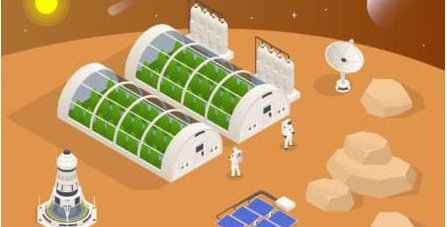
the specific problem divided into three problems, the first is that world will face a food shortage in general due to the problem of population explosion.the second is how to transport seeds to mars for planting.the third is the toxic mars soil.the solution is divided into three partsl.first is to eliminate food shortages by farming in space on the surface of mars to produce many crops that help meet the needs of population.second is adding titanium to aluminium cylinders to preserve the seeds.third is the elimination of soil toxicity by planting thick-stemmed Nile roses preserve the seeds. access to ideal soil suitable for cultivation of most agricultural crops and the elimination of soil
Link to Project "Demo"
Link to Final Project
Detailed Project Description
The transfer of seeds and seed cultivation in space is a very important challenge, as cultivation in space will be the best solution to the problem of the continuous increase in the population. The population has increased continuously since the end of the Black Death pandemic, approximately since 1350, and this increase doubled again in the fifties of the twentieth century. This is mainly due to medical advances and increased agricultural productivity. Although the population growth rate slowed in the 1980s, the total number continued to increase. The United Nations has expressed concerns about continued population growth in sub-Saharan Africa, and recent research has shown that these fears are indeed justified. As of November 21, 2017, the world's population was estimated at 7.583 million by the United States Census Bureau. The population is expected to reach between 8 and 10.5 billion between 2040 and 2050. Thus, the world will face a food shortage pandemic with the increase in population, and it will need an addition of agricultural land to meet the needs of the population
NASA planted salad crops in a soil that mimics the soil of Mars and produced salad crops, but with a quality lower than the quality of the normal soil and they were not sure of its toxicity due to the toxicity of the soil due to the presence of pyrochlorate salts in the soil.
Adding titanium to aluminum cylinders to withstand high temperatures in space and prevent rays from penetrating the cylinder and spoiling the seeds. Thus, we have been able to deliver the seeds properly to Mars. Perchlorate salts are absorbed from the soil, thus making the soil suitable for agriculture. We make a greenhouse to control the temperature on Mars, as the maximum temperature is 27 degrees and the minimum temperature is -137 degrees
Space Agency Data
I benefited from NASA video (have seeds will travel) that I could know many things about space soil . And I benefited from NASA research (growing plants in space that helped me too much in my research as I known too many things about which crops I can plant and growing crops on mars soil.
Hackathon Journey
I benefited from Hackathon journey too much that I knew so many new friends and I knew too much information which helped me to improve my project.
References
Certini, Giacomo; Ugolini, Fiorenzo C. (2013). "An updated, expanded, universal definition of soil". Geoderma. 192: 378–379. Bibcode:2013Geode.192..378C. doi:10.1016/j.geoderma.2012.07.008.
Karunatillake, Suniti; Keller, John M.; Squyres, Steven W.; Boynton, William V.; Brückner, Johannes; Janes, Daniel M.; Gasnault, Olivier; Newsom, Horton E. (2007). "Chemical compositions at Mars landing sites subject to Mars Odyssey Gamma Ray Spectrometer constraints". Journal of Geophysical Research. 112 (E8): E08S90. Bibcode:2007JGRE..112.8S90K. doi:10.1029/2006JE002859.
June 2013, Leonard David 13. "Toxic Mars: Astronauts Must Deal with Perchlorate on the Red Planet". Space.com (باللغة الإنجليزية). مؤرشف من الأصل في 20 نوفمبر 2020. اطلع عليه بتاريخ 28 أبريل 2021.
"Toxic Mars: Astronauts Must Deal with Perchlorate on the Red Planet". space.com. مؤرشف من الأصل في 20 مارس 2021. اطلع عليه بتاريخ 26 نوفمبر 2018.
"Mars covered in toxic chemicals that can wipe out living organisms, tests reveal". The Guardian. مؤرشف من الأصل في 18 فبراير 2021. اطلع عليه بتاريخ 26 نوفمبر 2018.
Hecht, Jeff (9 March 2007). "Martian dust may be hazardous to your health". New Scientist. 225 (Earth & Planetary Sciences Letters): 41. مؤرشف من الأصل في 14 أبريل 2021. اطلع عليه بتاريخ 30 نوفمبر 2018.
"Adaptive sampling for rover x-ray lithochemistry" (PDF). مؤرشف من الأصل (PDF) في 8 أغسطس 2014.
Webster, Guy (31 July 2014). "SHERLOC to Micro-Map Mars Minerals and Carbon Rings". ناسا. مؤرشف من الأصل
موقع لائحة النباتات (بالإنكليزية) The Plant List ورد النيل سميك الساق تاريخ الولوج 19 تشرين الأول 2014 نسخة محفوظة 28 مارس 2018 على موقع واي باك مشين.
عدل
Sample, Ian (31 August 2007). "Global food crisis looms as climate change and population growth strip fertile land". the Guardian. مؤرشف من الأصل في 29 أكتوبر 2019. اطلع عليه بتاريخ 02 فبراير 2020.
Ehrlich, Paul R. Ehrlich & Anne H. (1990). The population explosion. London: Hutchinson. صفحات 39–40. ISBN 978-0091745516. مؤرشف من الأصل في 24 فبراير 2020. اطلع عليه بتاريخ 20 يوليو 2014. When is an area overpopulated? When its population cannot be maintained without rapidly depleting nonrenewable resources [39] (or converting renewable resources into nonrenewable ones) and without decreasing the capacity of the environment to support the population. In short, if the long-term carrying capacity of an area is clearly being degraded by its current human occupants, that area is overpopulated.
Ehrlich, Paul R; Ehrlich, Anne H (2004), One with Nineveh: Politics, Consumption, and the Human Future, Island Press/Shearwater Books, صفحات 76–180, 256
Ehrlich, Paul R; Ehrlich, Anne H (1991), Healing the Planet: Strategies for Resolving the Environmental Crisis, Addison-Wesley Books, صفحات 6–8, 12, 75, 96, 241
"Coping with the Anthropocene". فيز. 17 March 2015. مؤرشف من الأصل في 11 مايو 2019. اطلع عليه بتاريخ 23 يناير 2017.
Vaughan, Adam (7 January 2016). "Human impact has pushed Earth into the Anthropocene, scientists say". الغارديان. مؤرشف من الأصل في 19 يناير 2020. اطلع عليه بتاريخ 23 يناير 2017.
Dimick, Dennis (21 September 2014). "As World's Population Booms, Will Its Resources Be Enough for Us?". ناشونال جيوغرافيك. مؤرشف من الأصل في 13 مايو 2019. اطلع عليه بتاريخ 23 يناير 2017.
Héctor Daniel Marín (2014-09-12). Compendio y análisis de los principales pronunciamientos del Tribunal Supremo en materia financiera. J.M Bosch. صفحات 151–194. ISBN 978-84-942640-3-0. مؤرشف من الأصل في 28 ديسمبر 2020.
Los criollos de base ibérica. Vervuert Verlagsgesellschaft. 2004-12-31. صفحات 227–236. ISBN 978-3-86527-855-5. مؤرشف من الأصل في 7 يناير 2021.
"World Population Clock: 7.7 Billion People (2019) - Worldometers". www.worldometers.info (باللغة الإنجليزية). مؤرشف من الأصل في 13 فبراير 2020. اطلع عليه بتاريخ 28 يونيو 2019.
Certini, Giacomo; Ugolini, Fiorenzo C. (2013). "An updated, expanded, universal definition of soil". Geoderma. 192: 378–379. Bibcode:2013Geode.192..378C. doi:10.1016/j.geoderma.2012.07.008.
Karunatillake, Suniti; Keller, John M.; Squyres, Steven W.; Boynton, William V.; Brückner, Johannes; Janes, Daniel M.; Gasnault, Olivier; Newsom, Horton E. (2007). "Chemical compositions at Mars landing sites subject to Mars Odyssey Gamma Ray Spectrometer constraints". Journal of Geophysical Research. 112 (E8): E08S90. Bibcode:2007JGRE..112.8S90K. doi:10.1029/2006JE002859.
June 2013, Leonard David 13. "Toxic Mars: Astronauts Must Deal with Perchlorate on the Red Planet". Space.com (باللغة الإنجليزية). مؤرشف من الأصل في 20 نوفمبر 2020. اطلع عليه بتاريخ 28 أبريل 2021.
"Toxic Mars: Astronauts Must Deal with Perchlorate on the Red Planet". space.com. مؤرشف من الأصل في 20 مارس 2021. اطلع عليه بتاريخ 26 نوفمبر 2018.
"Mars covered in toxic chemicals that can wipe out living organisms, tests reveal". The Guardian. مؤرشف من الأصل في 18 فبراير 2021. اطلع عليه بتاريخ 26 نوفمبر 2018.
Hecht, Jeff (9 March 2007). "Martian dust may be hazardous to your health". New Scientist. 225 (Earth & Planetary Sciences Letters): 41. مؤرشف من الأصل في 14 أبريل 2021. اطلع عليه بتاريخ 30 نوفمبر 2018.
"Adaptive sampling for rover x-ray lithochemistry" (PDF). مؤرشف من الأصل (PDF) في 8 أغسطس 2014.
Webster, Guy (31 July 2014). "SHERLOC to Micro-Map Mars Minerals and Carbon Rings". ناسا. مؤرشف من الأصل
https://nssdc.gsfc.nasa.gov/planetary/factsheet/marsfact.html
Tags
#nasa #Botany Portal #nasa space apps
Global Judging
This project has been submitted for consideration during the Judging process.