
High-Level Project Summary
The Oceans Cleaner is a machine designed to collect plastic on the surface of the oceans and seas. It is equipped with a large network that conveys in a grinder, which reduces the volume of plastic and increases the capacity of the machine. To prevent fish from being accidentally sucked the machine is equipped with strobe lights that keep the fish away. The Oceans Cleaner is powered electrically, by a system that uses the wave motion of the sea to generate electricity, this makes it so that it can work 24 hours a day.
Link to Project "Demo"
Link to Final Project
Detailed Project Description
The machine is equipped with 2 electric engines that push the Oceans Cleaner into the open sea where the sea currents will transport it to the high seas. Here, once the accumulations of plastic have been found, the machine starts to collect it with nets, conveys it into the grinder and reduces its volume. This machine is designed to work in fleets that, once full, can have a nearby base to unload.
Space Agency Data
The data we have used are few. We focused on a fact that made us on the team think: the waste of $264 billion. We have chosen this challenge precisely because it is not sensible to waste all this money and because it is not right to continue living in a dirty world.
Hackathon Journey
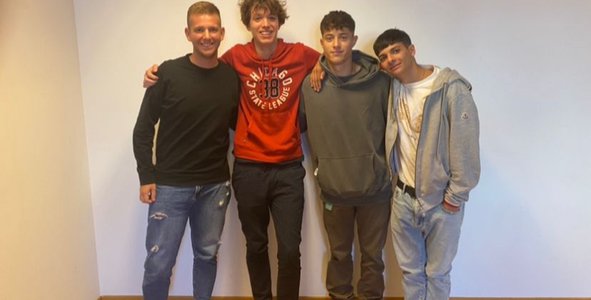
If we were to describe it with a word I would say that it was simply engaging, was a way to connect with teammates and teammates and learn each other based on the knowledge of others, a very pleasant way to learn without external distractions. The main things we learned concern the world of the seas, as we chose to develop an automated method to clean the oceans with an AI, we chose this challenge because every team member cares us particularly about nature and we all think it is a very serious problem nowadays, so we have joined forces to design together. It was not easy to think about how to feed it, the shape, the general functioning, how to design it so that it conforms to what was required but we never gave up and we always tried to compare ourselves, in this way we overcame every obstacle. Finally, the whole team wants to thank our math, electrical engineering and automation teacher Gilberto Daniel for the encouragement he has given us in getting involved and facing this challenge.
References
Here are the links from which we took the data for our project:
- https://marinedebris.noaa.gov/our-work
- https://www.epa.gov/trash-free-waters/toxicological-threats-plastic
- https://www.doi.gov/ocl/marine-debris
- https://www.epa.gov/sites/default/files/2020-10/documents/marinelitter_booklet_10.16.20_v10epa.pdf
Tags
#oceans #dirty #clean #planet #life