
High-Level Project Summary
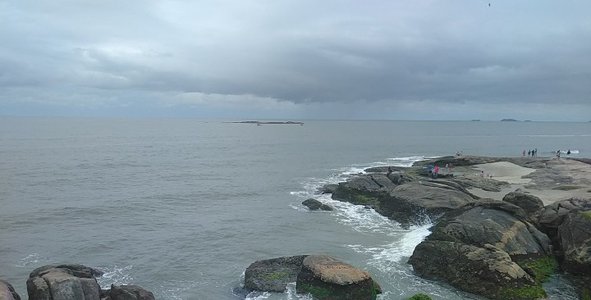
We developed a b2gov plan using an already existent robot, the BeBot designed by 4ocean and Poralu Marines, to help clean up the brazilian coast. The project was visioned to form a partnership between the brazilian goverment and the manufacturers of BeBot, combining the data from NASA’s Cyclone Global Navigation Satellite System with the busiest periods of the day in the beaches. This project intent is to prevent the marine debris to enter the oceans by cleaning the coasts, it starts in brazilian coastal areas and in the future it could reach the coastal areas around the world.
Link to Project "Demo"
Link to Final Project
Detailed Project Description
According to Juliana de Carvalho Dias (2016), a researcher for the Federal University of Rio de Janeiro, 50 years ago the global anual plastic production was of 15 million tons and in 2014 the production was 311 million tons and from those numbers 5 between 14 tons os plastic goes into the oceans every year (only in the coastal areas). In that period of time the anual production of plastic increase approximately in 1973,3%, as the population only 118%.
Our project visualizes the use of BeBot to help cleaning the coastal areas in a faster and more efficient way, the BeBot can clean up to 3 thousand m² in 1 hour and its performance is compared to 20 people labor work in the same period of time. BeBot uses 2 batteries of 12V each and they are filled by sollar energy, wich makes it enviromental friendly.
The b2gov plan is based on the use of BeBot to clean the brazilian coastal areas and later, the rest of the world. We contact the manufacturers of BeBot and we are waiting for their answer about a possible partership between the brazilian goverment and them, we hope that they answer positively and the contact with the brazilian goverment will also be done by us.
The phisical plastic isn't the only thing to worry bout, the chemicals and substances released into the marine enviroment are as lethal as the micro plastics, thus, our approach to avoid the waste to going into the oceans in the first place.


Space Agency Data
Our group used the NASA data bank provided in the "resoucers" folder of our challenge "Leveraging AI/ML for plastic marine debris", NASA’s Cyclone Global Navigation Satellite System, the informations provided by the manufacturers of BeBot and the article of Juliana de Carvalho Dias (2016), a researcher for the Federal University of Rio de Janeiro.
Hackathon Journey
In the beggining we were a little blue because our team is only formed by 2 members, but when we started to work with each other and the project took shape, everything fell into place and the experience became much more exciting. We are not gonna lie, it was 2 days of hard work, 2 nights without sleep (working or worrying) but in the end it paid off, because we know thatour project can help to save the oceans and that is our motivation: saving the oceans of the plastic, micro plastic and its chemicals.
References
https://www.4ocean.com/pages/4ocean-x-poralu-bebot
https://www.poralu.com/en/about-us/
https://earthdata.nasa.gov/learn/sensing-our-planet/unwelcome-enrichment-in-the-arctic
http://www.ppe.ufrj.br/images/juliana_dias.pdf
https://earthdata.nasa.gov/learn/discipline/ocean
https://www.epa.gov/trash-free-waters/toxicological-threats-plastic
https://earthdata.nasa.gov/learn/sensing-our-planet/unwelcome-enrichment-in-the-arctic
https://earthdata.nasa.gov/eosdis/daacs/nsidc
https://podaac.jpl.nasa.gov/CYGNSS
https://earthdata.nasa.gov/esds/csdap
https://coast.noaa.gov/states/fast-facts/marine-debris.html
https://sos.noaa.gov/catalog/datasets/marine-debris-garbage-patch-experiment-drifters-and-model/
https://www.doi.gov/ocl/marine-debris
https://www.doi.gov/ocl/marine-debris-impacts
https://www.epa.gov/sites/default/files/2020-10/documents/marinelitter_booklet_10.16.20_v10epa.pdf
Tags
#oceans #debris #marine #BeBot #plastic #waste #coast #coastal #areas #sand #areas
Global Judging
This project has been submitted for consideration during the Judging process.