
High-Level Project Summary
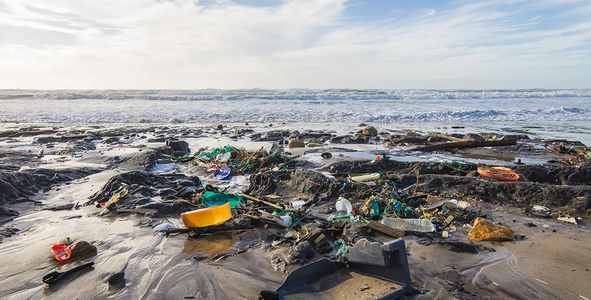
Have you ever dreamed of having a pink dolphin, whale shark, or manatee as inspiration near you? About 1,5 million marine species die each year from plastic waste in the sea. For this reason, our project “Future Vision” seeks to create an application that allows us to recognize areas with a high level of microplastics in the ocean using data provided by NASA satellites. The objective is to plan and carry out projects aimed at a society that is aware of a more ecologically sustainable future. In addition, for a better experience you can have the opportunity to talk with an animal with the help of artificial intelligence that tells you how it feels in the polluted sea.
Link to Project "Demo"
Link to Final Project
Detailed Project Description
Thanks to artificial intelligence (AI) and machine learning; volunteers, researchers, institutions and international organizations will be able to stay tuned and contribute in real-time to mitigate marine pollution. The project "Future Vision" is a platform to georeference your location where the contaminated place or an endangered marine species is and you could see and measure in real-time the quantified data of contamination by microplastics.
All this information collected by NASA satellites and by the global databases of various world researchers will be integrated here and help and contribute with this resource for the identification of contaminated spaces to save marine life, take care of the health of the world and reimagine our oceans.

Space Agency Data
Data was collected from NASA's Cyclone Global Navigation Satellite System (CYGNSS), a constellation of eight satellites that measures wind speed over oceans and provides information on the strength of hurricanes. CYGNSS also uses a radar to measure the roughness of the ocean, which is affected by factors including wind speed and floating debris on the water. After conducting an investigation, a group of scientists came to verify that places where the ocean was softer than expected given the speed of the wind, microplastics accumulated. Thanks to the research that was carried out obtaining the data from NASA, we were able to obtain results; in which oceans there were higher concentrations of microplastic, and a database from June 2017 to May 2018, represented in satellite images (https://www.youtube.com/watch?v=sQTGOU9LiJ0).
By obtaining this information, we through our application can provide specific information about your nearby place and a high resolution image about the emissions of microplastics, how they enter into the sea and where they come from.
Hackathon Journey
We are enjoying this experience! We learned not only as a team but also made new friends. We believe this opportunity helps many people who have great ideas to show and develop them while complementing their knowledge.
The team, in general, went through great difficulties and connectivity problems but patience and leadership helped us to face adversity. We acknowledge The Nasa Space Apps Challenges Program for giving us the opportunity to learn in a multidisciplinary team.
References
Bates, S. (2021, junio 25). Scientists Use NASA Data to Track Ocean Microplastics From Space [Text]. NASA. http://www.nasa.gov/feature/esnt2021/scientists-use-nasa-satellite-data-to-track-ocean-microplastics-from-space
Evans, M. C., & Ruf, C. S. (2021). Toward the Detection and Imaging of Ocean Microplastics With a Spaceborne Radar. IEEE Transactions on Geoscience and Remote Sensing, 1-9. https://doi.org/10.1109/TGRS.2021.3081691
Purca, S., & Henostroza, A. (2017). Presence of microplastics in four sandy beaches in Peru. Revista peruana de biología, 24(1), 101-106.
Sarria-Villa, R. A., & Gallo-Corredor, J. A. (2016). The great environmental problem of plastic waste: Microplastics. Journal of Science and Engineering, 8(1), 21-27.
Rojo-Nieto, E., & Montoto Martínez, T. (2017). Marine waste, plastics and microplastics: origins, impacts and consequences of a global threat.
Bollaín Pastor, C., & Vicente Agulló, D. (2020). Presence of microplastics in water and their potential impact on public health. Revista Española de Salud Pública, 93, e201908064.
De-la-Torre, G. E. (2019). Microplastics in the marine environment: a problem to be addressed. Revista Ciencia y Technología, 15(4), 27-37.
Iannacone, J., Huyhua, A., Alvariño, L., Valencia, F., Principe, F., Minaya, D., ... & Castañeda, L. (2019). Microplásticos en la zona de marea alta y supralitoral de una playa arenosa del litoral costero del Perú. The Biologist (Lima), 17(2).
Tags
#ocean, #pollution, #MarineLife, #PlasticPollution , #StandForOceans , #ClimateChange, #ClimateCrisis , #ProtectOurOceans
Global Judging
This project has been submitted for consideration during the Judging process.