
High-Level Project Summary
We developed an Artificial Intelligence (AI) based on the collected data of the polymers’ concentration in sea water and its location by a non-developed device. This equipment should collect water samples and calculate plastic concentration in the area and by a GPS acopled in it, should send information to a satellite about where the debris is. Then, our AI would calculate the percent of polymers in that location, place all this information in another database and it will set up an alarm for higher concentrations.This solves part of the challenge. Because if scientists obtain this information, they can direct their efforts in plastic water treatment to specific locations on the planet.
Link to Project "Demo"
Link to Final Project
Detailed Project Description
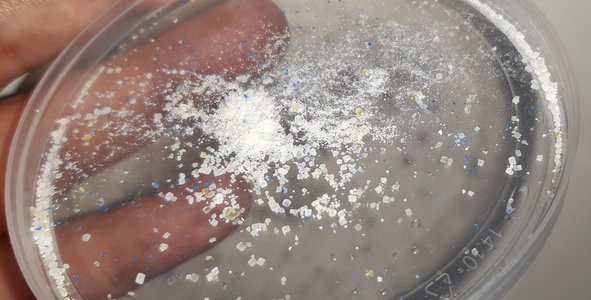
This project's main foundation is the concern with the huge amount of microplastics concentrated in the oceans(7), which tend to be present in animal and human food, mainly through sea salt (TOUSSAINT, B., p. 17-18).
Thus, the project aims to quantify the percent of these polymers in oceanic regions, using the study of data presented in the Marina Debris Tracker website(2), by the CYGNSS plastic tracking(3) and also by the database that we will create from the obtained data of the non-developed machine that we’re thinking about.
For the plausibility of this project, first we need to create a device which measures the percentage of impurities in various maritime regions. This device, when placed on the surface of the sea (we recommend to place it where the trackers show the greatest disposal of plastic and take a look at its waves(2,3,4) so the device would be more efficient), will collect water samples and through a system based on equipments like mass spectrometers (MS) and Fourier transform infrared (FTIR) spectrometers(1), will be able to recognize the polymers present in water, namely: nylon, polychloride vinyl, polyurethane, polystyrene, polypropylene, polyethylene and terephthalate(5).
If the device detects the presence of one or more of these components, it will calculate the percentage of microplastics and send the location (latitude and longitude) to a satellite. The satellite then will sent this values to a database, which is connected to a machine learning coded using python, which will use all the values of the database and create a linear regression equation based in this datas, in order to try to predict the amount/concentration of plastic in a determined spot in water. Also, it would set up an alarm for the higher polymers concentrations.
Our main purpose is to start a greater control of maritime pollution and then improve the quality of sea salt. Also, we hope that the countries who have the greatest waste generation take part of this by receiving the right environmental sanctions or that at least start to really look at the problems that they cause to the ocean and to the world consequently(6).
Space Agency Data
To carry out the project, the Marine Debris Tracker website(2) was used as our inspiration. We selected the following filters: all associations, category: plastics and period between dates of one year (10/02/2020 to 10/02/2021).
As we saw on the data provided by this website, they only show where the plastic is but not how much. Then, we believe that from the data that we will obtain by our not yet developed machine, we could use an artificial intelligence to create a database, which will provide the percentage of the polymers’ concentration present in marine water and its exact location.
Hackathon Journey
We had an amazing experience participating in Space Apps. It was challenging to set out to develop this project in this period of time, but we knew from the beginning that it would be a unique experience as we were able to discover new things and get to know the areas of technology, calculus and chemistry, in addition to learning from each other.
Our biggest motivation was mainly to be able to reduce the high incidence of plastics in the sea, capable of abruptly harming the ecosystem.
Therefore, in order to be able to develop the project, we met on call, asked the help of the ambassadors at the event chat and researched to find plausible solutions for our topic.
References
- Toussaint, B. et al. Review of micro- and nanoplastic contamination in the food chain. FOOD ADDITIVES & CONTAMINANTS: PART A, 2019, p. 17-18. Available in: <https://www.tandfonline.com/doi/full/10.1080/19440049.2019.1583381>. Accessed in: Oct. 2021
- MARINE DEBRIS TRACKER. Available in: <https://debristracker.org/data> Accessed in: Oct, 2021.
- BATES, S.. “Scientists Use NASA Satellite Data to Track Ocean Microplastics From Space”. NASA’s Earth Science News Team, 2021. Available in: <https://www.nasa.gov/feature/esnt2021/scientists-use-nasa-satellite-data-to-track-ocean-microplastics-from-space> Accessed in: Oct. 2021.
- EOSDIS OCEAN DATA. Available in: <https://earthdata.nasa.gov/learn/discipline/ocean>. Accessed in: Oct. 2021
- MATSUURA, S. Análise identifica a presença de microplástico em água engarrafada, O GLOBO - SAÚDE, 2018. Available in: <https://oglobo.globo.com/saude/analise-identifica-presenca-de-microplastico-em-agua-engarrafada-22492558>. Accessed in: Oct. 2021
- HEID, M. Your Bottled Water Probably Has Plastic In It. Should You Worry?. TIME, 2019.Available in: <https://time.com/5581326/plastic-particles-in-bottled-water/>. Accessed in: Oct. 2021
- SPACE APPS CHALLENGE. LEVERAGING AI/ML FOR PLASTIC MARINE DEBRIS Available in: <https://2021.spaceappschallenge.org/challenges/statements/leveraging-aiml-for-plastic-marine-debris/details> Accessed in: Oct, 2021.
Tags
#salt #plastic #water #polymers #concentration #python
Global Judging
This project has been submitted for consideration during the Judging process.