
High-Level Project Summary
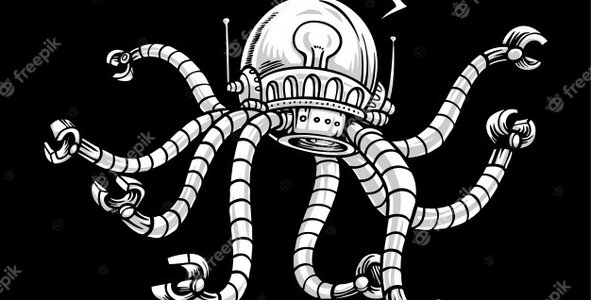
The marine environment struggles every day with the tough challenges it fights against against man-made pollutants like microplastics,polythene,plastics that risks marine speices.So we want to make a bio-kraken shaped AUV which will hunt marine debris,floats and dives into the sea and ocean to sense the different types and sizes of plastic and determine where they are; collect and also determine their measurements in a quantitative way and send them coordinates to satellites, and from satellites to our vehicles to know all the details in order.
Link to Project "Demo"
Link to Final Project
Detailed Project Description
Our project is about lessening sea pollution. We are proposing an AUV model to solve this problem. This model can float,dive into on the water and at the same time, ıt can collect the floating trash in a chamber. There is also a system for leaving the extra water out.
Using IR,cv,open CV,object detection,image processing and others it can objectify microplastic,plastics . Vacuum method can be used to to collect;filter trash from surface water,bottom of surface,seabed . It contains arms to pick trash from bottom surface.There can be used ballon method to lift up from bottom surface ( as it will cost less energy) . Using solar enegry surface movement will be done . This bot will be fully autonomous but still it can be controlled by human,can be tracked from satellite
The AUV uses PyTorch, Yolo5 detection model to detect the marine plastics. We have trained the model along with the existing Yolo5 weights to extend the accuracy of the plastics which includes Polythenes and Bottles. We have used datasets from various open source projects and various Marine Debris Sites. Please visit the project link to see the Image Processing performance of the System
https://www.youtube.com/watch?v=QyKCUCVi_dk
https://github.com/mxTuhin/KrakenFlask
Space Agency Data
https://www.nasa.gov/feature/esnt2021/scientists-use-nasa-satellite-data-to-track-ocean-microplastics-from-space
https://esc.gsfc.nasa.gov/news/Near-Space_Communications_Reimagined
Toxicological threats of plastic | EPA
MARINE DEBRIS FACTS I NOAA
Marine debris : Garbage patch Experiments | NOAA
Hackathon Journey
The hackathon trip was very interesting and informative, during which we were introduced to creative people from other nations who are passionate about space and everything related to computers,robotics,engineering. My team and I cooperated as if we had become one. We faced difficulties, but we overcame them, exchanged ideas, modified it and expressed our happiness with the opportunity to participate in this hackathon and to choose the challenge and the appropriate solutions for it.We learned and gained a lot of experience
References
https://www.nasa.gov/feature/esnt2021/scientists-use-nasa-satellite-data-to-track-ocean-microplastics-from-space
https://sos.noaa.gov/catalog/datasets/marine-debris-garbage-patch-experiment-drifters-and-model/
http://www.godac.jamstec.go.jp/
https://spectrum.ieee.org/robot-octopus-points-the-way-to-soft-robotics-with-eight-wiggly-arms
https://docs.google.com/document/d/1-_zIGY5akgDpIz466ciEQs8lgM95XmR0Vk3VaX5fjag/edit?usp=sharing
https://docs.google.com/document/d/17aneJvfmtxVybfBi8a_O1sI48gAN-Ck9LLgr001SoqE/edit
Tags
#water #pollution #AI/ML #leveraging-aiml-for-plastic-marine-debris #seapollution#auv#model#hardware
Global Judging
This project has been submitted for consideration during the Judging process.