
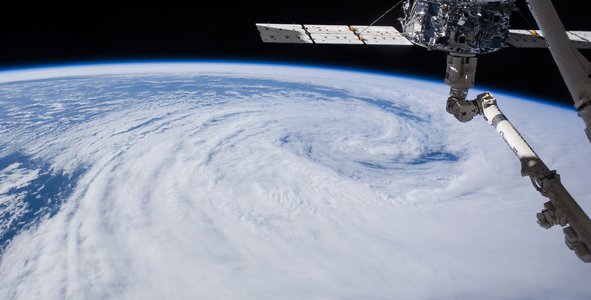
Information from Earth-observing satellites is used to make decisions that benefit society and the environment, but it can be challenging to document how this information leads to improved outcomes and to measure these improvements. Your challenge is to describe how Earth observations inform a specific decision that improves outcomes for society and propose a strategy for measuring these benefits.
Summary
Details
Background
Information from Earth-observing satellites is used to make decisions that benefit society and the environment. Examples of the tangible benefits realized from the application of satellite data include lives saved, acres of forest conserved, and increases in profits. However, it can be challenging to document how this remotely sensed information leads to such improved outcomes for society and to measure these improvements.
Objectives
Your challenge is to describe how Earth observations inform a specific decision that leads to improved outcomes for society—in terms of tangible benefits like lives saved or resources conserved—and propose a strategy for measuring these benefits. To complete this challenge, you can look at how decision-makers use existing satellite information from missions flying now or how decision-makers could use satellite data from planned future missions. Your strategy may quantify these improved outcomes or describe them qualitatively.
This challenge has three steps. First, find a documented example where an individual or an organization is using satellite data to make a decision. If you focus on information from a planned satellite mission, describe a credible scenario in which new data from that mission could be used to inform a decision. Second, describe what actions the decision-maker takes in response to the satellite data. For information from a planned satellite mission, describe what actions the decision-maker would take with these data once they are available. Third, determine how these actions influence tangible outcomes for society. In other words, how people or the environment benefit from the decision-maker's actions and how you would measure these benefits.
In each step, your goal is to find evidence (e.g., articles, reports, regulatory guidelines, interviews, etc.) that allows you to document how the satellite data is being used or could be used. Step 3 is critical and won't occur in every scenario where someone uses satellite data. So, you may have to investigate several documented examples to find one that allows you to complete this challenge successfully!
Potential Considerations
As you develop your project, you may (but are not required to) consider the following:
- If you are not sure where to start, browse the Space for U.S. website included in the resources section to learn more about how people are using satellite information.
- If your team or organization is using satellite information to inform a decision that leads to improved outcomes for society, you are welcome to design your challenge around this decision even if it is not documented.
- A useful approach for documenting the societal benefits of satellite information is to try to describe outcomes in two "worlds”: One in which the satellite information is available and used by decision-makers and another world in which the satellite information is not available and thus not used by decision-makers. The societal benefits of satellite information are represented by the difference in the outcomes tied to the decision-makers’ actions in the two worlds. For more background on this approach, browse the VALUABLES tutorials included in the resources section.
- Earth-observing missions that are currently under development will generate data that could be used in decisions that lead to improved outcomes for society. This challenge is not limited to data from satellites that are currently flying; feel free to describe how new datasets could improve a specific decision, how using them would lead to better outcomes for society, and how you would measure that improvement.
For data and resources related to this challenge, refer to the Resources tab at the top of the page. More resources may be added before the hackathon begins.
NASA does not endorse any non-U.S. Government entity and is not responsible for information contained on non-U.S. Government websites.