
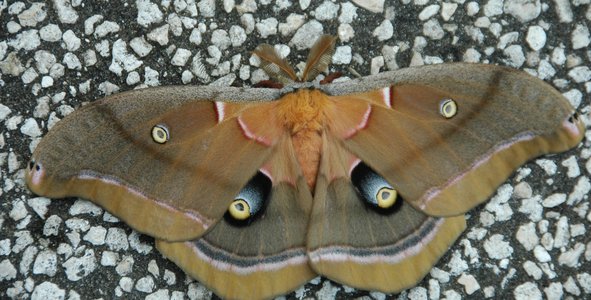
Our lives hinge on the wellbeing of insects; at the same time, insect biodiversity is disproportionately affected by human actions. Your challenge is to develop innovative ways to advance our ability to detect insect life, track and predict change over time, and communicate that information to scientists and society to combat the loss of insect biodiversity.
Summary
Details
Background
Over half of all classified species on Earth are insects, and our lives hinge on their wellbeing. Insects pollinate our crops, aerate our soil, control harmful pests, decompose human waste, and maintain numerous domesticated and wild species. In turn, insect biodiversity is disproportionately affected by human actions. Habitat loss, fragmentation, pollution, invasive species, and climate change have an oversized effect on insect taxa, with half a million species facing extinction.
NASA Earth observations have been used to investigate possible correlations between honeybee hive health and local environmental conditions—including precipitation, soil moisture, and habitat fragmentation—observed using satellites. Satellite data has also been used to track invasive insects. For instance, NASA spectral data can differentiate between the color of trees with insect infestations, thermal data can identify trees unable to take up water due to advanced insect infection, and lidar data can track the loss of subcanopy biomass of insect affected trees. Using NASA technologies and data, we can understand and potentially mitigate the harm being done to these insects on which we benefit and depend.
Objectives
Your challenge is to develop innovative ways to advance our ability to detect insect life, track and predict change over time, and communicate that information to scientists and society to combat the loss of insect biodiversity. Solutions could be as simple as visualizing patterns but could also take technology in directions new to NASA.
For example, your solution could be to:
- build maps of species distributions based on relationships to Earth observations,
- construct a map that tracks the migration of insects,
- predict changes in the abundance of specific species based on environmental changes, or
- monitor changes in the timing of insect life cycles.
Potential Considerations
When developing your solution, you may (but are not required to) consider the following:
- Be creative. Solutions could be as simple as visualizing biological diversity patterns (distributions, abundance, movement, physiology, behavior of one or more species), but may also include new and innovative technology or use of technology that might not be commonly used to assess the presence of insects.
- If you are unfamiliar with how the Example Resources data are used to detect biological diversity, the Species Distribution Modeling Data tutorial (see Example Resources) is a great place to start.
- A number of sources exist outside of NASA that are excellent repositories of relevant biological data. Feel free to research, explore, and use data from organizations that collect and publish biodiversity and other biological data.
For data and resources related to this challenge, refer to the Resources tab at the top of the page. More resources may be added before the hackathon begins.
NASA does not endorse any non-U.S. Government entity and is not responsible for information contained on non-U.S. Government websites.