
High-Level Project Summary
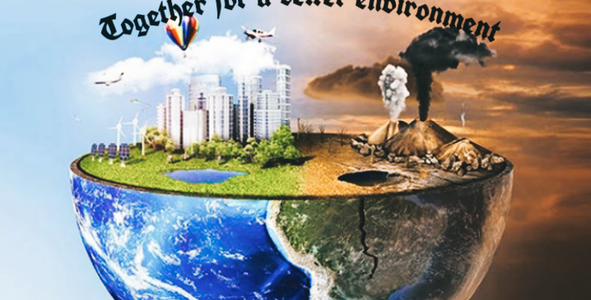
We deserve to live in a clean environment, it is not impossible.Dealing with the damage resulting from environmental problems that negatively affect our environment is not impossible, but it is difficult if we do not seek to solve it as one mind and one hand.It is easy in our union to solve these damages, the enemies of the environment, and this is the reason why we chose this challenge, as it is a space for change.Let's draw for us the future of the first lines of a clean environment.
Link to Project "Demo"
Link to Final Project
Detailed Project Description
Earth faces many environmental problems and cause damage to us, which threatens our lives, such as air pollution, water pollution, earthquakes, wreaths and food shortages and disaster and floods, such problems and disasters are difficult to solve in marginalized and poor remote places such as South Africa and Somalia and south Sudan, Yemen and Ethiopia
1- Extracting water from the air of the driest areas with less than 20% humidity, by using organic mineral structures * https://arsco.org/article-detail-399-8-0 2- Digging wells and springs 3- Providing rooms for generators and installing taps and troughs for animals in order to have access to water. 4- Development of traditional techniques for rainwater harvesting 5- Using the water harvesting system and constructing water tanks for use in the rainy seasons. It is recommended to build them in the form of circles or more durable and sustainable 6- Desalination of water 7- Wastewater treatment is more efficient than seawater desalination and seawater sanitation
1- Encouragement to live in the countryside
2- Disposal of industrial waste
3- Throwing dirt in the designated place
4- Waste recycling
5- Rely on paper bags
6- Afforestation of cities
7- Increasing green spaces
8- Enactment of legislation
1- Reducing the use of fireplace and wood stoves
2- Avoid burning leaves, litter and other materials (leaves compost and garden waste can be burned instead)
3- Treating plastic waste with a ban on the production and use of single-use plastic bags that can be replaced with less polluting tools.
4- Recycling of waste paper, glass and plastic.
5- Increasing green spaces
The Middle East and North Africa region can learn from emerging economies that have early adopted clean energy technologies and imposed plans for environmental policy reform, to reduce pollution without impeding economic growth.
A set of strategies to build resilience to extreme heat are laid out in our publication include:
Creating heat preparedness plans, identifying vulnerable populations, and opening cooling centers during extreme heat.
Installing cool and green roofs and cool pavement to reduce the urban heat island effect.
Planting trees to provide shade and evapotranspiration cools the air around trees.
Pursuing energy efficiency to reduce demand on the electricity grid, especially during heat waves.
One of Africa's biggest problems is water pollution according to the United Nations Convention on Climate Change in Southern Africa in 2000.
A large number of Africans are moving to the countryside due to the high demand for clean water
With the increasing demand, the supply of carbonated water remains limited
...
The water level in the Dirian dam has decreased by 20% of the water since 2010, and up to 30% of the water has been stolen or illegally distributed through international trade.
The Middle East and North Africa region can learn from emerging economies that have early adopted clean energy technologies and imposed environmental policy reform plans to reduce pollution without impeding economic growth.
Africa faces environmental issues, climate change, land and water change, deforestation, land degradation and pollution as a result of the South African region.
It is exposed to fewer carbon emissions, but is affected by the impact of climate change, which is characterized by high temperatures, and Africa has exhausted its many resources.
. The cutting down of trees and the production of the core of Africa's economy has led to the depletion and bad prospects of natural resources.
air pollution
It is considered the most prominent problem in Africa. Measures must be taken to prevent the negative impact of factories and various fumes.
-2. The population's dependence on agriculture mainly, the lack of interest in agricultural soil and the wrong farming practice
3... Migration from villages to cities, and its biggest problem is the deforestation, which is considered the greatest protector of the earth in terms of storing carbon dioxide emissions.
The world faces many natural hazards that cause multiple disasters that lead to huge losses in property and lives
Earthquakes are the most dangerous of these disasters because of the damage they produce, given the element of surprise they cause when they occur.
Earthquakes occur in some marginalized communities such as:
Nepal, Haiti and Indonesia
Earthquakes also occur in Morocco* https://ar.wikipedia.org/wiki/%D9%82%D8%A7%D8%A6%D9%85%D8%A9_%D8%A7%D9%84%D8%B2%D9%84%D8%A7%D8%B2%D9%84_%D9%81%D9%8A_%D8%A7%D9%84%D9%85%D8%BA%D8%B1%D8%A8
1_ The Lisbon earthquake remains the most powerful earthquake that struck northern Morocco in 1775 (Richter 9).
2- The 1969 earthquake, which left dozens dead and injured
3- The violent earthquake that shook the city of Al Hoceima on February 24, 2004 and caused the death and displacement of hundreds of residents
4- Agadir earthquake
We cannot prevent earthquakes, but we can reduce their severity
1- Psychological readiness
2- Avoid building on places that are prone to landslides
3- Designing houses and buildings to be earthquake resistant*
https://www.bigrentz.com/blog/earthquake-proof-buildings
1- Dominican Republic
One of the country's most vulnerable to hurricanes that can strike the country from June to November. Heavy rains often cause floods and landslides, especially in the more mountainous western parts of the country.
2- benin
The West African country of Benin is a hotspot for natural disasters. Countless devastating floods have occurred in the country over the past century. The floods in 2008 were among the worst to hit the country, displacing more than 150,000 people.
3- Niger
The 2008 floods in Benin may look bad, but they are nothing compared to Niger. Floods in Niger killed more than a million people, along with rising temperatures and erratic rainfall, which caused a massive famine.4- Haiti
Deforestation (as a result of poverty) in Haiti has led to landslides, as well as the risk of hurricanes, earthquakes, floods and landslides, most recently Hurricane Sandy Haiti in 2012.
5- Jamaica
Jamaica is one of the most diverse nations in natural hazards from hurricanes to droughts to fire storms and floods.
6- Gambia
The Gambia is one of the countries most prone to flooding, and one of the most vulnerable to climate change, particularly storms and rising ocean levels, which could be its most natural disaster.
7- Vietnam
One of the biggest places with monsoon rains, Vietnam is prone to flooding, especially in major cities like Hanoi, which have seen some neighborhoods sink up to 1.6 inches (4 cm) a year. Heavy rains also cause landslides in higher areas
Recent studies of how local investments in simple flood preparations can prevent up to 70% of property damage during a flood. But to realize these benefits on a global scale, we need better data, better modeling, and a deeper understanding of flood exposure.
That's why NASA's fleet of Earth-observing satellites helps scientists and policymakers better predict, prepare for, respond to, and recover from floods. NASA's flood preparedness and response capabilities include satellite observations, data systems, and modeling. Learn more about NASA tools and tools that are helping local communities in pre-flood, activism, and post-flood situations:
Global flood forecasting and warning
Global Modeling and Assimilation Office (GMAO)
Global Flood Monitoring System (GFMS)
real time land information system (LIS)
Global Flood Mapping and Damage Assessment
Near real time (NRT) flood mapping
ISs Portable Digital Camera
Advanced Center for Rapid Imaging and Analysis (ARIA) of Natural Hazards
Earth observation data
NASA Disaster Mapping
The NASA Disasters Mapping Portal is a powerful online interface for viewing, analyzing, and downloading the latest disaster products in near real time and in a Geographical Information Systems (GIS) format. The portal provides a variety of near-real-time and event-specific products for flood monitoring to support disaster response and recovery.
With this research and the information that our team reached, based on the studies conducted by researchers and scientists, according to the information available on the NASA page, we have clarified an idea about the problems facing the environment and the solutions needed to solve these problems, and this is what dictates our duty towards our environment.
The right behaviors start with maintaining cleanliness, our lives are precious, so we do not pollute it or endanger it.
Space Agency Data
https://www.c2es.org/content/heat-waves-and-climate-change/
https://svs.gsfc.nasa.gov/cgi-bin/details.cgi?aid=4029
https://www.nationalgeographic.com/climate-change/how-to-live-with-it/heat.html
http://appliedsciences.nasa.gov/what-we-do/disasters/floods
Hackathon Journey
Our team has benefited a lot and gained experience from Space Apps, where we learned how to collaborate together, search for information and problems and solve them, and we also developed our thinking and our knowledge by participating in this challenge.
The reason for choosing this challenge is that we found that we are in an urgent need to take care of the environment, reduce its pollution and address the problems resulting from the damage of environmental disasters that threaten our lives. These forms, we found that first of all we have to start with ourselves, unite, think as one mind, implement as one, work to find solutions to these problems and reduce the actions that increase them and if possible prevent them.
And finally, I would like to thank all the members of the research team who want to access information about the environment that the environment is facing and thank NASA for providing it
We also thank Miss Zikra for her efforts with us in the search for the required solutions
References
https://arsco.org/article-detail-399-8-0
https://ar.wikipedia.org/wiki/%D9%82%D8%A7%D8%A6%D9%85%D8%A9_%D8%A7%D9%84%D8%B2%D9%84%D8%A7%D8%B2%D9%84_%D9%81%D9%8A_%D8%A7%D9%84%D9%85%D8%BA%D8%B1%D8%A8
https://www.bigrentz.com/blog/earthquake-proof-buildings
Tags
#environment
Global Judging
This project has been submitted for consideration during the Judging process.