Awards & Nominations
Water Science Lab has received the following awards and nominations. Way to go!
Global Nominee

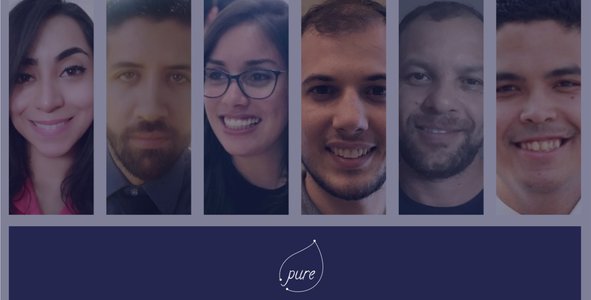
Water Science Lab has received the following awards and nominations. Way to go!
Every person needs a sustainable supply of clean water: for drinking, washing, cooking, and cleaning. It is a basic human right and there are still millions of people who do not have clean water.Pure uses Artificial Intelligence that analyzes the satellite images collected by Sentinel-2. After the analysis of water data, results will be made available on our easily accessible web app. Expanded functions such as the ability to trigger an alert via SMS, will also be available. The responsible authorities will also be immediately alerted to take action and provide further assistance to the local population.

Bringing Artificial Intelligence to monitor water quality and save lives.
To learn more about our project and check the water quality, please visit: https://pure-74236.web.app/home
You can also check our presentation on YouTube: https://www.youtube.com/watch?v=7esA616AtBg
Github repository: https://github.com/mtsvi-moraes/Water-Science-Lab
Over 1.8 billion people on Earth do not have access to adequate sanitation. Therefore, over 10 million people, with the majority being children, die every year due to the lack of safe drinking water. This is a major problem plaguing humanity, targeting the poorest populations, whose only source of drinking water are rivers that can become polluted unbeknownst to the people who rely on them.
Today, while scientific advancements are made daily, analyzing water quality is not a simple task. Researchers must travel to the region and collect individual samples. After which, the samples must then be transported to a qualified laboratory where testing can be performed. Each of these crucial steps increase the time and monetary value spent on the expedition making it more difficult to receive funding and consequently alert the population. Taking all of this into account, we developed Pure, a solution that aims to facilitate this process and improve access to safer water sources in all regions and in real time, for all humanity.
Pure uses Artificial Intelligence that analyzes the spectrum of light within a water sample collected by an IoT (a small equipment installed in rivers and lakes). After the analysis, results will be made available on an easily accessible website. Expanded functions such as the ability to trigger an alert via SMS, will also be available. When a water quality alert is sent, it will allow the population to be able to check the quality of the community source and view whether it has been contaminated, or if it’s safe to consume. Instructions regarding a separate source of drinking water will be provided if the community source tests confirm contamination thus, avoiding infant mortality, the human immunodeficiency virus, which is often found in contaminated water and several other serious health and nutrition problems. The responsible authorities will also be immediately alerted to take action and provide further assistance to the local population.
According to a recent report made by the United Nations Children’s Emergency Fund (UNICEF) and the World Health Organization (WHO), one in three people worldwide does not have access to safe water. In many countries, taps, wells and pipes which are the only option for drinking water are contaminated unbeknownst by the population, putting the health of the ones who drink it at risk and making many sick.
Every person needs a sustainable supply of clean water: for drinking, washing, cooking and cleaning. It is a basic human right and there are still millions of people who do not have clean water.
To date, governments, institutions and service providers around the world have not done enough to ensure that clean water reaches the poorest and most marginalized people.
Although COVID-19 highlights the importance of hand hygiene in preventing the spread of disease, billions of people around the world, including hundreds of millions of school-age children, do not have access to soapy washbasins. People living in rural areas, urban slums, disaster prone areas and low-income countries are the most vulnerable and the most affected. In addition, children who do not have clean water have not only their health affected, but also their nutrition, education and learning skills, impacting many aspects of their lives.
Given this, we have the sad realization that millions of people suffer annually, without water, sanitation and hygiene services.
Once the Desk Research step is completed, we realize that the starting point is to create a solution that aims to facilitate the process of water analysis and make the quality in your region available to all humanity in real time, so that everyone can access the site whenever you want, alerts will also be issued when the water that supplies your region is contaminated, as well as instructions for another form of drinking water consumption, and allowing safe information to be shared.
In addition, the system will issue an alert for responsible authorities to take appropriate action.

It is a method used to measure how much a chemical substance absorbs light by measuring the intensity of when a beam of light passes through a sample, making it possible to measure the quantity of a known chemical substance

We developed a spectrophotometry prototype in Arduino capable of analyzing water samples, which when in the future installed in rivers, streams, wells, springs and treatment plants will collect the water data and process them through cloud.

The Tietê river, born in Salesópolis, in the Serra do Mar, crosses the state of São Paulo, bathing 62 municipalities. The river is at the top of the ranking of the most polluted rivers in Brazil, as it receives domestic and industrial sewage in the stretch of the capital where less than half of this sewage is treated. The analyzed sample was collected in the western region of the city, after the river had crossed the entire state capital on the border with the municipality of Osasco.

Taken from the point where the water runs calmly with a strong sewage odor using a plastic container and transferred to the test body applying the method of analysis according to the variation of the light beam through the substance without decanting of organic material.

For this project, two samples were collected for analysis, one from safe water and the other from the most polluted river in Brazil, the Tietê river, located in the capital of São Paulo. Thus, we carried out a comparison between different samples and proved the efficiency of the chosen method, proving that the project is functionally applicable:

We used a cognitive system applied in Watson Studio together with Watson ML to test different algorithms and compare the efficiency of the models, streamlining the analysis process between the collected samples, and in the future analyzing any changes or anomalies that will be immediately noticed in the rivers.:

The SpecWater website is available for desktops and mobile devices. It is possible to search the water quality by filtering the country or province where the user is located, as well as view the map where the IoT device was installed and the water sample was collected, and through a check mark, view the quality of the water and in the future receive instructions on how to treat it for consumption, until the responsible authorities take further actions.

https://sentinel.esa.int/web/sentinel/technical-guides/sentinel-2-msi/msi-instrument
https://landsat.gsfc.nasa.gov/article/unesco-launches-pioneering-tool-monitor-water-quality
https://earthdata.nasa.gov/learn/pathfinders/water-quality-data-pathfinder
https://earthdata.nasa.gov/learn/pathfinders/water-quality-data-pathfinder
https://sentinel.esa.int/web/sentinel/sentinel-data-access
https://appliedsciences.nasa.gov/join-mission/training/english/arset-integrating-remote-sensing-water-quality-monitoring-program
It was a pleasure to be part of a big challenge to help the world. It wasn't an easy way, we had to find data that would supply our needs such as good rivers images, a way to get information about water other than the one we have today, and time for doing all kinds of things and keep going with our lives. We picked that challenge because we live in a place that has problems with clean water. We believe we can improve people's lives with our idea.
#water #clearwater #noinjustice #humanrights #saveWorld #ia #sentinel-2
This project has been submitted for consideration during the Judging process.