
High-Level Project Summary
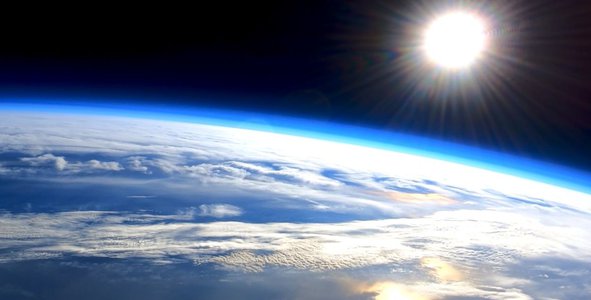
The NV4C group developed an application using python to create a game that explores and teaches players about the major planets of the Milky Way Galaxy.
Link to Project "Demo"
Link to Final Project
Detailed Project Description
Our program tests the knowledge of players about the Milky Way Galaxy. First you go through an introduction about the rules and how the game will run. First you would roll some dice so the program can randomly generate a question for the player to answer. If their answer is correct they earn some points and progress in the game. If they get their answer in-correct then they will have to stay in their place. Benefits that this game would have is educating players on information about planets and moons in the Milky Way Galaxy. This can encourage players to develop an initial interest in space exploration with facts given in the different questions.
Benefits that this game would have is educating players on information about planets and moons in the Milky Way Galaxy. We hope this game can encourage players to develop an initial interest in space exploration with facts given in the different questions. We hope that this game will also guide players to start learning more about space in their own free time through gamification and possible start taking courses at school in relation to space exploration. We used python as the coding language to develop the app and and application such as visual studio code and repl.it to share with other members in our team.
In our Python program, we used lists, while-loops, for-loops, index, if-else statements, and imported random module to complete the project. We used lists to ask questions on our solar system. We then used while-loops to repeat the option menu for the user to pick what they would like to do when it is their turn. We then used index to determine who the winner was at the end of the game. We also used if-else statements throughout the program to provide the instructions on what the program should do based on the user's choices and input. Lastly, we imported the random module to randomly choose the vast questions in the program so that the user is asked a different question every time.
We used :
- Python language
- Software: github, replit, Visual Studio Code
Space Agency Data
We used almost all of the information form NASA. As we are doing the project we also learned new information about our solar system.
- “Phobos.” NASA, NASA, 26 June 2020, https://solarsystem.nasa.gov/moons/mars-moons/phobos/in-depth/.
- “In Depth.” NASA, NASA, 8 July 2021, https://solarsystem.nasa.gov/planets/mars/in-depth/.
- “Planets.” NASA, NASA, 14 July 2021, https://solarsystem.nasa.gov/planets/overview/.
- Jupiter.” NASA, NASA, 3 Aug. 2021, https://solarsystem.nasa.gov/planets/jupiter/overview/.
- “In Depth.” NASA, NASA, 4 Aug. 2021, https://solarsystem.nasa.gov/planets/neptune/in-depth/. “Uranus.” NASA, NASA, 4 Aug. 2021, https://solarsystem.nasa.gov/planets/uranus/overview/.
- “In Depth.” NASA, NASA, 9 Aug. 2021, https://solarsystem.nasa.gov/solar-system/sun/in-depth/.
- “Earth.” NASA, NASA, 9 Aug. 2021, https://solarsystem.nasa.gov/planets/earth/overview/.
- “Earth's Moon.” NASA, NASA, 9 Aug. 2021, https://solarsystem.nasa.gov/moons/earths-moon/overview/.
- “Venus.” NASA, NASA, 9 Aug. 2021, https://solarsystem.nasa.gov/planets/venus/overview/.
- “In Depth.” NASA, NASA, 18 Aug. 2021, https://solarsystem.nasa.gov/planets/saturn/in-depth/. “Mercury.” NASA, NASA, 23 Sept. 2021, https://solarsystem.nasa.gov/planets/mercury/overview/.
Hackathon Journey
Throughout the Hackathon journey, we worked online through discord to communicate on what we wanted to do and how we wanted to complete the project. We learned that communication is key throughout the project and the dedication of not only people's interest but also people's time is crucial. We chose the Space Quest Prompt because we wanted to work on something that was fun. Our approach was to create a simple yet complicated program for users to enjoy. We resolved setbacks and challenges by rewriting the code more efficiently by using lists, while-loops, for-loops, index, if-else statements, and imported random module. I would like to thank the mentors and judges for the guidance throughout the project.
References
- Google, Google, https://www.google.com/search.
- “Phobos.” NASA, NASA, 26 June 2020, https://solarsystem.nasa.gov/moons/mars-moons/phobos/in-depth/.
- “In Depth.” NASA, NASA, 8 July 2021, https://solarsystem.nasa.gov/planets/mars/in-depth/.
- “Planets.” NASA, NASA, 14 July 2021, https://solarsystem.nasa.gov/planets/overview/.
- Jupiter.” NASA, NASA, 3 Aug. 2021, https://solarsystem.nasa.gov/planets/jupiter/overview/.
- “In Depth.” NASA, NASA, 4 Aug. 2021, https://solarsystem.nasa.gov/planets/neptune/in-depth/. “Uranus.” NASA, NASA, 4 Aug. 2021, https://solarsystem.nasa.gov/planets/uranus/overview/.
- “In Depth.” NASA, NASA, 9 Aug. 2021, https://solarsystem.nasa.gov/solar-system/sun/in-depth/.
- “Earth.” NASA, NASA, 9 Aug. 2021, https://solarsystem.nasa.gov/planets/earth/overview/.
- “Earth's Moon.” NASA, NASA, 9 Aug. 2021, https://solarsystem.nasa.gov/moons/earths-moon/overview/.
- “Venus.” NASA, NASA, 9 Aug. 2021, https://solarsystem.nasa.gov/planets/venus/overview/.
- “In Depth.” NASA, NASA, 18 Aug. 2021, https://solarsystem.nasa.gov/planets/saturn/in-depth/. “Mercury.” NASA, NASA, 23 Sept. 2021, https://solarsystem.nasa.gov/planets/mercury/overview/.
Tags
#Python #Code # space eploration #MilkyWay #Solarsystem # Planets # Space
Global Judging
This project has been submitted for consideration during the Judging process.