
High-Level Project Summary
Our project has space exploration as its content, which is a very broad field to be studied as it goes beyond the study of the solar system. Therefore, this project is important because it will help teachers/mediators to transmit this knowledge of space exploration in a playful way through a board game for children, so as the game develops, children will learn about the solar system, curiosities space, among others, making her obtain knowledge in a playful way.
Link to Project "Demo"
Link to Final Project
Detailed Project Description
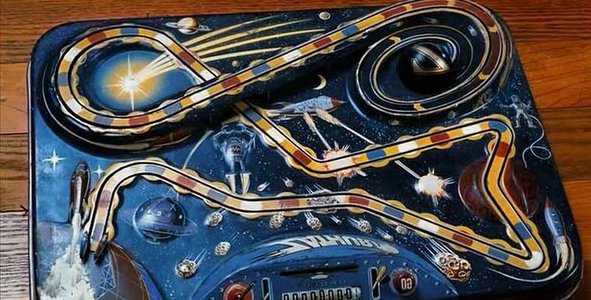
The proposed project consists of a board game that aims to help children from 7 to 10 years old to develop knowledge about space exploration. In this game the children, through a teacher/mediator, will embark on an adventure traveling across space. Initially, she joins the crew, which doesn't have a maximum limit, inside a rocket, the same used by Neil Armstrong, the Saturn V., and then the path is formed according to the children's curiosity. That way, every time they go to play the game they can take a different route. During the game, for children to travel to another station they must answer some questions correctly, thus earning 3 stars for each correct answer about the space they are in. In some moments, there will be challenges where whoever performs them first and correctly wins the score for the time, wild cards will also be available that will be blank and whoever is mediating the game will have the power to create any question, curiosity or challenge. After traveling through space, the crew returns to the base that is on Earth, and a winner may emerge from the stars they conquered. Whoever has the most stars wins the game, winning a medal.
With this game we have as a general objective to help children with a deeper knowledge about space exploration, and the specific objectives as helping the development of logical thinking; assist in the development of thinking and cognition skills; explore the solar system and its particularities; evaluate the development of autonomy, internalization of rules, socialization and construction of knowledge about the subject.
It is noteworthy that the game does not have an exact duration, it will vary according to how the students perform in front of the game. The trajectory of the game itself begins on Earth, after the beginning there is no fixed path to follow, through the children's curiosity, all the spaces on the board will be explored, after knowing everything that they comprise, it ends up returning to Earth. During the game, communication will be made through the mediator (who will read the cards and transmit knowledge of the game) and the participants (who will be the players who will participate in the game).
For a better understanding of the game we provide a manual, below:
GAME MANUAL:
What is the purpose of the game?
The objective of the game is to answer as many questions correctly as possible to get the most stars.
players
The game does not have a maximum player limit;
The recommended age range for players is 7-10 years;
Starting to Play...
The game starts with the members inside the rocket on planet Earth;
Players start the game without any stars, they must be earned during the game;
From this, the students decide where to go and so on, until completing the entire board;
moving the rocket
The rocket moves according to the children's history and consensus;
Playing
The game starts with a spaceship, which can withstand a round trip through the entire space system. During this route some questions must be answered about the theme and places explored, these questions if answered correctly or incorrectly add or subtract "stars" to the player, thus deciding the winner in the end. These questions are cards that have an image, a title and a question, which must be answered in an orderly way by the players, the order being decided by the game's narrator. During the course there will also be some challenges that players will encounter, indicated by the cards that are made available to the game's narrator, at that time whoever performs the challenge first correctly gets the score for the time.
End of the game
The game is over as soon as players go through all the spaces on the board;
Game rules
One player responds at a time, the order can be decided by the game's narrator;
Each correct answer, the player receives 3 stars;
Each incorrect answer, the player loses 1 star;
At the end of the game, the player with the most stars receives a medal (if the players decide to play again, the comparison can be made with the medals);
Each round will be asked two questions;
It is possible to donate 1 star from each player to skip a question (if no player knows the answer, for this to happen there must be a consensus), remembering that this will only be possible 1 time per location;
At each challenge, whoever finishes first correctly scores;
Winner:
Whoever finishes the board with the most stars wins the game, winning the medal.
Letter to the Storyteller...
Hello Storyteller, thank you for receiving this power. Your goal now is to accompany and induce players through this trajectory of challenges and experiences never experienced by anyone. If you are a teacher, parent or guardian, we have a manual and some tips to better guide you on how to use our game. We recommend that before using this game with students, the content about the solar system is introduced beforehand.


Space Agency Data
We used space gravity data and the structure needed for a rocket to last an extraordinary amount of time in flight and without damage.
What materials would be used during the construction of a rocket.
A rocket like the Ariane is made in 98% aluminum alloys, even material used in space shuttles. It is not the lightest in availability in this industry, carbon fiber is lighter and more resistant.
Hackathon Journey
My doing this hackton was inexplicable, it was an experience never seen before, ten from the point of having to do something for NASA, even spending the night developing something as a team, browsing experience through data never seen with restricted access by NASA. It was surreal, I just have to thank God first, then my parents for having given me opportunities to be here doing higher education, thank Marcello Bomfim for the work I have done.
References
https://2021.spaceappschallenge.org/locations/
Tags
#education #quizz #space #spaceexploration #astronauts #crew #solarsystem #teachingandlearning
Global Judging
This project has been submitted for consideration during the Judging process.