
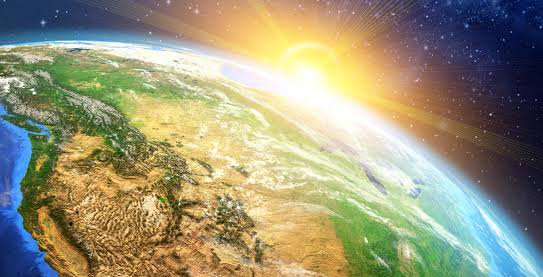
High-Level Project Summary
There are several examples of human actions causing serious environmental damage. One of these is the ozone layer's depletion. The predicted increase in the amount of UV radiation received at the earth's surface, as well as the impact this would have on human health and the environment, is one of the main causes of public worry about ozone layer depletion. The odds of restoring ozone are still slim. However, fluctuating ozone depleting gas abundances in the atmosphere and changing temperature will all affect ozone's future behavior. By examining and analyzing various researches, I'd want to talk about ozone's origins, causes, mechanisms, biological impacts, and recovery in this challenge.
Link to Project "Demo"
Link to Final Project
Detailed Project Description
Oxygen is a kind of supercharged which is very essential for every living thing. A pollutant gas substance or air germ damages the oxygen layer when I was studying about Ozone. It makes a layer in the atmosphere which acts as a cover to the earth against ultraviolet radiation of the sun. Ozone has the potential to absorb around 97-99% of the harmful ultraviolet radiations coming from the sun that can damage life on earth. If the ozone layer was absent, millions of people would develop skin diseases and may have weakened immune systems.
However, scientists have discovered a hole in the ozone layer over the Antarctica. This has focused their concern on various environmental issues and steps to control them. The main reasons for the ozone hole are chlorofluorocarbons, carbon tetrachloride, methyl bromide and hydro chlorofluorocarbons.
Ozone layer depletion is the thinning of the ozone layer present in the upper atmosphere. Some compounds release chlorine and bromine on exposure to high ultraviolet light, which then contributes to the ozone layer depletion. Such compounds are known as Ozone Depleting Substances (ODS).
The ozone-depleting substances that contain chlorine include chlorofluorocarbon, carbon tetrachloride, hydro chlorofluorocarbons, and methyl chloroform. Whereas, the ozone-depleting substances that contain bromine are Halons, methyl bromide, and hydro bromofluorocarbons.
Chlorofluorocarbons are the most abundant ozone-depleting substance. It is only when the chlorine atom reacts with some other molecule; it does not react with ozone.
Montreal Protocol was proposed in 1987 to stop the use, production and import of ozone-depleting substances and minimize their concentration in the atmosphere to protect the ozone layer of the earth.
Causes of Ozone Layer Depletion
The ozone layer depletion is a major concern and is associated with a number of factors. The main causes responsible for the depletion of the ozone layer are listed below:
- Chlorofluorocarbons
Chlorofluorocarbons or CFCs are the main cause of ozone layer depletion. These are released by solvents, spray aerosols, refrigerators, air-conditioners, etc.
The molecules of chlorofluorocarbons in the stratosphere are broken down by the ultraviolet radiations and release chlorine atoms. These atoms react with ozone and destroy it.
- Unregulated Rocket Launches
Researchers say that the unregulated launching of rockets result in much more depletion of ozone layer than the CFCs does. If not controlled, this might result in a huge loss of the ozone layer by the year 2050.
- Nitrogenous Compounds
The nitrogenous compounds such as NO2, NO, N2O are highly responsible for the depletion of the ozone layer.
- Natural Causes
The ozone layer has been found to be depleted by certain natural processes such as Sun-spots and stratospheric winds. But it does not cause more than 1-2% of the ozone layer depletion.
The volcanic eruptions are also responsible for the depletion of the ozone layer.
Following is the list of some main ozone-depleting substances and the sources from where they are released:
Ozone-Depleting Substances--Sources
Chlorofluorocarbons (CFCs)--Refrigerators, air-conditioners, solvents, dry-cleaning agents, etc.
Halons--Fire-extinguishers
Carbon tetrachloride--Fire extinguishers, solvents
Methyl chloroform--Adhesives, aerosols
Hydro fluorocarbons--fire extinguishers, air-conditioners, solvents
Effects of Ozone Layer Depletion
The depletion of the ozone layer has harmful effects on the environment. Let us see the major effects of ozone layer depletion on man and environment.
- Effects on Human Health
The humans will be directly exposed to the harmful ultraviolet radiations of the sun due to the depletion of the ozone layer. This might result in serious health issues among humans, such as skin diseases, cancer, sunburns, cataract, quick ageing and weak immune system.
- Effects on Animals
Direct exposure to ultraviolet radiations leads to skin and eye cancer in animals.
- Effects on the Environment
Strong ultraviolet rays may lead to minimal growth, flowering and photosynthesis in plants. The forests also have to bear the harmful effects of the ultraviolet rays.
- Effects on Marine Life
Plankton are greatly affected by the exposure to harmful ultraviolet rays. These are higher in the aquatic food chain. If the plankton are destroyed, the organisms present in the food chain are also affected.
Solution
The depletion of the ozone layer is a serious issue and various programs have been launched by the government of various countries to prevent it. However, steps should be taken at the individual level as well to prevent the depletion of the ozone layer.
Following are some points that would help in preventing this problem at a global level:
- Avoid Using Ozone Depleting Substances
Reduce the use of ozone depleting substances. E.g. avoid the use of CFCs in refrigerators and air conditioners, replacing the halon based fire extinguishers, etc.
- Minimize the Use of Vehicles
The vehicles emit a large amount of green house gases that lead to global warming as well as ozone depletion. Therefore, the use of vehicles should be minimized as much as possible.
- Use Eco-friendly Cleaning Products
Most of the cleaning products have chlorine and bromine releasing chemicals that find a way into the atmosphere and affect the ozone layer. These should be substituted with natural products to protect the environment.
- Use of Nitrous Oxide should be Prohibited
The government should take actions and prohibit the use of harmful nitrous oxide that is adversely affecting the ozone layer. People should be made aware of the harmful effects of nitrous oxide and the products emitting the gas so that its use is minimized at the individual level as well.
- Grow more Trees
Plants help to maintain the proportion of Co2 gas in our environment. The leaves and tiny twings of the canopy catch larger particulate as well as much like a giant air filter. When its rain these particles are washed down to the ground.
Space Agency Data
While studying researches about the planet I found some case study about the status of ozone layer.
By Sofie Bates,
NASA's Earth Science News Team
Protecting the ozone layer also protects Earth’s vegetation and may help prevent the planet from warming an additional 0.85 degrees Celsius (1.53 degrees Fahrenheit), according to new research from Lancaster University, NASA, and others. This new study in Nature demonstrates that by protecting the ozone layer, which blocks harmful ultraviolet (UV) radiation, the Montreal Protocol regulating ozone-depleting substances also protects plants – and their ability to pull carbon from the atmosphere. The impact from plants has not been accounted for in previous climate change research.
“We know the ozone layer is connected to climate. We know greenhouse gases affect the ozone layer. But what we’ve never done before this is connect the ozone layer to the terrestrial carbon cycle,” said lead author Paul Young, an atmospheric and climate scientist at Lancaster University in the United Kingdom.
The ozone layer in the upper atmosphere, or stratosphere, blocks UV radiation that can damage living tissue, including plants. The ozone “hole,” discovered in 1985, is the result of humans emitting chlorofluorocarbons (CFCs), which are ozone-depleting chemicals and greenhouse gases that were once commonly used as coolants in refrigerators and in aerosols like hairspray. They were then phased out of use by the Montreal Protocol signed in 1987 and its subsequent amendments.
Scientists have previously simulated the world that we avoided by banning CFCs. Now, the new study returns to the same question – what would happen if CFCs continued to be emitted? – and looked at the effect on plants.
“Past world-avoided experiments have never considered the impacts of increased UV radiation on plants, and what that would mean for the plants’ ability to sequester carbon,” said Young.
Nearly 200 countries came together to sign the Montreal Protocol in 1987, which limited CFC emissions. The production of CFCs was eventually phased out, and the ozone layer is recovering as a result. Credit: NASA's Goddard Space Flight Center/Katy Mersmann
The team used a series of models to gain a more complete picture and simulate two hypothetical scenarios: the world projected and the world avoided. “The world projected is similar to the path we’re currently on,” said Luke Oman, a research physical scientist focusing on atmospheric chemistry and dynamics at NASA’s Goddard Space Flight Center in Greenbelt, Maryland. “The world avoided represents a path not taken.”
For the world-avoided scenario, the researchers assumed that CFC emissions would increase at the same rate, 3% every year, from the 1970s onward. The models show that there would be a huge thinning of the ozone layer across the globe by 2050. By 2100, ozone holes forming in the tropics would be worse than what has been observed in the Antarctic ozone hole.
In their models of the world-avoided, a depleted ozone layer would let more harmful ultraviolet (UV) radiation reach the surface, inhibiting plants from storing carbon in their tissue and in the soil. As a result, atmospheric CO2 levels are estimated to be 30% higher than they would likely be under Earth’s current trajectory. Consequently, Earth would likely be an additional 0.85 °C (1.53 °F) hotter in that “world-avoided” scenario solely because of the impact on plants.
This global thinning of the ozone layer would allow significantly more harmful UV radiation from the sun to reach the surface, which would effectively sunburn the plants on Earth, said Young. Earth’s trees and vegetation would be much less efficient at photosynthesis, hindering their ability to absorb carbon out of the atmosphere and sequester it, storing carbon in plant tissue and the soil for many years. Overall, the damage to plants would result in 580 billion metric tons less carbon stored in forests, soil and vegetation. It would instead be released into the atmosphere, increasing atmospheric CO2 levels by 30% on average compared to the world projected scenario.
That huge increase in atmospheric CO2 alone would cause global temperatures to rise 0.85°C (1.53 °F) by 2100, according to the models. That’s on top of the warming Earth may experience due to prior and expected emissions of CO2 and other greenhouse gases, as well as the 1.7°C (3.06 °F) of direct warming due to increased CFC emissions in this scenario.
But how do we know this “world-avoided” scenario is anything like the world that would come to be without the Montreal Protocol? The team checked their models against historical data collected by NASA satellites and other available data from NASA’s partners. For example, they looked at ozone levels recorded by the Ozone Monitoring Instrument (OMI) aboard NASA’s Aura satellite and compared them to what the models ‘predicted’ would have happened. What happened in the model was very close to what actually happened in the past, giving the scientists confidence that their model could accurately project what may happen in the future.
One such family of chemical compounds is chlorofluorocarbons (CFCs), whose contribution to depleting ozone in Earth’s upper atmosphere has led to large springtime decreases in ozone around Earth’s Polar Regions, especially over Antarctica, a phenomenon known as the ozone hole that was first reported in 1985. But, as NASA atmospheric scientist Nathaniel Livesey explains, today, thanks to the phase-out of CFCs, Earth’s ozone hole is in recovery. He says the turnaround provides a great example of what humans can do when they work together to solve a global atmospheric problem.
Co2 Link :
Greenhouse gases are vital to life on Earth, but the growing concentration of certain gases, such as carbon dioxide, is throwing the planet's delicate balance out of whack. NASA is on the case, studying carbon dioxide on a global scale and its effects on our weather and climate.
When assessing the world’s tropical forests, size isn’t the only thing that matters. NASA’s high-resolution satellite data now allow scientists to measure forest quality by tree height, forest canopy thickness, and disturbances from logging, fires, and more.
Beyond being some of the world’s most species-rich environments, tropical forests also play a crucial role in fighting climate change by absorbing carbon dioxide from the atmosphere. That has led conservation groups and governments to create maps showing both extent and quality of forests. According to research using NASA satellite data, despite roughly half of all tropical forests qualifying as “high quality,” only 6.5% of them currently have formal protections against logging, hunting, and other human threats. The United Nations Development Program is using these maps in their decision-making.
At the 2021 U.N. Biodiversity Conference, currently scheduled for October, 196 countries will set global biodiversity priorities for the next 30 years. With access to more detailed information on forest health than ever before, researchers have an opportunity to work with government leaders to set realistic targets and establish closer monitoring over the coming decade.
Let’s see the alarming step
Link: https://youtu.be/dLGbqjp78lE
Before the Industrial Revolution, Earth’s climate changed due to natural events such as volcanic activity and solar energy variations. These natural events still contribute to climate change today, but their impact is very small compared to the growing levels of greenhouse gases added to the atmosphere by humans burning fossil fuels. NASA’s ongoing Earth science missions, research and computer models help us better understand the long-term global changes occurring today through both natural and man made causes.
It has been notice that in this pandemic world has stop their activities and mark petite changes in ozone layer which showcase that we need to continue little more efforts to save our future health as well as planet.
Hackathon Journey
Before three years, I had spoken with my cousins about a health issue they were having throughout the summer, and I heard that it was caused by ultraviolet rays, and we had very little time to engage. During the Covid-19 pandemic situation, people became more digitally connected, and through digital learning, I was able to speak with my cousins who live in various countries, and through our conversations, I learned about additional skin problems and other human ailments. In addition, I learned that diseases disproportionately affect children and the elderly. As a result, I examined and researched the issue. Furthermore, while researching and reading materials about ozone layer depletion and the Ozone Hole from NASA data and resources, so human can make the solution for the climate change. According to the findings, the ozone layer is damaged due to gas imbalances and dangerous pollution chemical material. People need to realize about the earth power to get solution for the problem.As a result, I chose this topic as a challenge to work on in order to keep my country and planet safe.
Emblems of earthwish‘may all sentient beings be at peace, may no one suffer from illness, may all see what is auspicious about our planet’, we all need to step up together to Save our Earth.
References
Tags
#Climate change #Health Problem #Ozone layer #Solution #Get in the Zone #To Save Ozone #Safe Earth Zone
Global Judging
This project has been submitted for consideration during the Judging process.