Awards & Nominations
Big NAS X has received the following awards and nominations. Way to go!
Global Nominee

Big NAS X has received the following awards and nominations. Way to go!
Have you ever dreamed of becoming an astronaut and visiting Mars?MARS MAX will help you make your dreams come true.The game includes level challenges explaining the work of the basic space principles necessary for human survival outside the Orbit.Tasks provided to the player allow you to navigate the spaceship, maintain the health of the avatar, restore the character's muscular system, and carry out scientific activities.Our application in a structured way presents the user with the system of astronauts' work, what problems they may face. Our mission is to inspire the younger generation to explore space and Mars. Thus, to bring the time of flight to Mars closer.
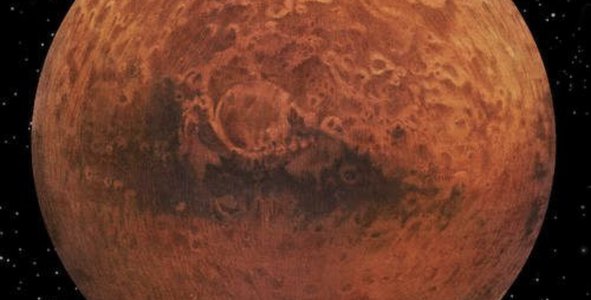
Mars is the most suitable location for living in the solar system after Earth. However, trips to Mars are still presenting big challenges to humankind. Astronauts can face these problems on a journey to Mars:
We decided to address these challenges that people in the future will face and added different kinds of mini-games in Mars Max.

Big NAS X team members: Ibrahim Amzebek, Malika Buribayeva, Margulan Mupteke, Ayana Kashkunova
Demo video: //youtu.be/yS37aTQ6_vY
Complete gameplay: https://youtu.be/fRys7qSD6PE
The MARS MAX application gives everyone the opportunity to:
You, as the commander of the spaceship, control the mission and you have several tasks to save your team. The game develops multitasking and trains your dexterity and logic. Plunging into the atmosphere of interplanetary travel, you will face serious problems and mission requirements to solve the problems that have arisen and cope with the routine of a scientist.

Our target audience:
Schoolchildren and young space enthusiasts between the ages of 10 and 16 from all over the world can easily understand the concept of the game and discover new boundaries of consciousness. The user audience has the opportunity not only to go through the culminating part of the journey and determine their agility and survival skills, but also to receive information about how space conditions affect the body and how real scientists work with data.
Character / Avatar:
We have chosen the most comfortable / realistic graphics for the user and the classic equipment for the character.
The suit is subject to all space suit norms and represents the formal and futuristic atmosphere of the game.

Let's move on to what our hero will face.
Assignment 1:
Time to train! Work out and provide your muscles with a daily load. Soon we will have informational notifications about the importance of sports in space and muscle reactions to unstable physical activity in the artificial gravity system.
You are given an exercise with a barbell, perform an action for the character to start training.
This task serves as an example to the user and explains the importance of physical activity, the system of work of the human body and the impact on it in critical conditions.

Assignment 2:
 The saturation of plants with oxygen, water and all the necessary substances also refers to the maintenance of life. The user should know that the path to the red planet is about a year long. Maintaining your own flora on a ship is a responsible task and increases the chances of survival.
Your goal is not to forget about the aspect of maintaining someone else's life and ensuring the correct cycle for the plants in the biolaboratory. Water, fertilize and care for life on your ship! They are your only companions within a radius of several thousand kilometers.
Assignment 3:
 Thanks to training, you got to Mars and now on the way back you have to take apart the photographs taken by the rovers. Get the data and collect the whole picture by restoring the image format so that everyone can make out the beauties of our galaxy.
This assignment covers the logical chain of all the temporal logic of the application and applies the scientific value of travel. This quest allows the player to feel involved in exploring the Martian surface. The user understands the importance of obtaining data and subsequent work with it, any research is subject to verification and processing so that those who will touch it understand the meaning.

After passing all the stages based on the assembly data, you get the result and calculated scientific points.
This is an indicator of how well you handled the mission and whether you saved life as a chance for humanity to become an interplanetary race.

In case of failure or lack of scientific points, you will receive a notification that you could not complete the mission.

Technical part:
For the entire development of the game, we used the UnReal engine.
We collected data on the popularity of genres among games and decided on the programming language necessary for the implementation of a popular science game.
In the future, this will allow the game to go the fastest way to publication and distribution for educational purposes.
Game design: Unreal Engine 3 (programming language - C++);
3D graphics: Blender (character design, space shuttle setup);
2D graphics: Figma (game visuals, user interface design), Adobe Photoshop (game visuals, user interface design), Adobe Illustrator (logo, graphic materials for the presentation), Canva(graphic materials for the presentation).
NASA AND ITS PARTNERS' RESOURCES
Radiation Protection and Architecture Utilizing High Temperature Superconducting Magnetshttps://www.nasa.gov/directorates/spacetech/niac/2012_Phase_II_Radiation_Protection_and_Architecture/
Nasa space education group web site https://spaceplace.nasa.gov/menu/parents-and-educators/
Nasa Mars exploration missions
https://spaceplace.nasa.gov/explore-mars/en/
Nasa Mars photos https://mars.nasa.gov/resources/26251/mars-mound-from-ingenuity-helicopters-perspective-in-3d/
Austronauts keeping
https://www.cnet.com/news/breathe-deep-how-the-iss-keeps-astronauts-alive/
https://www.space.com/21353-space-radiation-mars-mission-threat.html
During the development of the game, we did a lot of research on the topic of survival on the path to Mars. We were inspired by the fact that it can influence the younger generation to study the subject of space and Mars and make it accessible in the form of a game. We also explored a variety of games as related to the theme of space and not only. Having studied games for children, we have successfully applied them in our game.
On the first day, we thought about the most effective way to introduce educational functions into the gameplay.
We have listed the models that we could implement during the development period.
We devoted the second day to the development and modeling of the platform, objects and structure of the application.
In the next few days, we will be adapting several additional mini-games as a function of caring for plants. Also in the near future, he will introduce a multiplayer mode and the creation of a space community in the vastness of the game. Participants will be able to interact and unite into teams by looking at the rating of the best participants.
In the future, we plan to transform our game into a space travel simulator and massively develop it to train the younger generation. Such simulators are widely used in the medical field, and we could use such a method in studying the algorithms of life outside the Earth. A lot of multi-level functions and tasks will be implemented so that the user's concentration is always with us and he is waiting for the update of the game.
Radiation Protection and Architecture Utilizing High Temperature Superconducting Magnetshttps://www.nasa.gov/directorates/spacetech/niac/2012_Phase_II_Radiation_Protection_and_Architecture/
Nasa space education group web site https://spaceplace.nasa.gov/menu/parents-and-educators/
Nasa Mars exploration missions
https://spaceplace.nasa.gov/explore-mars/en/
https://www.nasa.gov/feature/nasa-selects-crew-for-simulated-trip-to-a-mars-moon
https://www.nasa.gov/feature/step-1-earth-analogs-help-advance-missions-to-moon-mars
Nasa Mars photos https://mars.nasa.gov/resources/26251/mars-mound-from-ingenuity-helicopters-perspective-in-3d/
Photos: Curiosity http://photojournal.jpl.nasa.gov/catalog/PIA16239, Perseverance https://www.nasa.gov/feature/jpl/7-things-to-know-about-the-mars-2020-perseverance-rover-mission
Austronauts keeping
https://www.cnet.com/news/breathe-deep-how-the-iss-keeps-astronauts-alive/
https://www.space.com/21353-space-radiation-mars-mission-threat.html
https://www.youtube.com/watch?v=C5Uy97FR36o
https://www.youtube.com/watch?v=1Q3YLKlwgDs
https://www.nasa.gov/feature/enhanced-diet-may-help-astronauts-adapt-to-spaceflight
https://www.nasa.gov/feature/astronauts-spines-under-scrutiny/
#SpaceExploration#SpaceData#trailToTheMars#Mars#Survive#ScienceIsFun#Games#FutureGeneration#PowerOfTen#DreamsComeTrue
This project has been submitted for consideration during the Judging process.