
High-Level Project Summary
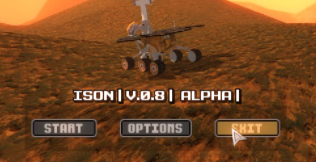
In the video game trip to mars the learning and the search for solutions and ways to reach a specific end, in this case the red planet Mars, is encouraged. The aim of this video game is to reach Mars avoiding the collision with asteroids and collecting tanks to obtain fuel supply
Link to Project "Demo"
Link to Final Project
Detailed Project Description
Video game designed in scratch with the following sections:
First: presentation of the game.
Second: Crew training.
You must read: tips trip to Mars to get information about how will be your trip and data for takeoff and trip where you will conclude which is the trajectory from Earth to Mars, what is the escape velocity to leave the Earth and with what speed you will move.
Third: Start the trip.
Remember: you will earn points each time you collect data, identify risks and complete each mission. If you want a high score, plan carefully. Some risks are worth more points than others.
The encouraging voice that will guide you in this game is the Colombian Diana Trujillo, an Aerospace engineer who is part of the group of NASA scientists who took the Persevering Robot to Mars. During the trip you will find a virtual book for you to learn more about Diana Trujillo.
Space Agency Data
The video game consists of a spaceship that has as its objective the planet Mars, to achieve a successful takeoff you must enter a series of directional commands, once on the trip you will have to collect tanks that will serve as fuel supply for the ship to reach the target, you will have to avoid colliding with the asteroids found on the way, it has a distance control to Mars and Earth as well as a fuel level control. Also, remember that you will get points every time you collect data, identify risks and complete each mission. If you want a high score, plan carefully. Some risks are worth more points than others:
risks (low difficulty) 10 points.
-Isolation: isolation for long periods can cause changes in sleep, day and night adaptation is avoided with light therapy and behavioral health.
Distant from land: mid-trip illnesses are avoided with thorough planning and development of self-sufficiency.
-broken equipment: collisions with errant asteroids, or damage on takeoff can be quickly repaired with creativity and determination.
risks (medium difficulty) 20 points
-space radiation: astronauts will face the space environment in which they encounter radiation which causes cell damage, inflammation, cancer in different organs, this can be avoided by protecting, controlling doses and developing new drugs.
risks (high difficulty) 25 points
-Gravity fields: micro gravity, weightlessness in orbit and increased gravity during launch and landing: loss of bone and muscle mass, damage to the heart and blood vessels, this can be avoided by continuous exercise during the trip.
-Hostile and closed environments (care of temperature, pressure, oxygen, carbon dioxide concentrations, etc.). Astronauts' health effects and growth of microorganisms, this can be avoided by monitoring and recycling resources.
Hackathon Journey
How would you describe your experience with Space Apps?
Excellent, the experience of solving a challenge together with your peers giving their opinions and helping to achieve the solution of the challenge successfully is a satisfying moment to enjoy together with your peers.
What did you learn?
the different didactic ways in which you can instill in young minds the natural and astronomical sciences, how to create a video game with its different commands, the different adversities that will present the astronauts in future trips.
what was your inspiration and approach to choose this challenge?
Our inspiration is the idea of being able to instill in young minds the passion for astronomy and the different sciences and our approach was the lack of inspiration from teachers towards the different sciences that govern the cosmos.
How did your team solve the setbacks and challenges?
We solved them by working as a team informing ourselves about the different skills we needed in our challenge and with the help of the guidance of our mentor "Adriana Vega".
Is there someone you would like to thank and why?
To our mentor Adriana del Pilar Vega Pinzón who was our guide in the process of solving the challenge as she was also the one who instilled and inspired us in the astronomical sciences.
References
- El camino a Marte: ¿Puedes mantener viva a tu tripulación? | Desafío de aplicaciones espaciales de la NASA. https://www.youtube.com/watch?v=TlHD5HfFJlE&list=PL37Yhb2zout05pUjr7OoRFpTNroq_wd9f&index=3
- https://scratch.mit.edu/projects/578321164/fullscreen/
Global Judging
This project has been submitted for consideration during the Judging process.