
High-Level Project Summary
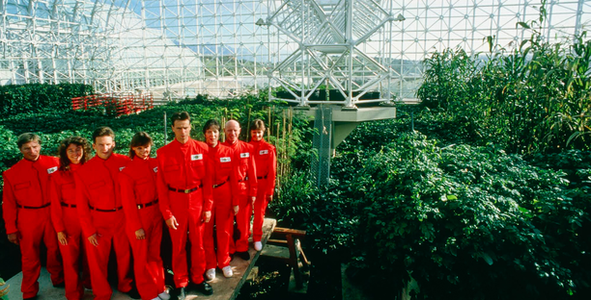
The game is created to raise awareness of space travel in a fun and cute way. In the game you create an Avatar that has to face the harsh conditions of space. The character is a gardener on board and takes care of the ecosystem involved on board. All materials on board are to be recovered and reused. Already in earth the ecosystem and food production can experience severe environmental problems. It is important to teach young people to solve these problems at the earliest possible stage and show how it is possible to reuse everything. Each task takes the curious learner to the edge of science which explains things so that everyone can understand.
Link to Project "Demo"
Link to Final Project
Detailed Project Description

Plants is a mobile application designed to be entertaining and educational at the same time. The game’s layout and illustration have been created by Canva to show the look of this small ship and its crew. In the game the player creates an avatar which takes care of the ecosystem on board. An algorithm has been created in the ship’s ecosystem that reflects the real photosynthesis on board.

The player’s journey to Mars takes 260 days in Hohmann’s orbit. The trip can be tracked in real time as the game lasts 260 days. There are no push notifications in the game, but every time the game opens there is something new to do and learn. The player can create their own schedule for the ecosystem that the ship maintains on its own. Sometimes the space radiation have been able to interfere with the algorithm and the player has a lot of work to do once the game is opened.

While the game is meant to be fun it has been created to teach the hard conditions of space. The main task is to maintain the ecosystem and find the right combination of water and fertilizers for your garden in the right time, the avatar must also be taken care of. Fitness and social relations with other crew members must be maintained on board. You can also meet on board a space robot that asks questions about space. By answering them correctly you can get new seeds. An easy to read fact sheet is available for each selection and function.


Through the game, it is hoped that young people will learn to better understand the difficult conditions of the spacecraft, but also to see in it the opportunities and learning situations. There may come a time when all cultivation on earth will become much more difficult.
Space Agency Data

Data inspires us to make a fun game for young people. Surviving in space is not just about physical exercising and protecting yourself from radiation. It is important to create a functioning ecosystem aboard for long distance space voyage. The crew and garden plants form a symbiosis in the spacecraft. Also mental well-being and social intercourse with other crew members are significant during the voyage to Mars.
The biggest job is to simplify the information about the space environment, like data from NASA GeneLab and Space Biology Program, so everybody and especially young people can understand it. Information about the requirements for creating the ecosystem and especially gardening in the spacecraft are necessary for the leading idea of the game. There is also plenty of information about effects of zero gravity and radiation for living organisms which can adapt with support of experts as a part of the game. This allows us to explain differences and similarities of living in the spacecraft and the Earth and simultaneously the conditions of the life generally, like the protective atmosphere and magnetic field of the Earth.
5 hazards of human spaceflight affect also the plants in the spacecraft, like space radiation and changes of gravity from weightlessness to heavy gravity, but those hazards can be at least partly solved by the space garden. Feeling of isolation can be relieved by visiting the garden and seeing green plants instead of the cold metal frame of the spacecraft. Problems of long distance and duration of the space voyage can be eased by fresh vegetables and fruits with their nutrients instead of frozen meals and vitamin pills. Closed environment of the spacecraft in hostile space is more comfortable with its own Earth-like ecosystem.
Hackathon Journey
This was my first Space app challenge. Although i don’t have much experience in space technology i’ve been interested in the topic. I play games myself and i saw here the opportunity to accomplish something that interests me. That is the reason why i wanted to get involved with this. It’s nice when the option was to design a game. First i asked my sister’s child, who is ten years old, what she would like to do in the game. She replied that she would like to push all the buttons at the ship. So we made a lot of buttons.
Since i am not a coder i knew right from the start that i would just design the layout of the game. I joined the challenge alone, but i was glad someone wanted to join my team. We have different backrounds but we complited each other with different knowledge.
I would like to thank Tapio for good team spirit and event organizers and for the fact that it is possible to participate in the challenge without being an engineer. Hopefully creative solutions will continue to be given space as they can have surprisingly good ideas without the ability to code.
The game would be awsome to bring to the markets because i think it is a niche. There is little space information for kids that they can understand.
-Taru

I was second time at NASA Space Apps Challenge. This time I was more participating in solving the challenge because I had experience about hackathon and I liked using creativity for solving this challenge. This challenge was selected by my team partner Taru who was looking for members to her team during pre-hackathon meeting and I found this challenge very innovative and I had several ideas for the game. We didn’t know each other before and before joining the team we had problems with communications caused by new softwares and during that time my imagination developed those ideas even further. After joining the team we started with brainstorming sessions where we introduced our ideas and simultaneously got to know each other better. I liked Taru’s idea about a spacecraft gardening game for kids and we added my ideas for developing that concept further. Our backgrounds are completely different but those completed each other: my engineering approach helped us to develop the game realistic with space knowledge and Taru’s skills with visual design created a great-looking appearance for the game which is especially important for designing games for kids. We got good feedback from the hackathon sparring team during two sparring sessions in Saturday and Sunday which motivated us and gave us ideas for developing the concept of our game.
During this hackathon I learned to use my imagination which the challenge acts as stimulus and how to develop my ideas as part of teamwork.
I want to thank Taru for good teamwork and the sparring team (Jari, Heidi and Kendall) for constructive feedback.
-Tapio

References
-Communications between team members and local hackathon organization by Microsoft Teams and Slack
-Collecting ideas from brainstorming and developing those for game concept on common use platform by Google Docs (docs.google.com)
-Visual appearance design for game concept by Canva (canva.com)
-https://nasa.tumblr.com/post/136706596374/exercising-in-space
-https://2021.spaceappschallenge.org/challenges/statements/the-trail-to-mars-can-you-keep-your-crew-alive/resources
Tags
#art, #game, #plants, #ecosystem, #learning, #gardening, #spacecraft
Global Judging
This project has been submitted for consideration during the Judging process.