
High-Level Project Summary
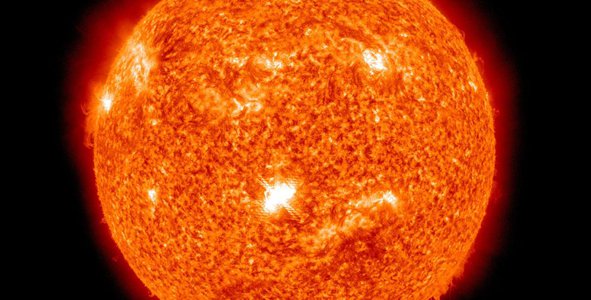
We have developed an interactive website that presents data regarding the Secrets of the Sun, accessible to anyone. Our website, Solar-Solved , features 3D model of all four probes that may be considered to have the most prominent roles in our study of the Sun and many more interesting information. As as our main object in this endeavour is not only just provide information, but ignite and encourage curiosity around such a topic; we have included basic, fundamental information on the Sun everyone can learn from. The significance of our project is that it allows everyone, despite their current understanding of the Sun; to appreciate and reinforce their understanding on this enigmatic entity.
Link to Project "Demo"
Link to Final Project
Detailed Project Description
The project our team came up with is called "Solar Solved." Our website is an interactive platform packed with information and 3D visualisation for our viewer. Apart from providing information about the probes studying the nearby star (the Sun) we also provide information about the Sun itself.
The website is divided into 4 main categories, The Anatomy of the Sun, The Probes Orbiting the Sun, Unlocking the Secrets of the Sun and Future missions. We have condensed information gathered from various credible sources such as NASA, ESA and etc. We also hope to provide a good idea of how the probes are to look through our 3D model which are scaled replica of the real probes.
Our website aims to educated people about the importance of the sun, but also the probes studying it. We want to break down the wall and destroy the stigma surrounding astronomy and how it is widely seen as a subject for nerds. We have condensed and summarised information from various reliable sources to give our viewers sufficient information on the topic without going into much depth.
We used the website making platform " wix.com" to be make our website. The 3D models that we provide in our website are made using Blender.
Space Agency Data
The main sources for our data in this project are NASA, ESA and JAXA. Informations in these space agencies website was essential to our project since it gave us an insight to the details of the project. For our Parker Solar Probe and the Solar Dynamics Observatory, most of our information came from the NASA website, giving us general information on the project and what the scientific purpose of the mission is. Other sources is then used for informations such as the history of the project and the list of scientific instruments. For the Solar Orbiter and the Solar and Heliospheric Observatory, information from ESA's webpage allowed us to be able to understand more about the probe. The information choose to cover is history, timeline, trajectory, scientific purpose, and instruments. We also used images of the probe itself and the vehicle that launched inner webpage, increasing the engagement with the users. We found that the space agency datas are incredibly useful in our research, and understanding more about it has inspired all our team members to pursue this project with determination. By being involved in a project that can revive the enthusiasm of astronomy for the public, our group strongly believe this is a great start to a future where more people are aware and are always curious of what exists beyond our world.
Hackathon Journey
Our Hackathon Journey, in our humble opinions, is perhaps one-of-a-kind. As us being high-schoolers and felt unconfident in our ability to even complete a challenge outside of the Youth-Friendly Section; we have initially gravitated towards participating in the origami-challenge. However, as we soon realise that the actual value of being a part of Space App Challenge is not to excel, nor compete; but rather to gain an experience, one which can not be obtained anywhere else; we decided to step out of our boundary.
We voted and of course, ultimately ending up picking "Unlocking the Secrets of the Sun" as we felt really intrigued by irony that exist between how important the Sun is to us , and how little we actually know about it.
Unfortunately, as the Space App Challenge takes place right during all of our summative-weeks at school, it was quite difficult for us to allocate much time to it. We therefore were able to manage planning each of ours roles on 30th September, delineating a work-agenda on October 1st and then actually working on the weekend. (October 2nd-3rd)
Our main approach to tackle this behemoth challenge traces back to having a great team-organisation. By assigning every-single person a specific role and providing them tasks they are the most qualified to do, we have managed to complete the challenge in time. Two out of five of our team members were tasked with web-design and generating a new 3D models for the four probes. As for the remaining three members, they were responsible for performing in-depth researches. This includes searching for hypothesises scientists' made about little-known features of the Sun and an overview of each probe.
Compared to other teams, it may be said that we have faced only some problems along this journey. While we were working on the website, it seemed as if our internet disconnected. We were unable to edit the website and lost some of our progress. However, luckily, this occurred in the initial phrase of our website and hence, with the help from a detailed planning we have, we were able to finish the challenge in time.
References
http://www.tunl.duke.edu/~ticesty/ecl...
https://www.nature.com/nature/journal...
http://www.nature.com/nature/journal/...
http://science.sciencemag.org/content...
https://sppgway.jhuapl.edu/instruments
https://www.cfa.harvard.edu/sweap/
https://link.springer.com/content/pdf...
http://rsta.royalsocietypublishing.or...
https://arxiv.org/pdf/1703.05707.pdf
http://iopscience.iop.org/article/10....
https://www.aanda.org/articles/aa/abs...
https://www.researchgate.net/profile/...
https://www.aanda.org/articles/aa/pdf...
https://arxiv.org/abs/1701.00795
https://link.springer.com/article/10.1007%2Fs11214-015-0211-6
https://www.nasa.gov/content/goddard/parker-solar-probe-humanity-s-first-visit-to-a-star
https://en.wikipedia.org/wiki/Solar_Orbiter#Timeline_and_status
https://www.nasa.gov/vision/universe/solarsystem/sun_for_kids_main.html
https://www.isro.gov.in/aditya-l1-first-indian-mission-to-study-sun
Blender
https://nasa3d.arc.nasa.gov/models
wix.com
Tags
#Sun #Heliophysics #website #interactive #universal #foreveryone #basic #easy #corona #NASA #ESA
Global Judging
This project has been submitted for consideration during the Judging process.