
High-Level Project Summary
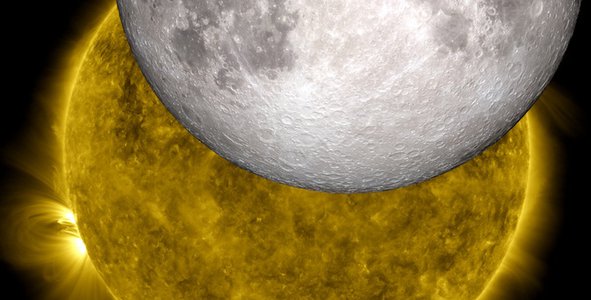
The Sun is the engine of our Solar System, and, as such, humans have been interested in learning more about it since the dawn of our curiosity, but never has an object been sent so close to our closest star. The Parker Solar Probe, on its closest approach, will pass within 6.2 million kilometers (3.85 million miles) of the Sun NASA’s Parker Solar Probe speed up and flip the direction of the wind’s magnetic field. So our purpose is to share an old myth about the philia and love of the sun and the moon and how patiently all these centuries support each other beyond time and the same time to raise awareness to more about NASA’S Parker Solar probe.
Link to Project "Demo"
Link to Final Project
Detailed Project Description
From the conception that the Sun and Moon were husband and wife many legends concerning them were created.
The purpose of Sun-Earth Day is to get people to understand that the Sun is a magnetic star that impacts the Earth and other planets .
The sun is the bestower of light and life to the totality of the cosmos; with the almost universal connection of light speed with enlightenment or illumination, the sun is the source of wisdom.
The moon and the sun were commonly referred to by the ancient Egyptians as "the two lights", and the weaker light of the Moon is compared to the evening Sun. Most frequently, the ancient Egyptians interpreted these two lights as the eyes of Ra, or of the sky god Horus, whose left eye was the Moon and whose right eye was the sun
The humanity has the technology today to observe the secrets of sun through Parker Solar Probe.
The Parker Solar Probe is the first spacecraft to fly into the low solar corona. It will assess the structure and dynamics of the Sun's coronal plasma and magnetic field, the energy flow that heats the solar corona and impels the solar wind, and the mechanisms that accelerate energetic particles.
It is important for the public to understand that the love of the sun and moon are important for the global good .
Some examples of dissemination methods are the publication method will be use to present the project idea and describing it, or promoting the love of sun and moon and solar flames energy of Parker Solar Probe observations and raise awareness to more people through conferences, workshops, collaborative art events, web sites, interactive platforms, media or mobile devices; these will be organized in various geographic regions to encourage participation. The first start is through NASA platforms.
Academia, universities, industry, government and citizens collaborating together in order to drive structural changes beyond the scope of any one organization can achieve on its own for the global good .
Space Agency Data
The beauty of the secret kissing of the sun to the moon and inspire us in order to raise awareness to more people with universal language that is easy to understand about the energy and the beauty of the sun and solar flames and explore mechanisms that accelerate and transport energetic particles.
Hackathon Journey
If we want to know the source, we have to get up there and get closer to the mysteries of sun and solar frames.
References
Newsletters and live updates of Parker Solar Probe: http://parkersolarprobe.jhuapl.edu/
Newsletters: https://www.nasa.gov/press-release/nasa-approves-heliophysics-missions-to-explore-sun-earth-s-aurora
The Parker Solar Probe takes its first up-close look at the sun
Newsletters and live updates of Parker Solar Probe: http://parkersolarprobe.jhuapl.edu/
Newsletters: https://www.nasa.gov/press-release/nasa-approves-heliophysics-missions-to-explore-sun-earth-s-aurora
Amazing Things You Need to Know About NASA’s Parker Solar Probe
https://www.fi.edu/blog/parker-solar-probe
Sun-bombing spacecraft uncovers secrets of the solar wind
https://www.nature.com/articles/d41586-019-03684-0
Solar Orbiter and Parker Solar Probe
https://www.esa.int/ESA_Multimedia/Images/2020/01/Solar_Orbiter_and_Parker_Solar_Probe
The Moon and the Sun : Two Nasa Missions Join Images
https://www.nasa.gov/mission_pages/LRO/news/sun-moon.html
For more information about LRO, visit: http://www.nasa.gov/lro
Exploring the Sun Through Ancient Civilizations
https://www.nasa.gov/vision/universe/solarsystem/sun_earthday.html
36:1 The Origin of Pagan Idolatry, G. S. Faber.
37:1 Primitive Culture, Edward B. Tylor.
Sugiura K. (1996) The sun, the Moon, and the Eyeball —A Cosmic Correspondence. In: Ogawa T., Miura K., Masunari T., Nagy D. (eds) Katachi ∪ Symmetry. Springer, Toky https://link.springer.com/chapter/10.1007%2F978-4-431-68407-7_5#citeas
Tags
#secretkissingof thesun#moon#The Parker Solar Probe,
Global Judging
This project has been submitted for consideration during the Judging process.