
High-Level Project Summary
We developed "POWER to the people" to solve the "You Are My Sunshine" challenge. POWER to the People Is a cross-platform mobile application, developed to ensure solar irradiance data is easily accessible to all. Based on the user's input parameters, the application interacts with the NASA POWER Application Programming Interface (API), retrieves, and displays the data in an easy-to-read graph. Our user-friendly UI allows users to find a location, choose a time period, select parameters, without even having to use their keyboard. We effectively bring POWER to the People.
Link to Project "Demo"
Link to Final Project
Detailed Project Description
Our project serves as a bridge connecting our user audience to the extensive amount of data in NASA’s Prediction Of Worldwide Energy Resource (POWER) database in a simple, digestible way. When designing the app our main goal was to have a simple, yet professional platform that effectively displayed the data in a clear, concise way. Currently, our application allows the user to input their specified location via a built-in map library. The user is also able to select the type of solar data they are looking for with a drop-down menu, as well as the start date and time period (daily, weekly, or monthly). To develop our project we used React Native, a UI-based Software that is compatible among multiple platforms, along with JavaScript.
Weekly averages were not provided by the POWER database. Our application calculates the weekly averages based on daily data, these are the only calculated values provided at the moment but our application can be easily extended to provide other data based on solar irradiance calculations, such as the potential Electric Power that can be generated by solar panels. Other future improvements we are planning on are: Provide customized options based on the user's profile and incorporating data from other sources, such as historical weather and climate data from the Meteostat API.
Space Agency Data
For our data, we used NASA’s Prediction Of Worldwide Energy Resource database. At first glance, the multiple different parameters, data types, and formats seemed very overwhelming, however, this inspired our team to try and develop a simpler way of relaying all this really cool data to an average person interested in solar data. With this idea, we developed a way to access the data by creating API calls to specific parameters within the database. These calls would pull the iridescence data from NASA's database and display it in a graph shown to the user on-screen. This graph served as the bridge to connect our user to NASA's immense database, which can be difficult to understand at first glance. The data brought in from the database can be manipulated by the user by their specified input of parameters and dates, as well as the time frame they would like to see (daily, weekly, or monthly).
Hackathon Journey
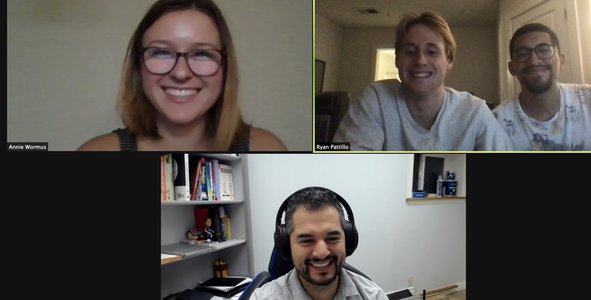
This Space Apps hackathon has been an amazing experience for our team allowing us to explore different Software and learn new technical skills, but also in terms of teamwork and collaboration. In the span of two days our team was able to come together by learning and developing an application using React-Native, a UI Software framework. Our team was also able to learn how to use and implement NASA's Prediction Of Worldwide Energy Resources database in a way that our anticipated user audience can understand. Another crucial skill our team was able to develop was teleworking communication; initially, there were some minor setbacks with installing the Software needed to develop our app due to our team communicating virtually, however, we were able to adapt our strategy and use Zoom as a way of effectively communicating instructions to each other. Our team met through our mutual internship at NASA Kennedy Space Center, so we would like to shout out Jill Giles and Stephen Aument for not only bringing us together but for igniting a passion for space and inspiring us to quite literally shooting for the moon.
References
The POWER Project (NASA’s Prediction Of Worldwide Energy Resource) API: https://power.larc.nasa.gov/
React Native Platform: https://reactnative.dev/
JavaScript Programming Language: https://www.javascript.com/
Information on Long Wave and Short Wave Radiation: https://legacy.climate.ncsu.edu/edu/RadiationTypes
Tags
#MobileApp, #CrossPlatform, #App, #Software, #UI, #API, #Weather, #SolarRadiation, #RenewableEnergy, #Power, #Energy, #Javascript, #ReactNative
Global Judging
This project has been submitted for consideration during the Judging process.