
High-Level Project Summary
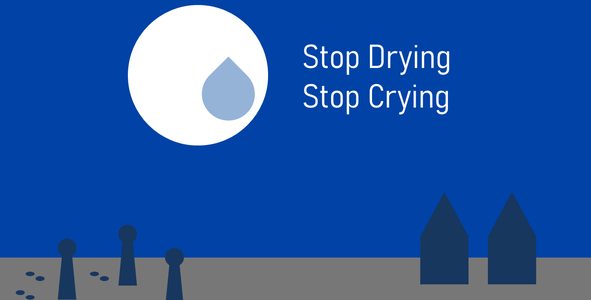
In this challenge, I have worked on a solution for Measuring the Value of Earth Observations, via coming up with the concept for how to associate the Earth observations with the social issues, how to utilize the Earth observation data in practice, how to design the feasible resolution, and how to measure the resolution in the future. By taking advantage of the Earth observations data that Nasa provides, and the information about the society, we can find a the relevance between water-related data and education-related data, as well as find the reason why water shortage impacts the education badly in practice.
Link to Project "Demo"
Link to Final Project
Detailed Project Description
By taking advantage of the Earth observations data that Nasa provides, and the information about the society, we can find a the relevance between water-related data and education-related data, as well as find the reason why water shortage impacts the education badly in practice. The data shows that the higher drought frequency is, the lower the penetration rate of education will be.
The reason is that some of children will be asked to look for water source by walking far away from their home to the well to get water every single day, which has taken them a large part of time to go to school. Besides, some girls are having menstrual period every month since they don’t have enough knowledge and sufficient feminine products to deal with their physical condition, and that might deprive them of the chance to go to school every month.
In order to solve those issues about education, I have come up with some strategies to improve their educational quality despite drought. The first strategy is to create a map showing some data about the Earth observations. This method requires the data from Nasa about the Earth observations, like precipitation and the distribution of well and river.
The second strategy is to design the available plans especially for those regions with both less educational rate and less resources for life because the predicament of lower educational prevalence might result from those reasons we often neglect, such as menstrual period for some innocent adolescent girls.
Last but not least, after using the data to find out the regions where habitants need help the most, and taking actions in order to improve their life quality to make them easy to go to school, it is still necessary to measure all of these efforts. And the most simple method is to keep tracking the data about the percentage of the primary education enrollment, higher education enrollment, and the rate of children marriage, to name a few.
Space Agency Data
We used Space Agency Data in this project in three ways primarily.
- Find the relevance between water shortage and children education.
- Make a forecast of the trend (the education) by regression analysis by using the precipitation and vegetation data.
- Build a map (from Global Maps - NASA Earth Observatory) which can point out the region where residents are most likely in need for help in education.
Hackathon Journey
The reason why I want to choose the topic is that I have watched the documentary beforehand, seeing the cruel condition little children were walking to the well where was very far from their home in order to get enough water, and they had done this for several years.
Due to the daily work and physical feature, they have difficulty receiving education. And the host of the documentary also said that they are inclined to marry a man at very young age.
As far as I am concerned, the reason why many children, girls in particular, have lost the possibilities to receive higher education is significantly related to water shortage. For instance, they spend a lot of time on the daily work for seeking water. On top of water, they tend to reject going to school when they have menstrual period, since they redeem this kind of their physical feature as the shame, and has no idea to tackle this without sufficient knowledge about personal hygiene and enough feminine products. Without water, they had no choice but expect the period stop, then they can go back to school.
As a result, I began to consider the relevance between the Earth observations (water shortage, which results from both terrain and climate) and social outcomes (the lower education level and the higher). It is crystal clear that the social outcomes might have a high relevance with the Earth observation features . And that can be the evidence for the reasons why some people who live in regions suffering from droughts might have lower education backgrounds.
It is difficult for us to prevent droughts, while we still can take actions to stop children from dropping out of school. There are many volunteers and philanthropists willing to assist them. However, they often provide them with a short-term help, such as some food and short-term English courses. It is obvious that the short-term assistance cannot change the whole predicament the residents are confronted with.
Accordingly, we still require a great plan for helping them in a long term, especially cultivating some younger people to save the residents by themselves. How to do this? By taking advantage of Nasa open data, we can find the regions where people are in need right now, then initiate some practical measures according to both the short-term and sustainable plans.
References
【Global Maps - NASA Earth Observatory】
https://earthobservatory.nasa.gov/global-maps
【Total Rainfall - NASA Earth Observatory】
https://earthobservatory.nasa.gov/global-maps/TRMM_3B43M
【Total Rainfall & Vegetation - NASA Earth Observatory】
https://earthobservatory.nasa.gov/global-maps/TRMM_3B43M/MOD_NDVI_M
【Malawi Economic Monitor: Girls' Education Key for Malawi's ...】
https://www.worldbank.org/en/country/malawi/publication/malawi-economic-monitor-girls-education-key-for-malawis-development
【Tertiary Education - Our World in Data】
https://ourworldindata.org/tertiary-education#enrollment-in-tertiary-education-over-time
【Primary and Secondary Education - Our World in Data】
https://ourworldindata.org/primary-and-secondary-education
Tags
#Proposals, #Gender_Innovation, #Education, #Water, #Actions
Global Judging
This project has been submitted for consideration during the Judging process.