
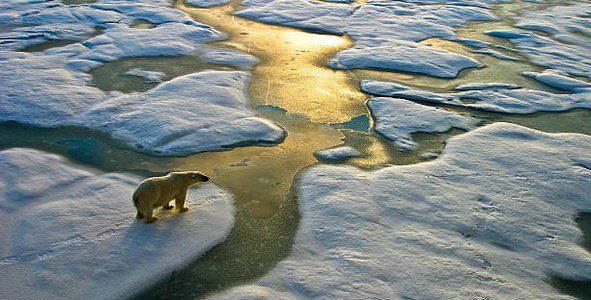
High-Level Project Summary
Our purpose is to help people coming over most of theses dangers by dealing with extraordinary climate change to warn people peacefully and earn them the knowledge; As they are in the bad need of it, in addition to that our goal is trying to exploit the opportunity of climate change positively as possible as we can in a way or another.- Scientists from around the world with the Intergovernmental Panel on Climate Change (IPCC) tell us that during the past 100 years, the world's surface air temperature increased an average of 0.6° Celsius (1.1°F) due to burning fossil fuels that releases carbon dioxide and other greenhouse gases into the atmosphere.Depending on the crop and ecosystem, weed
Link to Project "Demo"
Link to Final Project
Detailed Project Description
● 1-Present and justify a problem and solution requirements:-
● Predicted Impacts of Climate Change:-
● What are the benefits of Weather forecasting to:-
● What Effect Do Solar Cycles Have on Earth’s Climate?
CHAPTER 2
● Solution and design requirement:
● Selection of our solution
CHAPTER 3
● Test plan
CHAPTER 4
Analysis and discussion
Recommendations
Chapter 1
Introduction:-
Our team portfolio represents our loyalty for our great planet which provides us with shelter, food, air, also meets our needs. Being a part of the Ecosystem as human is one of the most impacted factors for devastation the balance makes us extremely excited and keen to handle with this ecosystem much deeper in order to forecast and speculate the weather to get our precautionary measures. Earth pollution is one of the greatest challenges which not only endangers one country or a group of countries, but also all the Earth and its population, animals, plants, and all the components of the Earth.
Unfortunately, Earth is heating up incredibly more and more. we are all in a closed circle of danger the dangers are around us everywhere. Our purpose is to help people coming over most of theses dangers by dealing with extraordinary climate change to warn people peacefully and earn them the knowledge; As they are in the bad need of it, in addition to that our goal is trying to exploit the opportunity of climate change positively as possible as we can in a way or another.
1-Present and justify a problem and solution requirements:-
Climate change is expected to exacerbate heat-related extremes that impact human health and environmental and ecological systems. The solution requirements are to:-
1- Build a tool that uses Earth Observations (EO).
2- Crowdsourced data and models to provide warnings about potential impacts of these events.
3- Guidance on mitigation measures.
2- problem to be solved:-
- Scientists from around the world with the Intergovernmental Panel on Climate Change (IPCC) tell us that during the past 100 years, the world's surface air temperature increased an average of 0.6° Celsius (1.1°F) due to burning fossil fuels that releases carbon dioxide and other greenhouse gases into the atmosphere.
(explains the global worming in August 2021)
- This may not sound like very much change, but even one degree can impact the Earth in many ways. Climate models predict that Earth's global average temperature will rise and additional 4° C (7.2° F) during the 21st Century if greenhouse gas levels continue to rise. But with swift action to reduce greenhouse gas emissions, models project that global average temperature will only rise an additional 1° Celsius (1.8° F).
Predicted Impacts of Climate Change:-
First of all, there is no doubt that climate change predicted to impact regions by different criteria. We can support that as the increasing in temperature will be greater on the land than oceans, also at high altitudes than in the tropics and mid-altitudes.
Fig[2]
● The growing temperature affects and will effect on the climate, such as (rain, clouds, ocean, life, ice, ……….) actually it will affect all the parts of the Earth system.
● The global warming will cause the water cycle to speed up; since the higher rate of evaporation. Indeed, The more water vapor in the atmosphere, the more precipitation will happen.
● Global average precipitation increases by 1% to 3% for each degree of warming, which means we are looking at a future with much more rain and snow, and a higher risk of flooding to some regions which makes people, animals, plants,…. Endangered. That is actually will put the Earth on the edge of decade.
● As the climate warms, snow and ice melt on the other hand. It is speculated that the melting of glaciers, ice sheets, and other snow and ice on land in the summer will continue to be greater than the amount of precipitation that falls in the winter, which means a decrease in the total amount of snow and ice on the planet.
(Shows snow and ice melt)
● As a result, that will reject the roads and may expose some animals to be endangered also may cause damages in some places and put a not desirable fingerprint by influencing badly on our monuments and the world the touristic monuments, which in result to decrease the national income, and many unlimited effects.
● The acute rush of water will damage homes, shelters, and may kill many people also threatening coastal communities, wetlands, and coral reefs. Changes to rainfall patterns, increasingly severe drought, more frequent heat waves.
● The summer thickness of sea ice in the Arctic is about half of what it was in 1950.Arctic sea ice is melting more rapidly than the Antarctic sea ice. Melting ice may lead to changes in
● A warmer climate causes sea level to rise via two mechanisms:
1- Melting glaciers and ice sheets (ice on land) add water to the oceans, raising the sea level.
2- Ocean water expands as it warms, increasing its volume and thus also raising sea level. During the 20th Century, sea levels rose about 10 to 20cm (4 to 8 inches).
● Many marine organisms – like kelp and corals – that are at high risk. Warmer waters in the shallow oceans have contributed to the death of about a quarter of the world's coral reefs in the last few decades, On the other hand, the range of some species, such as mosquitos which carry different types of diseases, may increase due to climate warming.
● Therefore, this changing will devastate the crops by flooding and extreme weather make it more difficult for farmers to graze livestock and grow produce, reducing food availability and making it more expensive to buy which will turn into an extremely large starvation.
● Earth’s oceans are predicted to act as a buffer against climate change by taking up some of the excess heat and carbon dioxide from the atmosphere. This is good news in the short run, but more problematic in the long run. Carbon dioxide combined with seawater forms weak carbonic acid.
● Scientists believe this process has reduced the pH of the oceans by about 0.1 pH since pre-industrial times. Further acidification of 0.14 to 0.35 pH is expected by the year 2100. Higher acidity in the ocean causes problems for coral reefs and other marine organisms.
● Warming surface temperatures are also predicted to increase the frequency of heat waves and droughts, which can affect crop production, increase the risk of wildfires, and even impact human health.
To conclude, that will work on losing the earth its balance and ecosystem.
● Some scientists believe there will be a higher proportion of the most powerful and destructive storms. Some scientists believe we already see evidence for an upswing in the numbers of the most powerful storms. Others are less convinced.
● Warmer global temperatures produce faster overall evaporation rates, resulting in more water vapor in the atmosphere and more clouds.
Different types of clouds at different locations have different effects on climate. Some shade the Earth, cooling the climate. Others enhance the greenhouse effect with their heat-trapping water vapor and droplets. Scientists expect a warmer world to be a cloudier one, but are not yet certain how the increased cloudiness will feed back into the climate system.
The Fifth unexpected effects of the climate change:-
One of the most fascinating thing in our life is the connection and the integration of all the earth components. Incredibly, all components form the smallest bacteria to the volcano all somehow feel the impacts of the climate change.
● 1- Desert soil :-
It seems to be desolated and empty, but actually it is full of desert bacteria.
Bacteria make colonies have the ability to grow so thick, that enables them to form layers sturdy enough to stabilize the desert soil against erosion called ((bio crusts)).
The study of the ((bio crusts)) In the USA ( United States of America ) which shows that different types of desert bacteria thrive in different temperature regimes and Some prefer the sweltering heat of Arizona and New Mexico, while others fare better in the cooler climate of southern Oregon and Utah.
Unfortunately, As temperatures become more erratic with climate change, desert bacteria may struggle to adapt, leaving desert soil more prone to erosion.
● 2- Ocean Darken:-
The more climate change, the more precipitation in some regions of the world, that is sound a small effect, but actually Stronger river currents stir up more silt
and debris, which all eventually flows into the ocean and makes the ocean more opaque.
Regions along the coast of Norway have already
experienced increasingly darker and murkier ocean water
with increased precipitation and snow melt in recent decades.
Some researchers have speculated that the murkiness is responsible for changes in regional ecosystems, including a spike in jellyfish populations.
3- Allergies worsen:-
As climate change causes springtime to spring out earlier in the year, sneeze-inducing pollen will ride the airwaves that much earlier in the year as well.
This will increase the overall pollen load each year,
and could make people's allergies worse.
Some temperature and precipitation models have shown
that pollen levels could more than double by the year 2040.
4- Ant invasions slow:-
Pheidole megacephala, also known as the big-headed ant, is one of the top 100 most invasive species on Earth. Hoards of these insects thrive in South America, Australia and Africa, and their voracious populations spread rapidly.
As invasive animals, they steal habitat and resources from native species, disrupting regional ecosystems and jeopardizing biodiversity. They have even been known to hunt bird hatchlings.
Researchers have estimated that 18.5 percent of the land on Earth currently supports the big-headed ant. But as temperatures shift in the coming decades, the habitat range of these cold-blooded animals will likely shrink substantially.
Some climate models suggest that the ant's range will decrease by one-fifth by the year 2080. How native insects will respond to these changes, however, remains unclear.
5- Sunlight floods polar seafloor:-
As sea ice melts, more sunlight will bathe shallow coastal regions
around the poles. Seafloor communities of worms, sponges, and
other invertebrates accustomed to existing in darkness will begin to
experience longer periods of sunlight each summer.
Recent research has shown that this shift could significantly alter these communities, by allowing seaweeds and other marine plant-life to smother invertebrates. This transition from invertebrate-dominated communities to algae-dominated communities has already been observed in pockets of both the Arctic and Antarctic coastlines, and could significantly decrease biodiversity in these regions.
All these incredibly divesting effects which yield from the climate change attracted our attention like all scientists and your organization (NASA) as a small thinkers and keepers to our planet, so we decided to go deeper in this topic to try to find some solutions in order to help our planet health and safe as possible as we can.
What are the benefits of Weather forecasting to:-
⮚ If we can stop the reasons which cause the climate changes to avoid them accordingly the decade of our life planet. But if we cannot do that like now we can just try to reduce the loses resulting in climate change. But the idea here is that how can we do that right now?! And how that will help us?!
⮚ The solution lies in the speculating about the future weather, then we can take our precautionary measures and scientific procedure in order to come over these tough time as possible as we can.
⮚ The prediction of weather chief purpose is to provide information. People and organizations can use to reduce weather-related losses and enhance societal benefits, including protection of life and property, public health and safety, and support of economic prosperity and quality of life.
⮚ It's important to make accurate weather forecasting because it can save lives by better preparing people for an upcoming event. Additionally, people can be appropriately clothed for the weather.
⮚ We can summary this great thing in some words like:-
Weather has a massive impact on human kind in terms of fatalities and property damage.
Research:-
On Earth, human activities are changing the natural greenhouse. Over the last century the burning of fossil fuels like coal and oil has increased the concentration of atmospheric carbon dioxide (CO2). This happens because the coal or oil burning process combines carbon with oxygen in the air to make CO2.
To a lesser extent, the clearing of land for agriculture, industry, and other human activities has increased concentrations of greenhouse gases.
The consequences of changing the natural atmospheric greenhouse are difficult to predict, but some effects seem likely:
⮚ On average, Earth will become warmer. Some
regions may welcome warmer temperatures,
but others may not, but individual regions will
vary, some becoming wetter and others dryer.
⮚ A stronger greenhouse effect will warm the ocean and partially melt glaciers and ice sheets,
increasing sea level. Ocean water also will expand if it warms, contributing further to sea level rise.
⮚ Outside of a greenhouse, higher atmospheric carbon dioxide (CO2) levels can have both positive and negative effects on crop yields. Some laboratory experiments suggest that elevated CO2 levels can increase plant growth.
⮚ However, other factors, such as changing temperatures, ozone, and water and nutrient constraints, may more than counteract any potential
increase in yield. If optimal temperature ranges for some crops are
exceeded, earlier possible gains in yield may be reduced or reversed altogether.
- Climate extremes, such as droughts, floods and extreme temperatures, can lead to crop losses and threaten the livelihoods of agricultural producers and the food security of communities worldwide. Depending on the crop and ecosystem, weeds, pests, and fungi can also thrive under warmer temperatures, wetter climates, and increased CO2 levels, and climate change will likely increase weeds and pests.
- Finally, although rising CO2 can stimulate plant growth, research has shown that it can also reduce the nutritional value of most food crops by reducing the concentrations of protein and essential minerals in most plant species. Climate change can cause new patterns of pests and diseases to emerge, affecting plants, animals and humans, and posing new risks for food security, food safety and human health.
The Role of Human Activity:-
- In its Fifth Assessment Report, the Intergovernmental Panel on Climate Change, a group of 1,300 independent scientific experts from countries all over the world under the auspices of the United Nations, concluded there's a more than 95 percent probability that human activities over the past 50 years have warmed our planet.
Fig [12]
- The industrial activities that our modern civilization depends upon have raised atmospheric carbon dioxide levels from 280 parts per million to about 417 parts per million in the last 151 years. The panel also concluded there's a better than 95 percent probability that human-produced greenhouse gases such as carbon dioxide, methane and nitrous oxide have caused much of the observed increase in Earth's temperatures over the past 50-plus years.
- Human activities (primarily the burning of fossil fuels) have fundamentally increased the concentration of greenhouse gases in Earth’s atmosphere, warming the planet. Natural drivers, without human intervention, would push our planet toward a cooling period.
-
- Scientists attribute the global warming trend observed since the mid-20th century to the human expansion of the "greenhouse effect" warming that result when the atmosphere traps heat radiating from Earth toward space.
- Certain gases in the atmosphere block heat from escaping. Long-lived gases that remain semi-permanently in the atmosphere and do not respond physically or chemically to changes in temperature are described as "forcing" climate change.
- Gases, such as water vapor, which respond physically or chemically to changes in temperature, are seen as "feedbacks.
Gases that contribute to the greenhouse effect include:-
⮚ Water vapor:-
The most abundant greenhouse gas, but importantly, it acts as a feedback to the climate. Water vapor increases as the Earth's atmosphere warms, but so does the possibility of clouds and precipitation, making these some of the most important feedback mechanisms to the greenhouse effect.
⮚ Carbon dioxide (CO2):-
A minor but very important component of the atmosphere, carbon dioxide is released through natural processes such as respiration and volcano eruptions and through human activities such as deforestation, land use changes, and burning fossil fuels. Humans have increased atmospheric CO2 concentration by 48% since the Industrial Revolution began. This is the most important long-lived "forcing" of climate change.
⮚ Methane:-
A hydrocarbon gas produced both through natural sources and human activities, including the decomposition of wastes in landfills, agriculture, and especially rice cultivation, as well as ruminant digestion and manure management associated with domestic livestock. On a molecule-for-molecule basis, methane is a far more active greenhouse gas than carbon dioxide, but also one which is much less abundant in the atmosphere
Fig[13] (Shows the Atomic structure for gases which are causing the global warming.)
⮚ Nitrous oxide:-
A powerful greenhouse gas produced by soil cultivation practices, especially the use of commercial and organic fertilizers, fossil fuel combustion, nitric acid production, and biomass burning.
⮚ Chlorofluorocarbons (CFCs):-
Synthetic compounds entirely of industrial origin used in a number of applications, but now largely regulated in production and release to the atmosphere by international agreement for their ability to contribute to destruction of the ozone layer. They are also greenhouse gases.
- Not enough greenhouse effect: The planet Mars has a very thin atmosphere, nearly all carbon dioxide. Because of the low atmospheric pressure, and with little to no methane or water vapor to reinforce the weak greenhouse effect, Mars has a largely frozen surface that shows no evidence of life.
- Too much greenhouse effect: The atmosphere of Venus, like Mars, is nearly all carbon dioxide. But Venus has about 154,000 times as much carbon dioxide in its atmosphere as Earth and (about 19,000 times as much as Mars does), producing a runaway greenhouse effect and a surface temperature hot enough to melt lead.
- Earth's climate has changed throughout history. Just in the last 650,000 years there have been seven cycles of glacial advance and retreat, with the abrupt end of the last ice age about 11,700 years ago marking the beginning of the modern climate era — and of human civilization. Most of these climate changes are attributed to very small variations in Earth’s orbit that change the amount of solar energy our planet receives.
- In Brief: Direct observations made on and above Earth’s surface show the planet’s climate is significantly changing. Human activities are the primary driver of those changes.
- Earth's climate has changed throughout history. Just in the last 650,000 years there have been seven cycles of glacial advance and retreat, with the abrupt end of the last ice age about 11,700 years ago marking the beginning of the modern climate era — and of human civilization. Most of these climate changes are attributed to very small variations in Earth’s orbit that change the amount of solar energy our planet receives.
Scientific evidence for warming of the climate system is unequivocal.
Does the sun effect on the global warming??
Fig[14]
The above graph compares global surface temperature changes (red line) and the Sun's energy received by Earth (yellow line) in watts (units of energy) per square meter since 1880. The lighter/thinner lines show the yearly levels while the heavier/thicker lines show the 11-year average trends. Eleven-year averages are used to reduce the year-to-year natural noise in the data, making the underlying trends more obvious.
The sun is the responsible for giving the earth the suitable heat to survive, Although it can influence the Earth climate, But it is not responsible for the recent changes or the global warming; As the warming we’ve seen in recent decades is too rapid to be linked to changes in Earth’s orbit and too large to be caused by solar activity.
One of the “smoking guns” that tells us the Sun is not causing global warming comes from looking at the amount of solar energy that hits the top of the atmosphere. Since 1978, scientists have been tracking this using sensors on satellites, which tell us that there has been no upward trend in the amount of solar energy reaching our planet.
A second smoking gun is that if the Sun were responsible for global warming, we would expect to see warming throughout all layers of the atmosphere, from the surface to the upper atmosphere (stratosphere). But what we actually see is warming at the surface and cooling in the stratosphere.
This is consistent with the warming being caused by a buildup of heat-trapping gases near Earth's surface, and not by the Sun getting “hotter.”
What Effect Do Solar Cycles Have on Earth’s Climate?
According to the United Nations’ Intergovernmental Panel on Climate Change (IPCC), the current scientific consensus is that long and short-term variations in solar activity play only a very small role in Earth’s climate. Warming from increased levels of human-produced greenhouse gases is actually many times stronger than any effects due to recent variations in solar activity.
For more than 40 years, satellites have observed the Sun's energy output, which has gone up or down by less than 0.1 percent during that period. Since 1750, the warming driven by greenhouse gases coming from the human burning of fossil fuels is over 50 times greater than the slight extra warming coming from the Sun itself over that same time interval.
As mentioned, the Sun is currently experiencing a low level of sunspot activity. Some scientists speculate that this may be the beginning of a periodic solar event called a “grand minimum,” while others say there is insufficient evidence to support that position. During a grand minimum, solar magnetism diminishes, sunspots appear infrequently and less ultraviolet radiation reaches Earth.
Grand minimums can last several decades to centuries. The largest recent event happened during the “Little Ice Age” (13th to mid-19th century): the “Maunder Minimum,” an extended period of time between 1645 and 1715, when there were few sunspots.
Several studies in recent years have looked at the effects that another grand minimum might have on global surface temperatures. These studies have suggested that while a grand minimum might cool the planet as much as 0.3 degrees C, this would, at best, slow down (but not reverse) human-caused global warming. There would be a small decline of energy reaching Earth, and just three years of current carbon dioxide concentration growth would make up for it. In addition, the grand minimum would be modest and temporary, with global temperatures quickly rebounding once the event concluded.
Some people have linked the Maunder Minimum’s temporary cooling effect to decreased solar activity, but that change was more likely influenced by increased volcanic activity and ocean circulation shifts.
NASA’s sustainability policy
NASA is an expert in climate and Earth science. While its role is not to set climate policy or prescribe particular responses or solutions to climate change, its purview does include providing the robust scientific data needed to understand climate change and evaluating the impact of efforts to address it. NASA then makes this information available to the global community – the public, policy- and decision-makers and scientific and planning agencies around the world.
Fig [15]
( A view of Earth's horizon from the International Space Station. Credit: NASA)
With that said, NASA takes sustainability very seriously. NASA’s sustainability policy is to execute its mission without compromising the planet’s resources so that future generations can meet their needs. In the risk management culture of NASA, that means we use proactive measures to reduce NASA's environmental, institutional, programmatic, and operational risks. In doing so, we continuously improve the resilience of NASA’s space and ground asset operations and performance.
Sustainability involves taking action now to enable a future where the environment and living conditions are protected and enhanced. In implementing sustainability practices, NASA manages risks to missions, risks to the environment, and risks to our communities, all optimized within existing resources.
Of course this policy is going to help our planet and stop this increasing in temperetures.
In executing its mission, NASA's sustainability objectives are to:
● increase energy efficiency;
● increase the use of renewable energy;
● measure, report, and reduce NASA's direct and indirect greenhouse gas emissions;
● conserve and protect water resources through efficiency, reuse, and stormwater management;
● eliminate waste, prevent pollution, and increase recycling;
● leverage agency acquisitions to foster markets for sustainable technologies and environmentally preferable materials, products, and services;
● design, construct, maintain, and operate high-performance sustainable buildings;
● utilize power management options and reduce the number of agency data centers;
● support economic growth and livability of the communities where NASA conducts business;
● evaluate agency climate change risks and vulnerabilities and develop mitigation and adaptation measures to manage both the short-and long-term effects of climate change on the agency's mission and operations;
● raise employee awareness and encourage each individual in the NASA community to apply the concepts of sustainability to every aspect of their daily work to achieve these goals;
● maintain compliance with all applicable federal, state, local or territorial law and regulations related to energy security, a healthy environment, and environmentally-sound operations; and
● comply with internal NASA requirements and agreements with other entities.
Intergovernmental Panel on Climate Change:-
⮚ The current warming trend is of particular significance; because it is unequivocally the result of human activity since the mid-20th century and proceeding at a rate that is unprecedented over millennia. It is undeniable that human activities have warmed the atmosphere, ocean, and land and those widespread and rapid changes in the atmosphere, ocean, cryosphere, and biosphere have occurred.
⮚ Earth-orbiting satellites and other technological advances have enabled scientists to see the big picture, collecting many different types of information about our planet and its climate on a global scale. This body of data, collected over many years, reveals the signals of a changing climate.
⮚ The heat-trapping nature of carbon dioxide and other gases was demonstrated in the mid-19th century. Their ability to affect the transfer of infrared energy through the atmosphere is the scientific basis of many instruments flown by NASA. There is no question that increased levels of greenhouse gases must cause Earth to warm in response.
⮚ Ice cores drawn from Greenland, Antarctica, and Tropical Mountain glaciers show that Earth’s climate responds to changes in greenhouse gas levels. Ancient evidence can also be found in tree rings, ocean sediments, coral reefs, and layers of sedimentary rocks.
⮚ This ancient, or paleoclimate, evidence reveals that current warming is occurring roughly ten times faster than the average rate of ice-age-recovery warming. Carbon dioxide from human activity is increasing more than 250 times faster than it did from natural sources after the last Ice Age.
Are humans causing or contributing to global warming?
- Yes, by increasing the abundance of greenhouse gases in the atmosphere, human activities are amplifying Earth’s natural greenhouse effect.
- Virtually all climate scientists agree that this increase in heat-trapping gases is the main reason for the 1.8°F (1.0°C) rise in global average temperature since the late nineteenth century.
● Gases that contribute to the greenhouse effect are all human-emitted heat-trapping gases. Among these, carbon dioxide is of greatest concern to scientists because it exerts a larger overall warming influence than the other gases combined.
● At present, humans are putting an estimated 9.5 billion metric tons of carbon into the atmosphere each year by burning fossil fuels, and another 1.5 billion through deforestation and other land cover changes.
● Of this human-produced carbon, forests and other vegetation absorb around 3.2 billion metric tons per year, while the ocean absorbs about 2.5 billion metric tons per year.
A net 5 billion metric tons of human-produced carbon remain in the atmosphere each year, raising the global average carbon dioxide concentrations by about 2.3 parts per million per year.
● Since 1750, humans have increased the abundance of carbon dioxide in the atmosphere by nearly 50 percent.
● Climate change is expected to exacerbate heat-related extremes that impact human health and environmental and ecological systems. The impacts of climate change are already evident in the USA and globally. Heat waves are often associated with droughts and forest fires that have multi-billion-dollar impacts on national and global societies. These phenomena appear to be increasing in frequency, intensity, and duration, and affect the water-energy-food nexus with consequent impacts on social and economic structures.
● Environmental co-factors that are related to heat wave and heat stress and affect health include air pollution (PM2.5—inhalable particles whose diameters are 2.5 micrometers and smaller), exacerbation of pre-existing health conditions, and the availability or unavailability of infrastructure.
Other solutions Already tried to predict the weather:-
Brazilian Space Agency (AEB) Resources:-
● INPE's Images Catalog:-
INPE's images Catalog provides a database with thousands of
Images generated by more than 16 satellites, with resolutions
Varying from 2meters to64 meters.
Cameras include multispectral, wide field imagers,
Panchromatic, among others. All images are available to the
Public in the linked platform, which integrates search tools for
Filtering the database.
● Canadian Space Agency (CSA) Resources:-
● Cloud Sat:-
Data on cloud structure, occurrence and volume to improve our
Knowledge of clouds and heir effect on climate and weather.
● Infrared Imaging System:-
Canada's OSIRIS is the optical payload on Sweden's Odin satellite. It works in synergy with Sweden's advanced radiometer and measures atmospheric composition.
Pollution in the Troposphere:-
MOPITT is a Canadian instrument aboard the Terra satellite. Since 1999, it has contributed to the study of environmental pollution by continuously scanning the troposphere to make long-term measurements of carbon monoxide concentrations.
● Particles of the Ozone:-
Canada’s SCISAT is studying the complex chemical
Processes that affect the distribution of ozone in the
Upper atmosphere.
● The National Centre for Medium Range Weather Forecasting:-
The National Centre for Medium Range Weather Forecasting (NCMRWF) is a Centre of Excellence in Weather and Climate Modelling under the Ministry of Earth Sciences.
The mission of the Centre is to continuously develop advanced numerical weather prediction systems, with increased reliability and accuracy over India and neighboring regions through research, development and demonstration of new and novel applications, maintaining highest level of knowledge, skills and technical bases.
● European Space Agency (ESA) Resources :-
● Sentinel-1:-
Access to Copernicus Sentinel data via download or cloud services.
● Sentinel-2:-
Access to Copernicus Sentinel data via download or cloud services.
● Sentinel-3:-
Access to Copernicus Sentinel data via download or cloud services.
● Sentinel-5p:-
Access to Copernicus Sentinel data via download or cloud
services.
● ESA EO Catalogue:-
ESA's Earth Observation information discovery platform.
● ESA CCI:-
Access to ESA satellite climate data records for a suite
of Essential Climate Variables.
● SANSA Resources:-
● SANSA EO Catalogue:-
- Satellite data over South and Southern Africa
- ranging with varying from 1.5m to 60m.
- Higher resolution data have license conditions attached, access to which can be discussed with SANSA.
Chapter 2
(Generating and defining a solution)
● Solution and design requirement:-
Our main solution is to prepare an accurate Weather Forecasting App with real significant warnings and the best advices to help people in all aspects all through the world how to come over all these changes with the least possible lose.
⮚ Our first requirement is to create a tool that uses Earth Observations (EO), crowdsourced data, Therefore we are using the most reliable resources in the world ((NASA)); as we trust that this is the best website and the more accurate ever.
⮚ The second one is the models to provide warning level (Red, yellow, green) for a selected area ((city, country…), and we are working on that by taking NASA website as the chief source of our information then we add the colors according to the warning level. Red with the higher areas, yellow to the intermediated ones, and the green for the normal when there is no danger. All that to get the website useful and easier to use and also we use Color grades in order to be more accurate.
⮚ Third, we should predict each area (e.g., city, county, country) individually. We achieved that by put a semi-sphere looks like the Earth when you point in any place all the information related to this area will appear immediately to include the entire world.
⮚ Fourth, we should add the next potential risk for one or more of the following: (forest fires, air pollution, crop damage, water, and energy supply shortages).
Here, we depend on NASA websites to speculate the weather and linked the information we got and used it and we saw the least temperature in each place caused a previous forest fires, or air pollution, or crop damage, water, and energy supply shortages) and predicted that it may happen again , so we started to warn people how to come over that by sending a message for them like alarms to reduce the losings as possible then, we can say that we have achieved another stipulation which is the tool must require data or information that is readily available to the user before a risk level can be estimated and displayed .
⮚ Fifth, The user interface needs to be simple with templates that are intuitive. We have already worked on that by making a very easy model for earth with few templates.
By achieving all these stipulations and meeting all these requirements, Our team achieves his goal which is keeping the Earth safe and healthy.
Selection of our solution:-
We choose this solution as the most proper one to be used in weather forecasting and introduce warnings for its users by the easiest way ever. As our solution (App) completely depends on trusted websites especially (NASA) as the chief resource for our information then our base is extremely strong enough and that was in the first place of anything to have a strong dependent base.
App is one of the easiest ways which many people use on their smartphones and laptops for its availability to use and give the user the significant notifications, which they are in the bad need of them, to warn them if there is any danger endangers them.
Our App interface is special with its high accuracy and simplicity to be much easier to handle with its main three colors (Red, Yellow, and Green) to help them more and give them a more influenced impression if there is any disaster or danger and make everything more clear and obvious for them.
Our App help its user to predict the temperature, humidity and forest fires.
Our great solution is going to forecast the weather not only that but also it is going to warn people by sending them notifications before any disaster or any climate change to be careful and aware of what happens around them.
Chapter 3
(Constructing and testing the App)
● Materials & Methods :-
The materials:-
1- Adobe XD.
2- NASA websites (weather prediction and as other source of general information about our challenge).
3- Information for speculating forest fires.
4- NASA graphs.
5- NASA photos.
6- Some of NASA videos about climate change.
7- NASA posts & Articles.
8- Many US websites will be mentioned in the resources section.
The Method:-
1. We started with reading NASA challenge carefully.
2. Then, We come out many headlines and main topics to search about ( the reasons, The bad effects, the role NASA plays in that, The main NASA prediction website,……) .
3. We started our search in all these points and knew what should we do to meet the stipulations of NASA challenge as wanted.
4. We selected the features and treats which distinguish our App.
5. We downloaded the data of any place around the world by connecting our App with NASA website.
6. We used (Adobe XD) which is the Adobe prototyping tool for user experience and interaction designers. Adobe XD features we used it for creating wireframes, prototypes, and screen designs for our App.
7. We flow the rules of the challenge by using Earth model as an easy interface and we got it from Google Maps.
8. We used App builder ( )
9. We made our App linked to NASA website to get the weather information (Temperature, and humidity).
10. We searched about the normal temperature for each place and area by NASA websites and graphs.
11. We decided to give the users notification when the app predicts forest fire.
12. So, we started to search the least temperature in each forest area when the previous fires happened.
13. After that, we add that to the app, when the temperature becomes equal or at least just near to these conditions to launch sending notifications as warnings.
14. We started to do our test plan to make sure that our idea was right.
● Test plan:-
- We opened NASA website and get information about Cairo the temperature was equal (21C - 30 C).
- We opened our App and get the same temperature.
- We repeated this with Luxor (21C – 34C) and Alexandria (23C -28C) and we get the same results.
- We wrote down this results and tried on Paris (15C – 26C).
That was our test plan.
Chapter 4
(Evaluation, Reflection, & Recommendations)
- Analysis and discussion :-
Finally, Our App do what we wanted exactly:-
Our App is correctly linked to the NASA website by making a comparison between the two temperatures of many places.
The design of the App interface was done professionally with the most simple way( the Earth model), also connected with the world map accurately so when the user points or selects any area on the earth it gives the user all the right information as we made sure that by our last test plans.
Our App was programmed as that when the degrees of the forests area increases to become near to the least temperature the forest fires happened in it gives the user a notification as the Alarm for waking up in order to make him ready to face any climate change like increasing temperature, rising humidity, and forest fires.
Our great App role don’t stop here and his work isn’t only working as an alarm, but also it gives the users the best ways to come over and avoid any disaster and reduce the loses as possible. By giving them the advices they should follow. Our project actually is so useful also will help our countries to avoid many economic crises by predicting them and give us an idea about the danger before it becomes indeed a wild animal preys on us and our economy.
- Recommendations:-
1- Use many websites together and take the average of them to get more accuracy and precision.
2- Add many other features like predicting rains, storms, Lightning and thunder.
3- Add the previous exiting animals which extricated according to the fossil record as a result to the climate change.
4- Make the app connect to the current location for the user to make this process easier.
5- Add photos and sound effects express the current weather.
6- Give the suitable information for each staff (farmers, citizens, Geologist…).
7- Add some entertainment by asking some questions about climate change and on the other hand collecting bonus.
- Resources:-
Space Agency Data
National Aeronautics and Space Administration. NASA is a U.S. government agency that is responsible for science and technology related to air and space. ... The agency was created to oversee U.S. space exploration and aeronautics research.
Hackathon Journey
Our journey started when we did Tim, and we came back to plan an idea and try to benefit the community and the people who worked on the many things that taught us a lot and benefited us, and it seems that every person in the team has increased his experience in a field and developed himself and tried to work as hard as he could. Part of the fact that we are working with ideas that benefit society and this shook our scientific idea that was linked to technology and took us at a time to learn a lot of skills in programming and this helped us greatly
References
https://earthdata.nasa.gov/earth-observation-data
https://giovanni.sci.gsfc.nasa.gov/giovanni/
https://earthdata.nasa.gov/eosdis/daacs/gesdisc
https://disc.gsfc.nasa.gov/datasets?page=1&keywords=GLDAS
https://disc.gsfc.nasa.gov/datasets?page=1&keywords=NLDAS
https://gmao.gsfc.nasa.gov/GMAO_products/
https://www.giss.nasa.gov/projects/impacts/uccrn/
https://data.giss.nasa.gov/gistemp/
https://droughtmonitor.unl.edu/
https://nadm-noaa.hub.arcgis.com/
https://www.cdc.gov/pictureofamerica/pdfs/picture_of_america_heat-related_illness.pdf
http://www.dgi.inpe.br/DIDGI
https://donnees-data.asc-csa.gc.ca/en/dataset/63000552-0f3g-2j4x-885zfri593np79
https://donnees-data.asc-csa.gc.ca/en/dataset/6c3f7e9c-7b43-4a6b-a924-a1bef1a9cf74
https://donnees-data.asc-csa.gc.ca/en/dataset/ef42819f-35bb-49c0-a368-1e61fa876ee6
https://donnees-data.asc-csa.gc.ca/en/dataset/02969436-8c0b-4e6e-ad40-781cdb43cf24
https://sentinel.esa.int/web/sentinel/sentinel-data-access
https://sentinel.esa.int/web/sentinel/sentinel-data-access
https://sentinel.esa.int/web/sentinel/sentinel-data-access
https://sentinel.esa.int/web/sentinel/sentinel-data-access
https://earth.esa.int/eogateway
https://climate.esa.int/en/odp/#/dashboard
https://catalogue.sansa.org.za/
https://www.epa.gov/ghgemissions/global-greenhouse-gas-emissions-data
Tags
#environment #global warming #earth keepers #GLOBAL WARMING #CLIMATE CHANGE
Global Judging
This project has been submitted for consideration during the Judging process.