
High-Level Project Summary
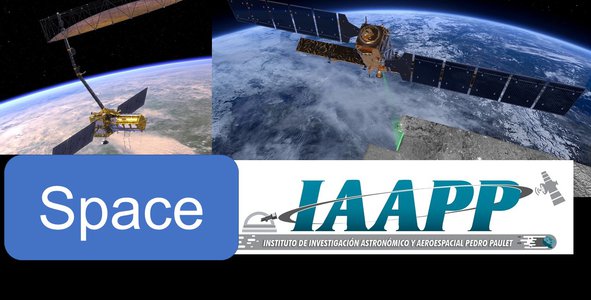
The project consists of answering the question of what is the synthetic aperture radar, for which a video of approximately 5min was elaborated, previously reviewing the bibliographic documentation available in the resources of the challenge, later a structure of the content of the video was elaborated, concepts of how the synthetic aperture radar works and the applications of SAR, and the different SAR satellites of the space agencies NASA ESA JAXA, it is important because it gives to know the technology and the use of SAR to people who are not related to space technology and also to researchers of other areas outside remote sensing.
Link to Project "Demo"
Link to Final Project
Detailed Project Description
A video of approximately 5 minutes was prepared. It is a video that explains the fundamental principle of SAR, its applications and types of sensors, and other important data in a didactic and entertaining way to achieve learning.
It is important to talk about this topic, since nowadays there are SAR satellites, which provide high quality images, a large amount of data that can keep informed people interested in the field of remote sensing.
The video aims to generate interest in all kinds of people, whether children, teenagers, young people and adults around the world, and that they can learn about the concepts of remote sensing in SAR images.
The project was developed by means of software, the first Adobe Illustrator for the animation of the mascot and the second video editing software where, Audios, subtitles, and effects.
Space Agency Data
Synthetic aperture radar concepts were used from concepts provided by the Earth data web portal.
Information provided by the JPL NASA-ISRO SAR Mission (NISAR) web portal was used.
The project also involved the space agencies of Canada and the space agencies of Japan.
Hackathon Journey
It is the first time we participate, and we are happy with the result obtained during these days, we have been able to complement each other as a team, sharing ideas on how to overcome the challenge, helping each other in case of any inconvenience during the HACKATHON, we thank NASA for giving us the opportunity to promote science and collective learning.
We learned to work in teams, edit videos, make animations, consult bibliographic sources and above all learn how synthetic aperture radar technology works.
What inspired us to choose this challenge was to learn more about the types of remote sensing, because we had previously worked on optical remote sensing and because SAR technology can be applied in our country for different scientific studies necessary to counteract and monitor anthropic and natural phenomena.
We solved our setbacks with active communication, we organized meetings via meet to have a structured work and assigning tasks at each stage of the project.
We thank Dr. Yanyachi, Ing. Rodriguez and IAAPP for motivating us to participate in the NASA challenges. We also thank NASA for encouraging our creativity and above all for spreading space science in each one of us.
References
RECURSOS NASA
NASA(2020). What is Synthetic Aperture Radar?. Obtenido de: https://earthdata.nasa.gov/learn/backgrounders/what-is-sar
NASA(2019). Manual para usuarios de ciencias de la misión NASA-ISRO SAR (NISAR). Obtenido de:https://nisar.jpl.nasa.gov/resources/documents/?order=date+desc&per_page=50&page=0&search=&filter_categories%5B0%5D%5B%5D=-208&filter_categories%5B0%5D%5B%5D=-209&filter_categories%5B0%5D%5B%5D=-219&fs=&fc=&ft=&dp=&category=-208%2C-209%2C-219
NASA (2019). NASA-ISRO SAR (NISAR) Mission Science Users’ Handbook Obtenido de: https://nisar.jpl.nasa.gov/system/documents/files/26_NISAR_FINAL_9-6-19.pdf
Recursos de la NASA (2020). Animación de lanzamiento e implementación de NISAR. Obtenido de: https://nisar.jpl.nasa.gov/resources/96/nisar-launch-and-deploy-animation/
Recursos de la NASA (2020). Animación de imágenes NISAR. Obtenido de: https://nisar.jpl.nasa.gov/resources/90/nisar-imaging-animation/
Recursos de la NASA (2020). Cómo se implementará NISAR después del lanzamiento. Obtenido de: https://nisar.jpl.nasa.gov/resources/88/how-nisar-will-deploy-after-launch/
Recursos de la NASA (2020). Volcanes: el portal de NISAR al interior de la Tierra. Obtenido de: https://nisar.jpl.nasa.gov/resources/98/volcanoes-nisars-portal-into-earths-interior/
Imágenes de la NASA (2017). Volcanic Hazards.Obtenido de: https://nisar.jpl.nasa.gov/resources/documents/?order=date+desc&per_page=50&page=0&search=&filter_categories%5B0%5D%5B%5D=-208&filter_categories%5B0%5D%5B%5D=-209&filter_categories%5B0%5D%5B%5D=-219&fs=&fc=&ft=&dp=&category=-208%2C-209%2C-219
RECURSOS EXTERNOS
Mongabay(2020). Nuevo informe indica que más de 400 derrames de petróleo afectaron la Amazonía peruana. Obtenido de: https://es.mongabay.com/2020/08/informe-derrames-petroleo-amazonia-peruana/
ALOS-2 Project. Obtenido de: https://www.eorc.jaxa.jp/ALOS/en/top/about_top.htm
JAXA(2013). Advanced Land Observing Satellite-2 "ALOS-2" (DAICHI-2) Gazing into Earth's Expression. Obtenido de: https://www.youtube.com/watch?v=FS_4_O0V05o&t=951s
MINAM(2013).Güido Lombardi en RPP comentando sobrevuelo por Madre de Dios. Obtenido de: https://www.youtube.com/watch?v=c5cIvHeNXmk&t=128s
Canadian Space Agency(2019).Obtenido de: https://www.asc-csa.gc.ca/eng/satellites/radarsat/default.asp
Tags
#SARcito #What_is_SARcito? #NASA #SARcito_Video
Global Judging
This project has been submitted for consideration during the Judging process.